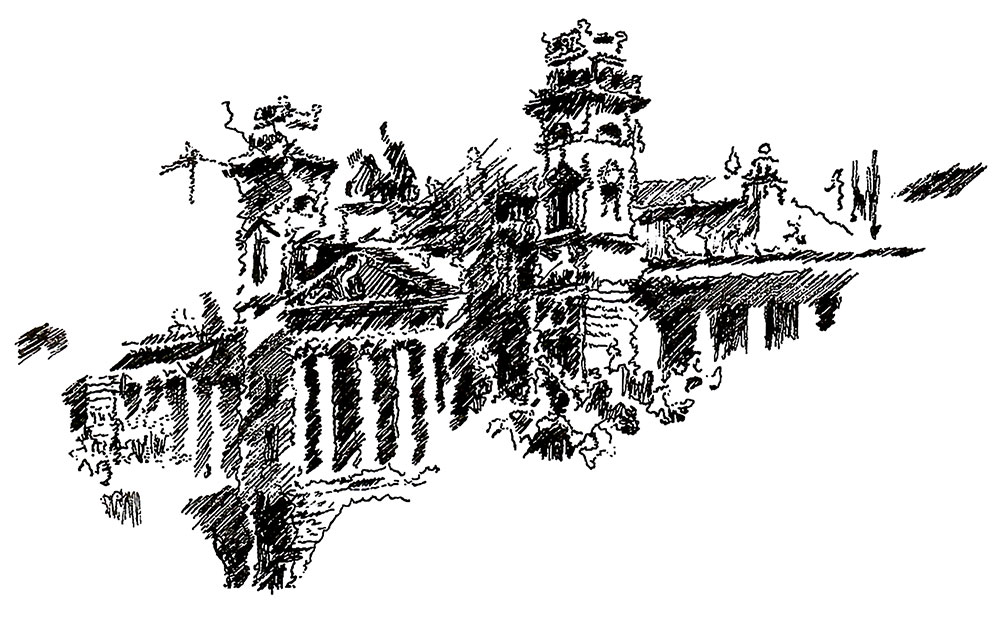
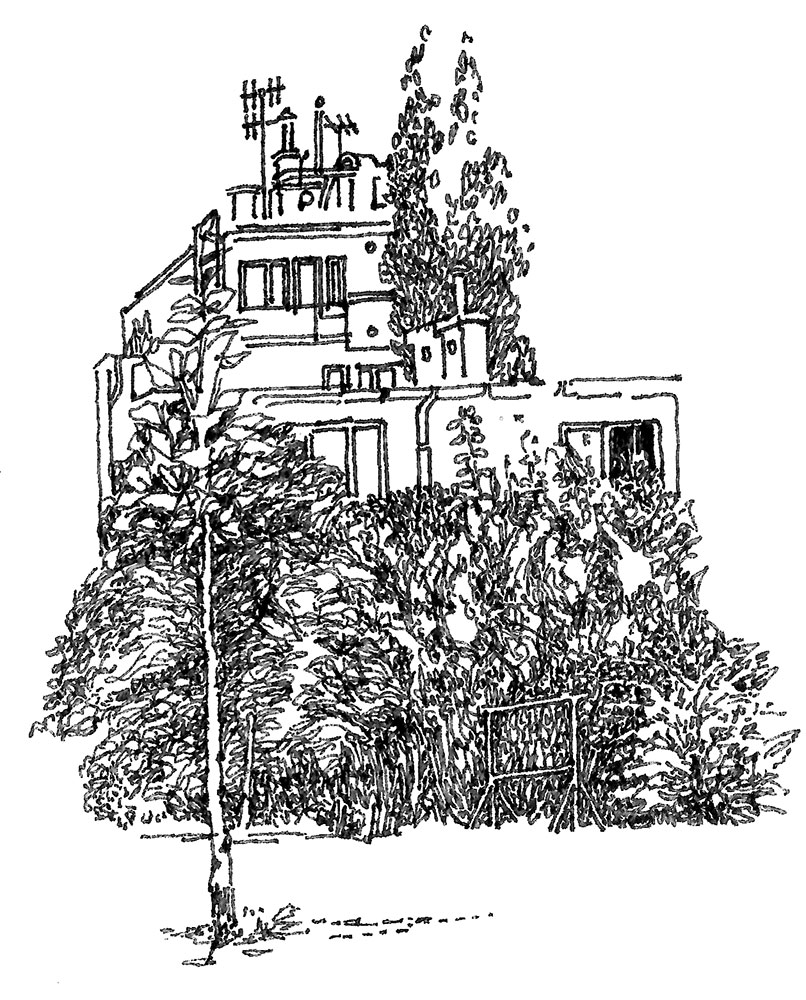
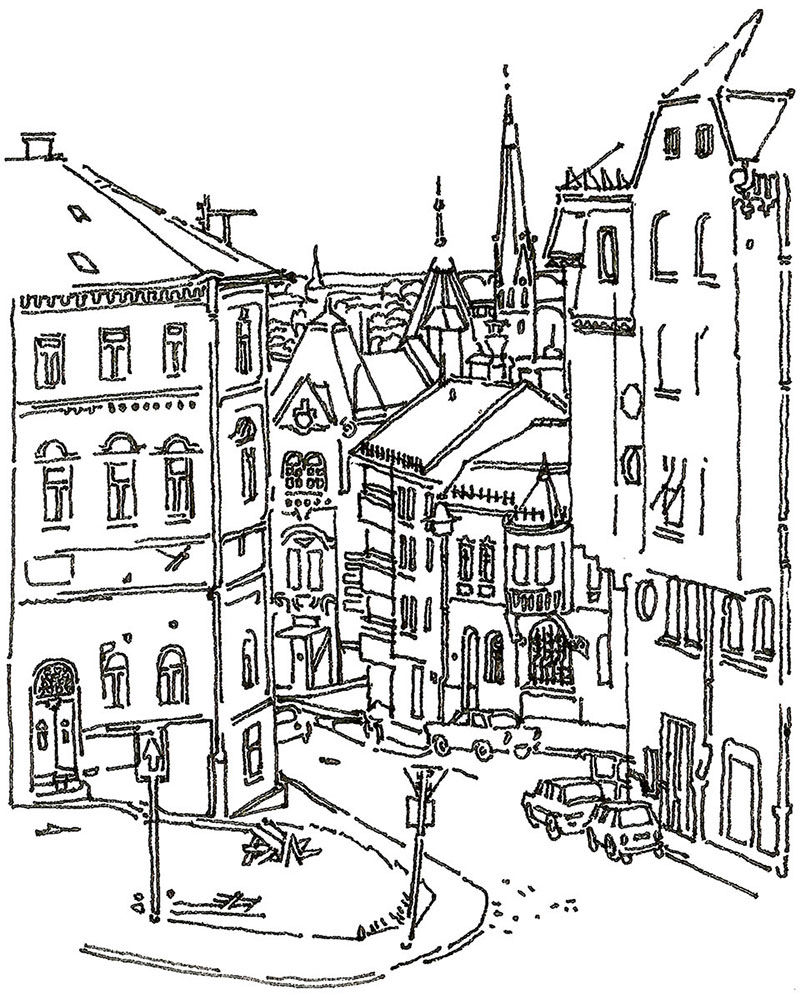
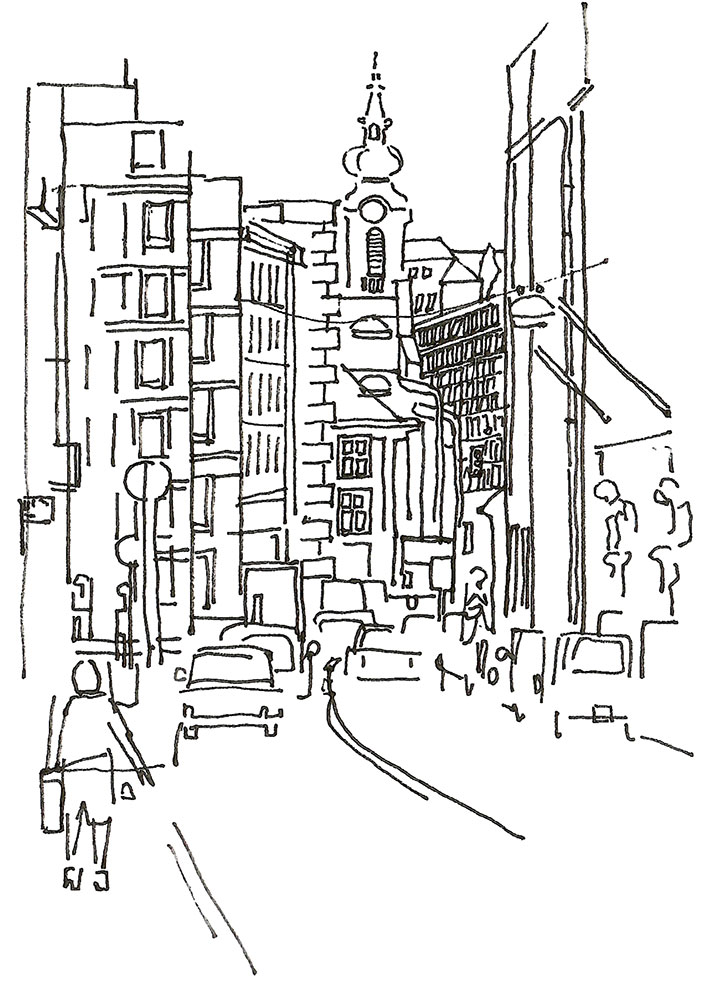
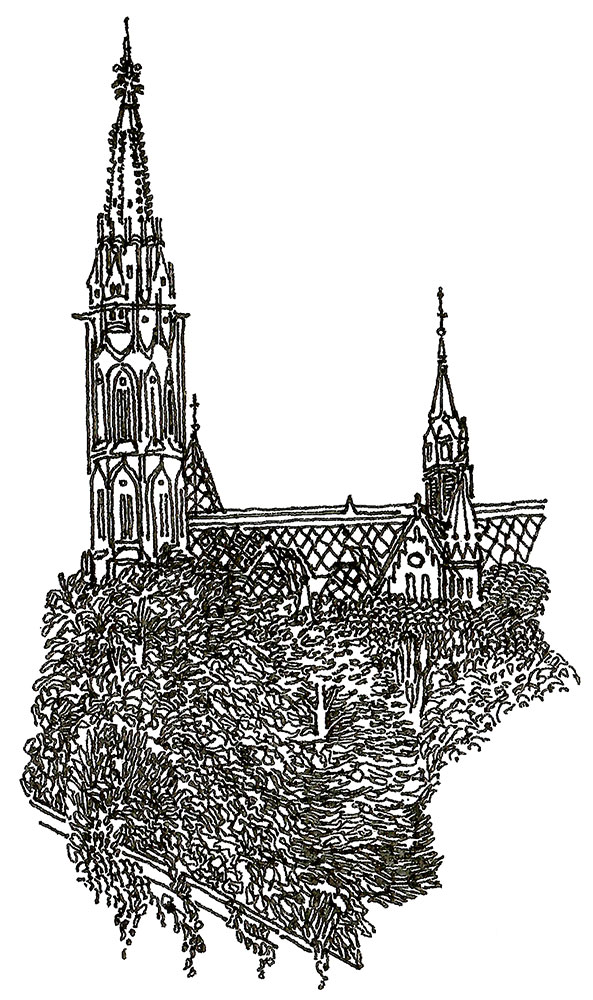
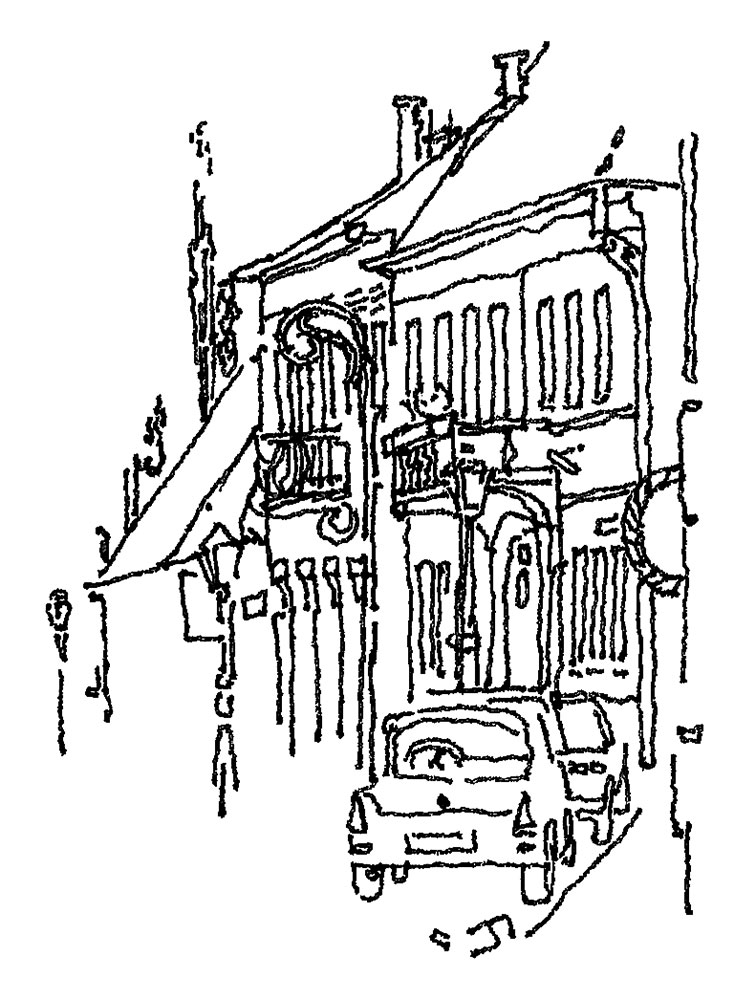
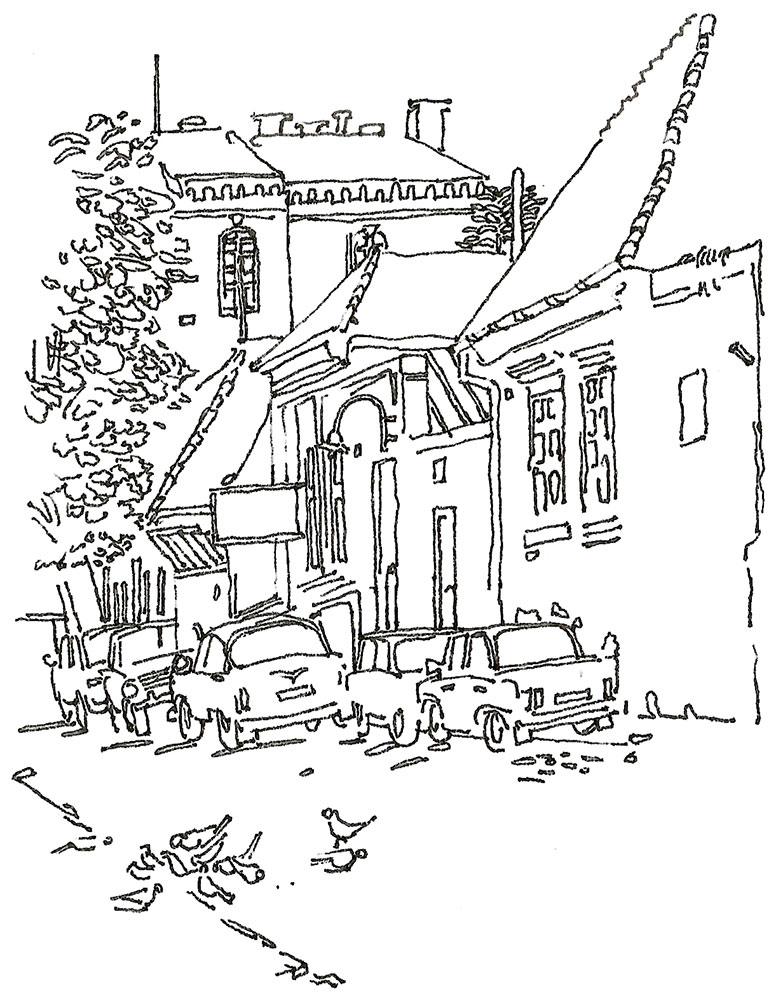
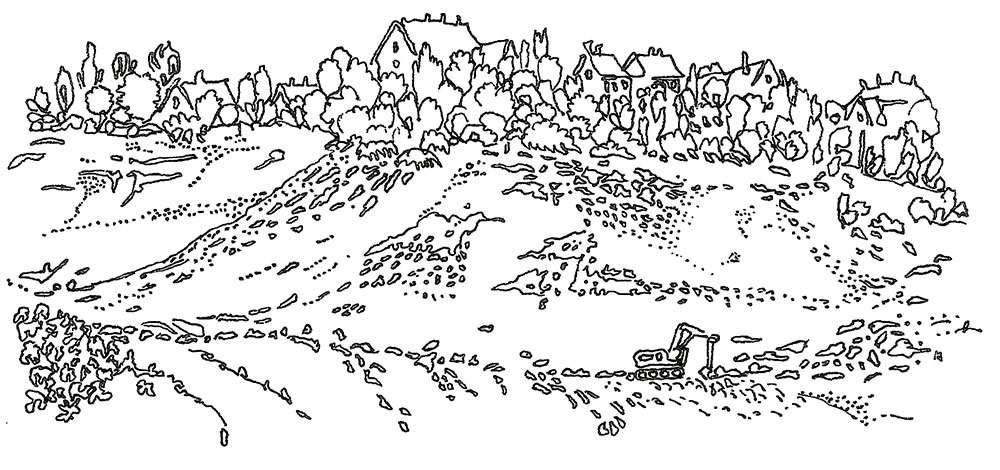
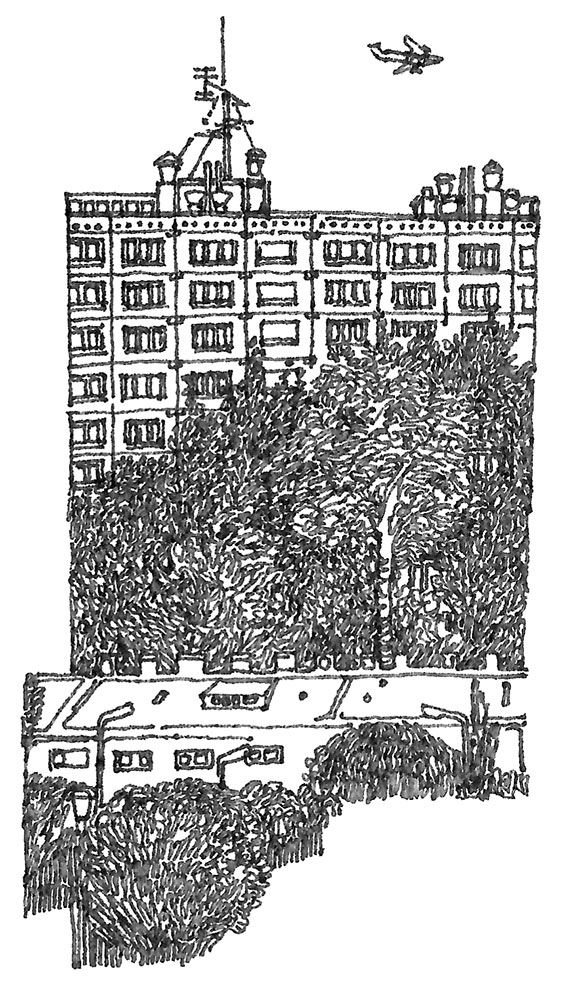
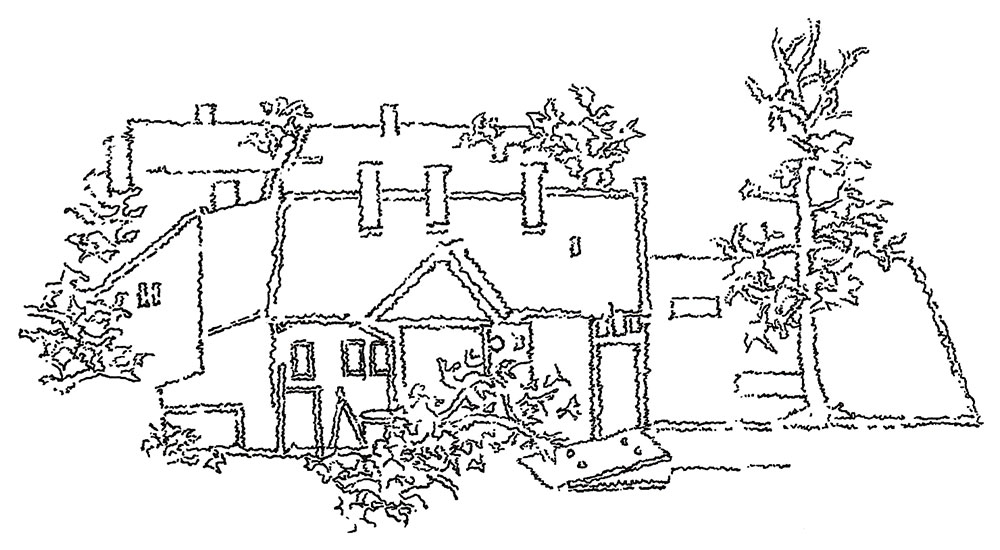
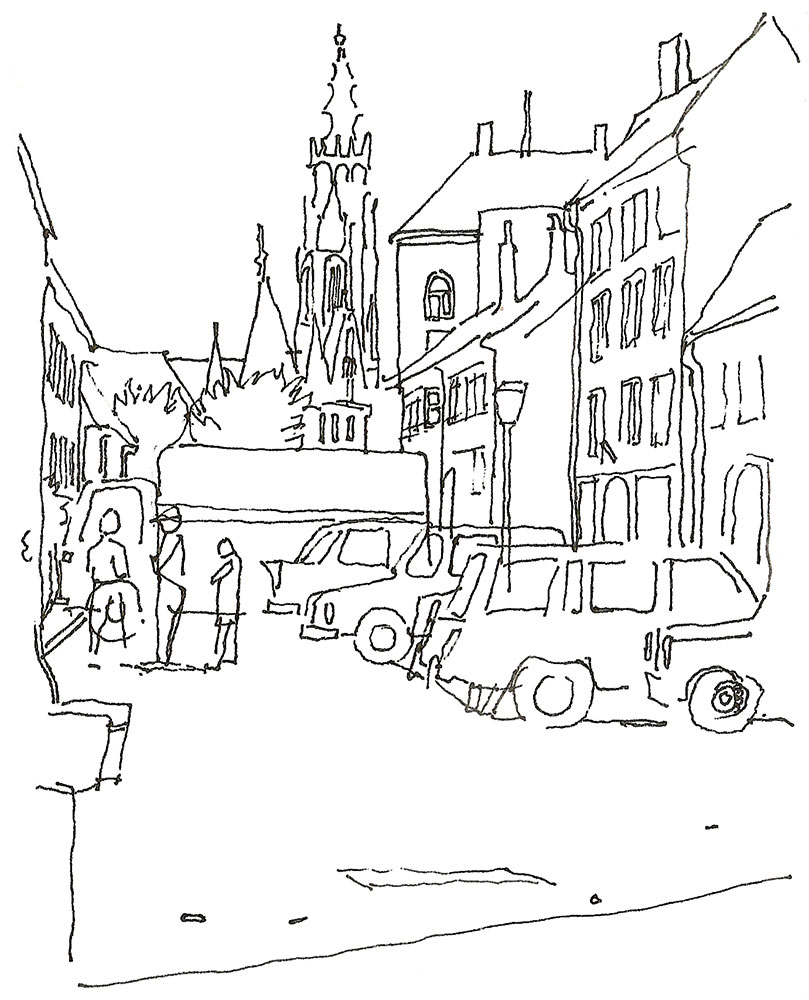
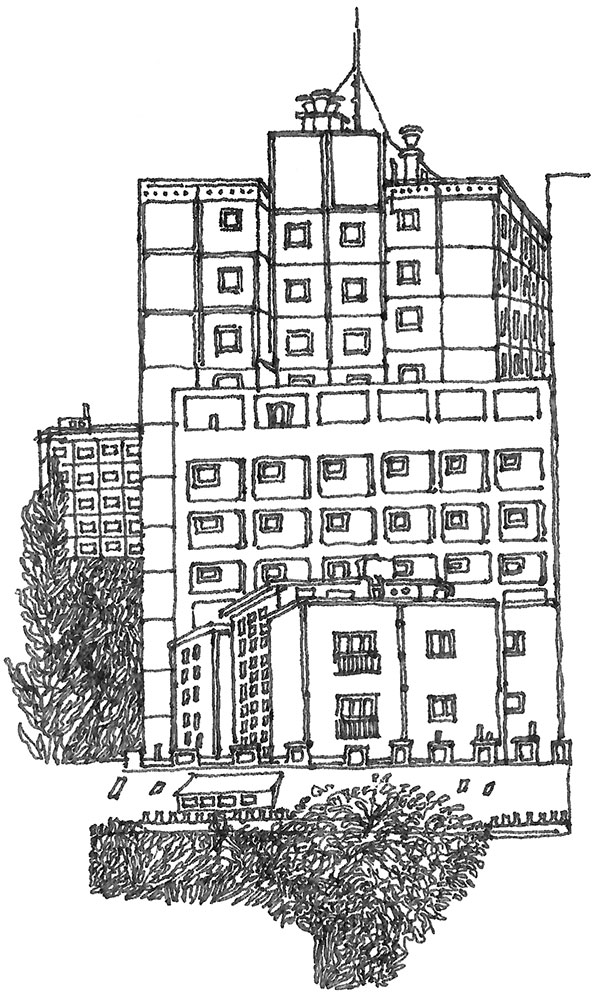
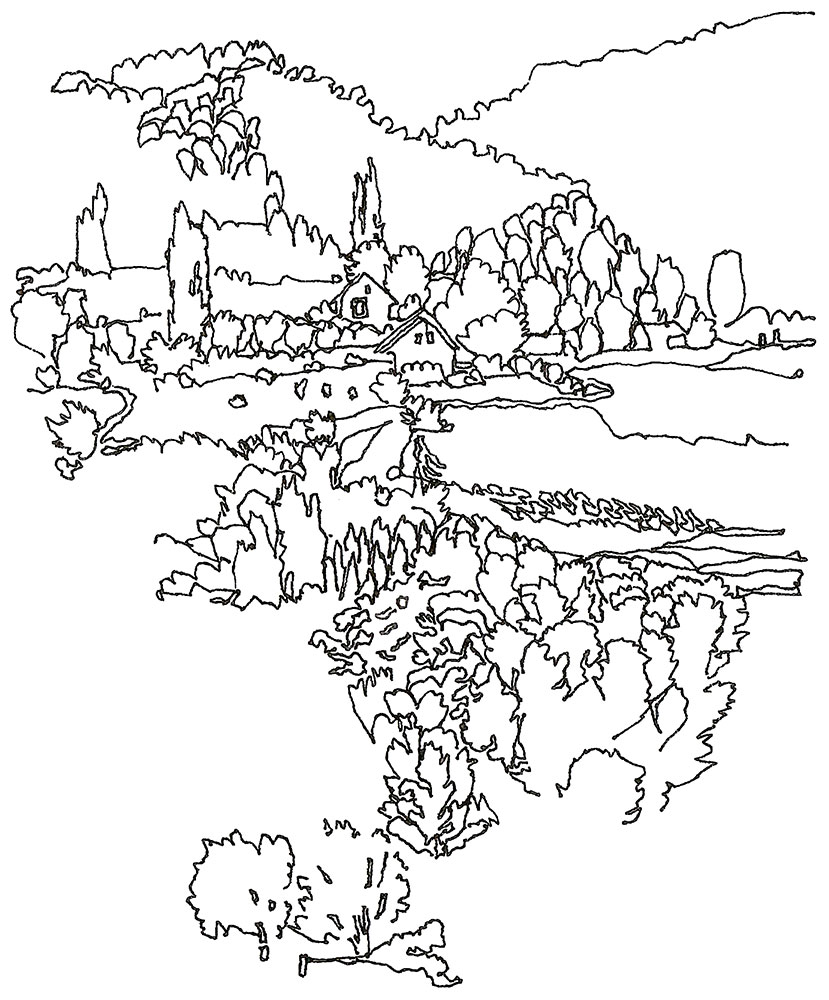
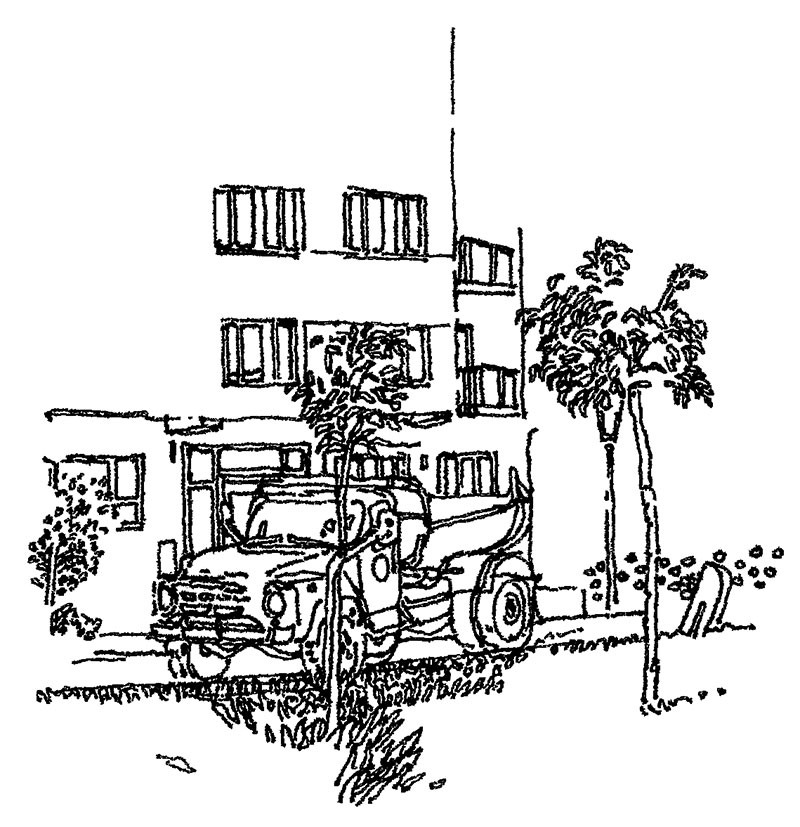
In Győző Sárkány’s pen and ink drawings, buildings, landscapes and cityscapes emerge from a fabric of meticulously crafted structures. Sometimes with a dynamic, almost calligraphic play of lines, sometimes by leaving the delimited surfaces white, the fragments of space become visible. The compositions unfold from the web of lines like natural phenomena, like moss weaving in the rock or the lace of an ice flower creeping up the surface of glass. The surfaces of the images develop in gradual and meticulous steps. Buildings, cityscapes and landscapes emerge from the grid of lines with a naturalness that is self-evident. These works are visual records, in which the evocation of the spectacle is articulated through the redefinition of space.
These architectural or natural representations of space are relatives of veduta and capriccio. They lie somewhere between these two ways of representation. The architectural and organic details appear in a recognisable form in the places and spaces depicted, thus on the one hand preserving visual elements in a factual way (as in veduta), and on the other hand, the primary view is reinterpreted and in a certain sense even rearranged by the artist’s thoughts and his particular view of space (as in capriccio).
These fragmentary compositions reveal not only a slice of the world around us, but also a slice of the artist’s world. From elements taken from the real world, the artist’s imagined places – sometimes distant in time and space – are put on paper. Through the cut-outs, they focus on a narrow piece of space, but at the same time open up infinite horizons thanks to the artist’s way of representation. The seemingly metaphysical fragments that are left white, floating in empty spaces, and the visualization creating a reflective effect all add to the sense of infinity. Even standing still, looking at the drawings, one is transported into various worlds by the artist’s linework.
Judit Szeifert art historian