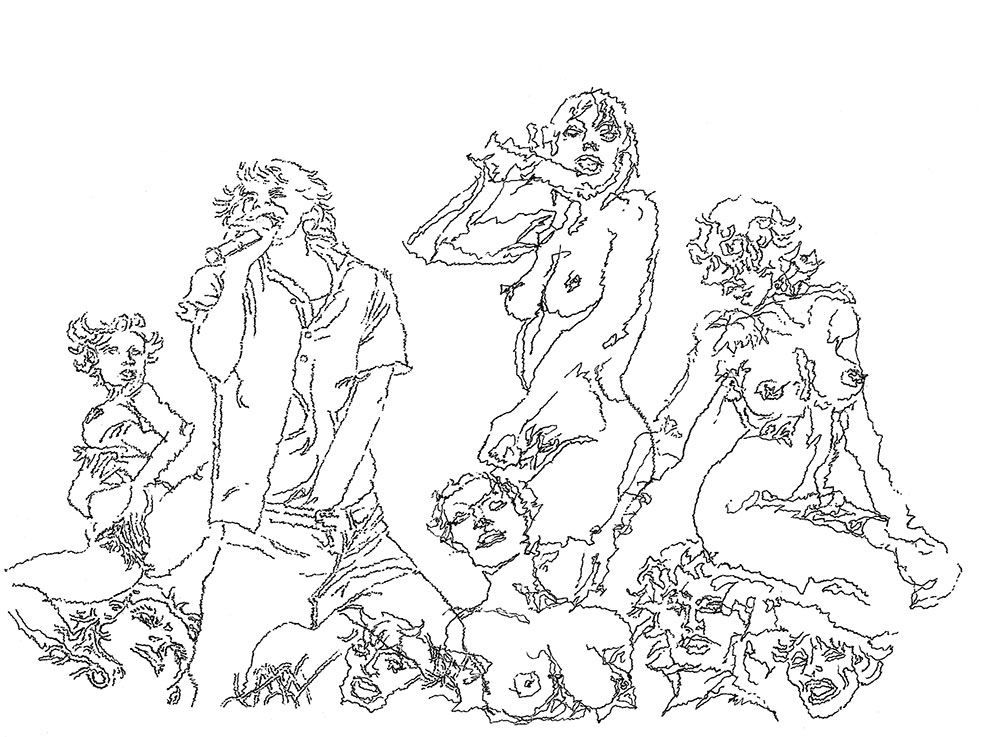
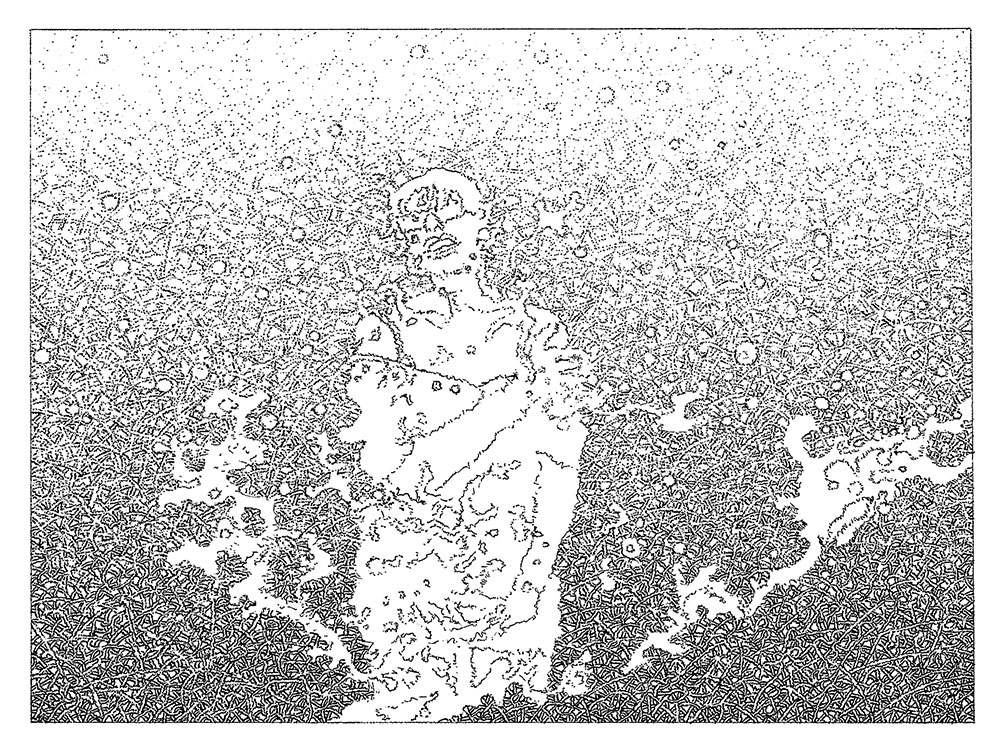
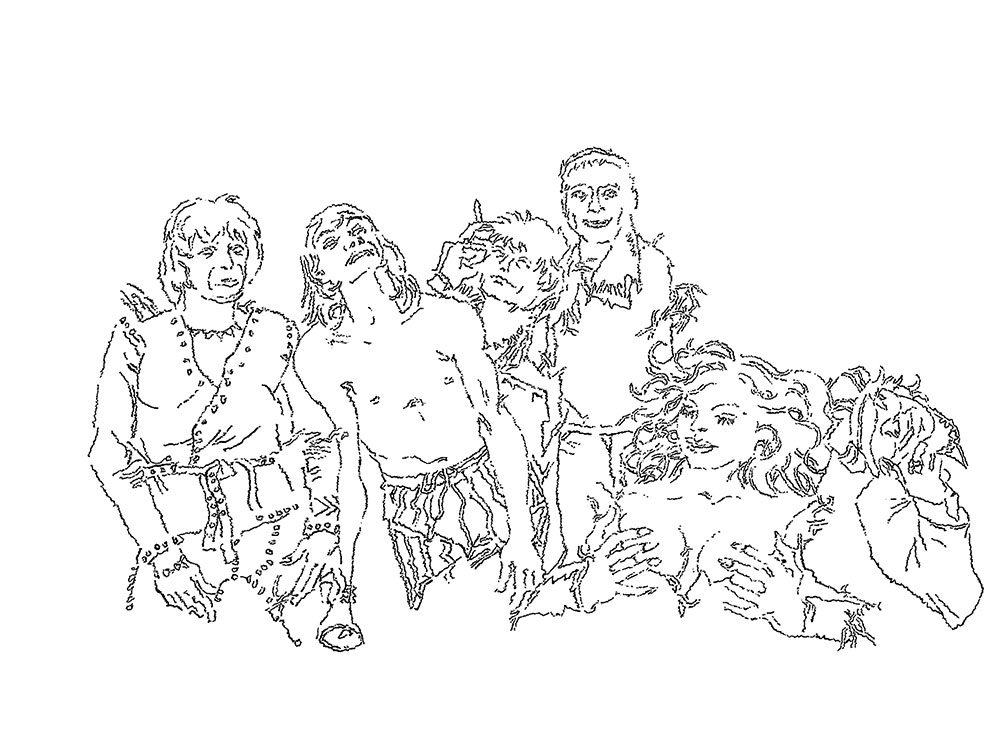
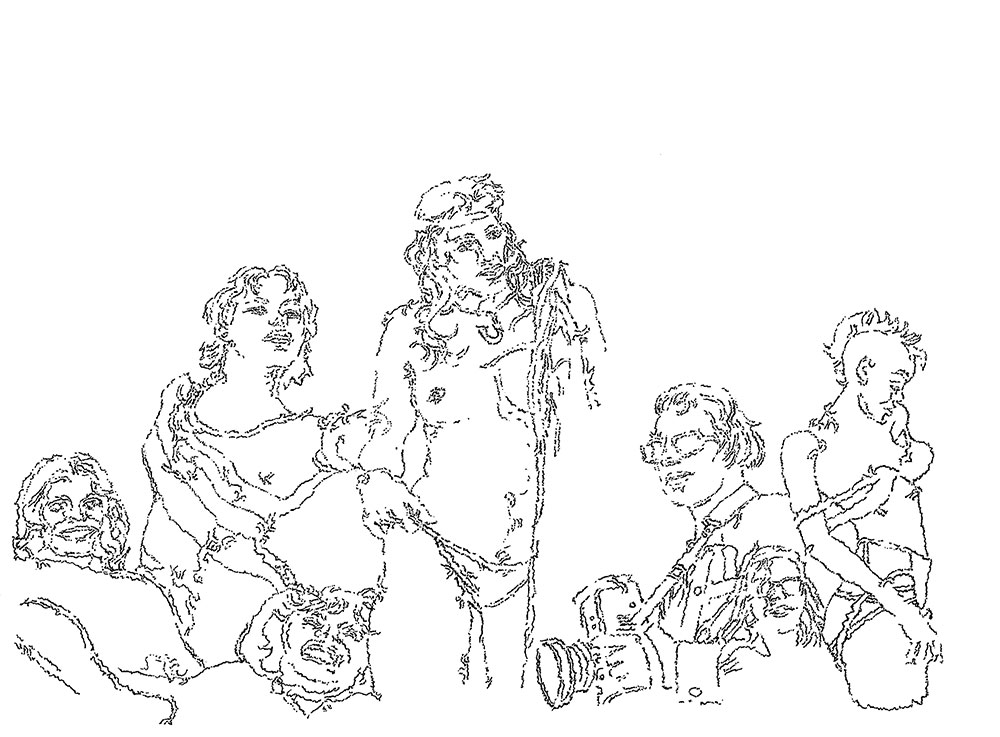
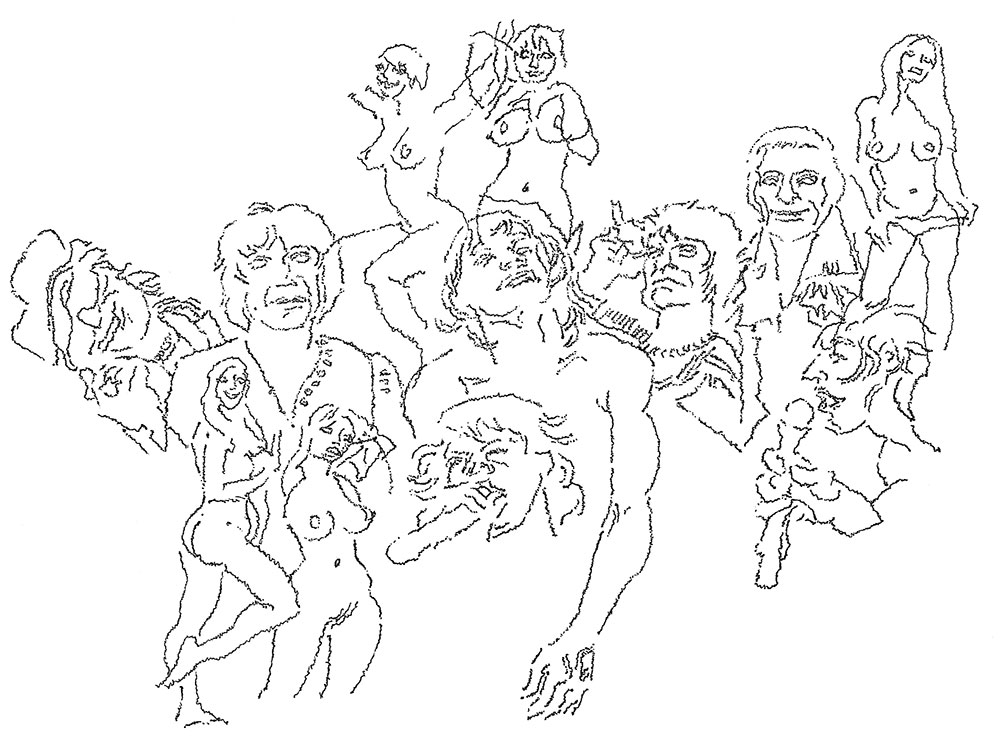
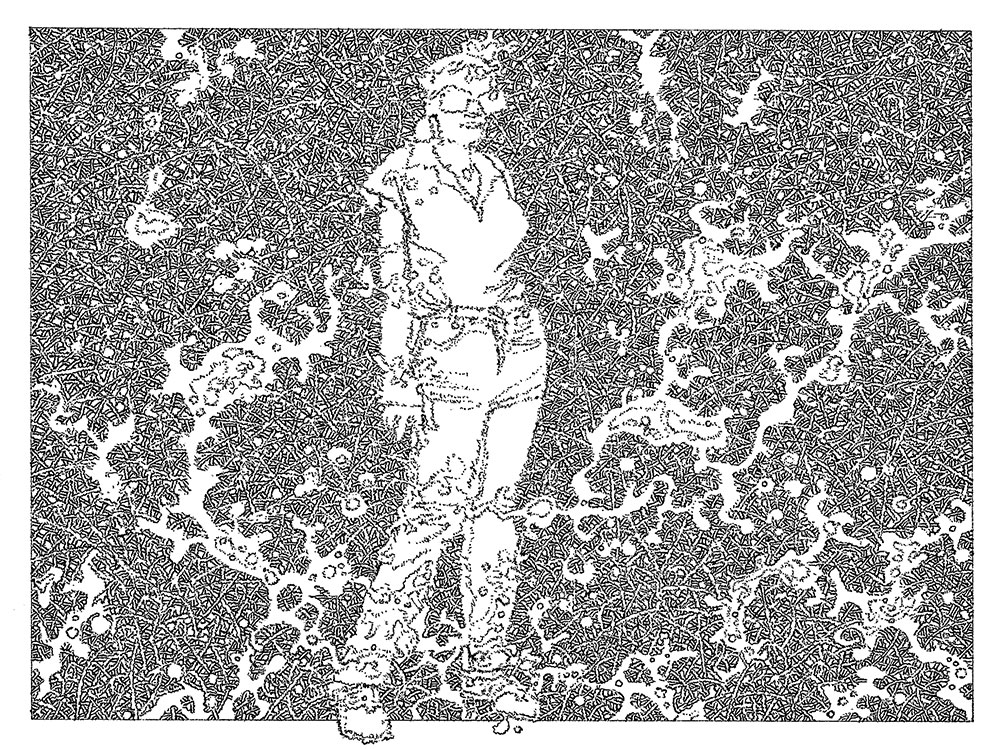
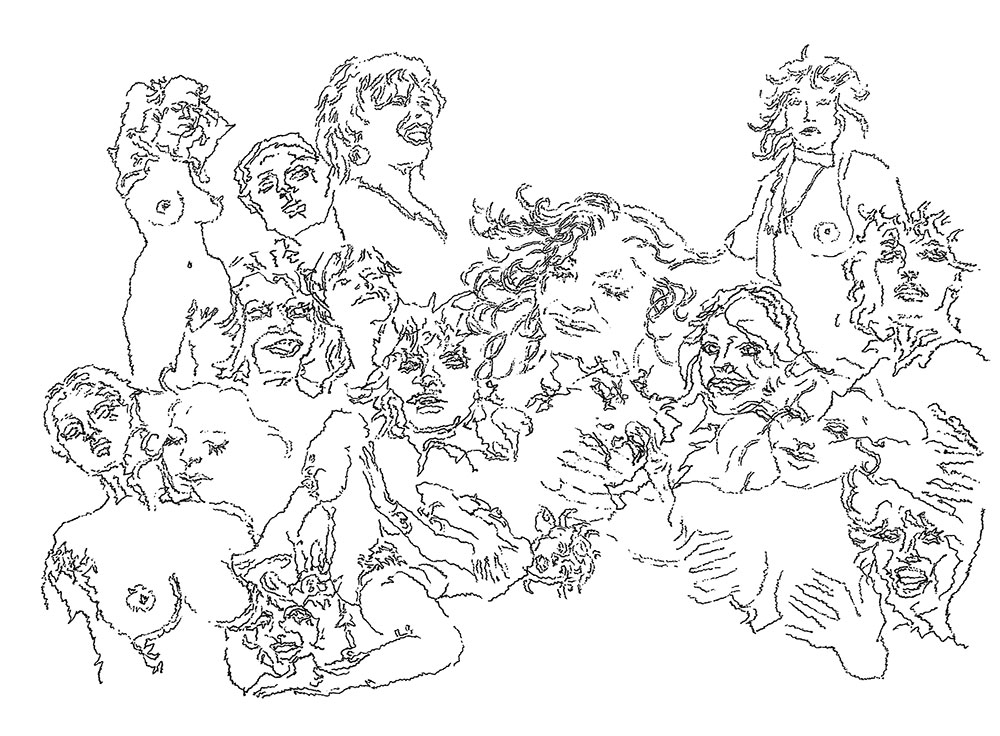
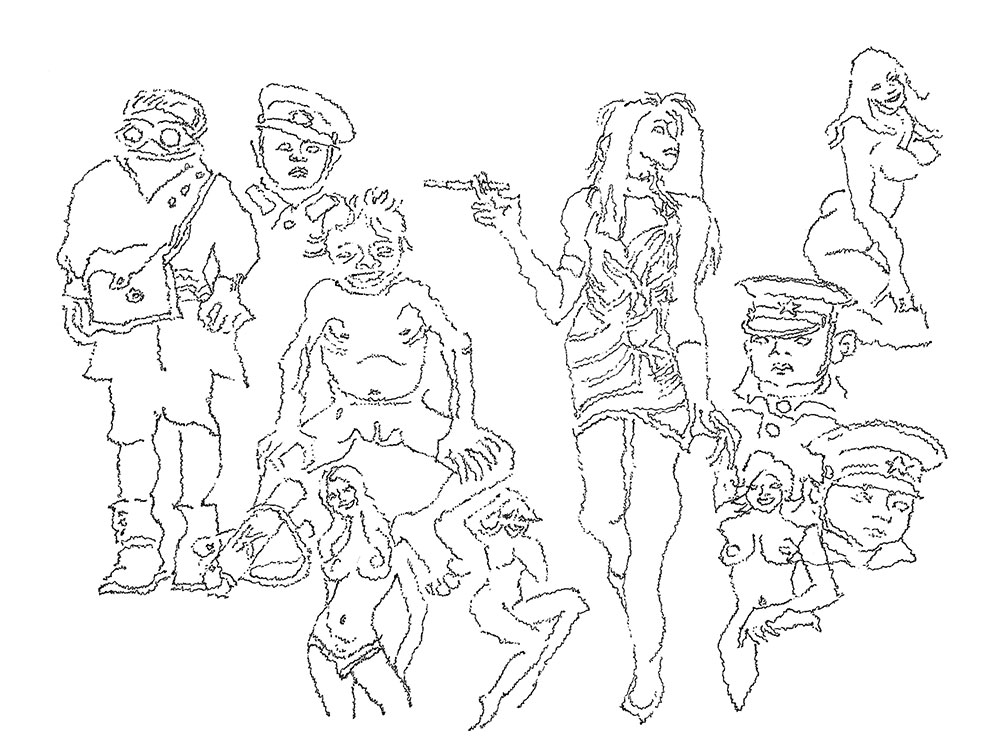
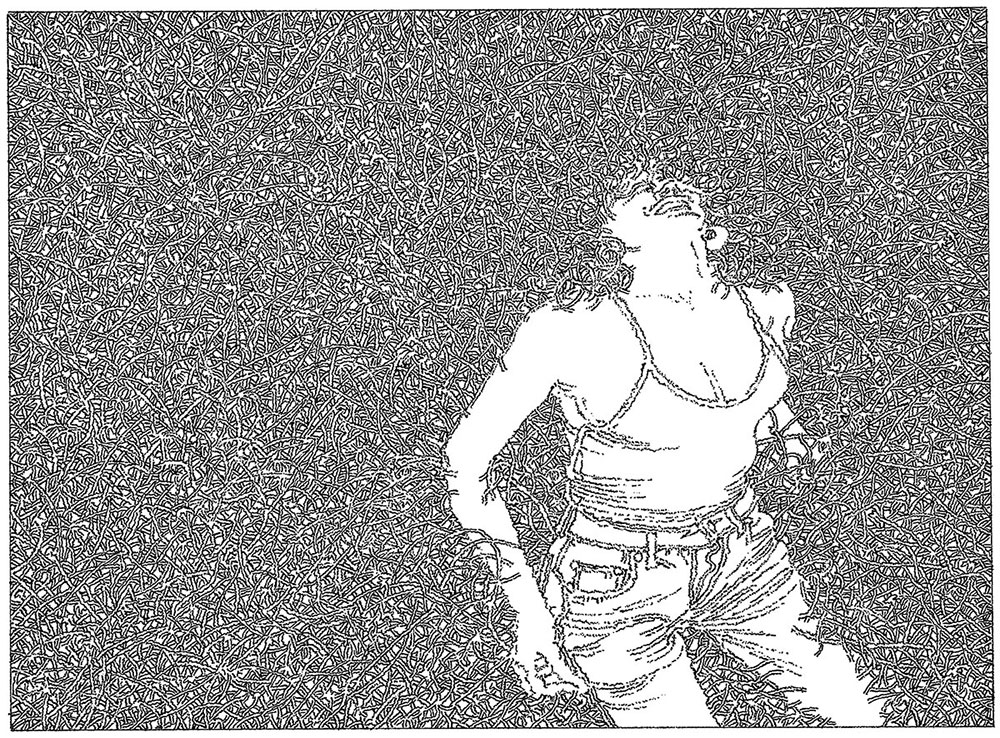
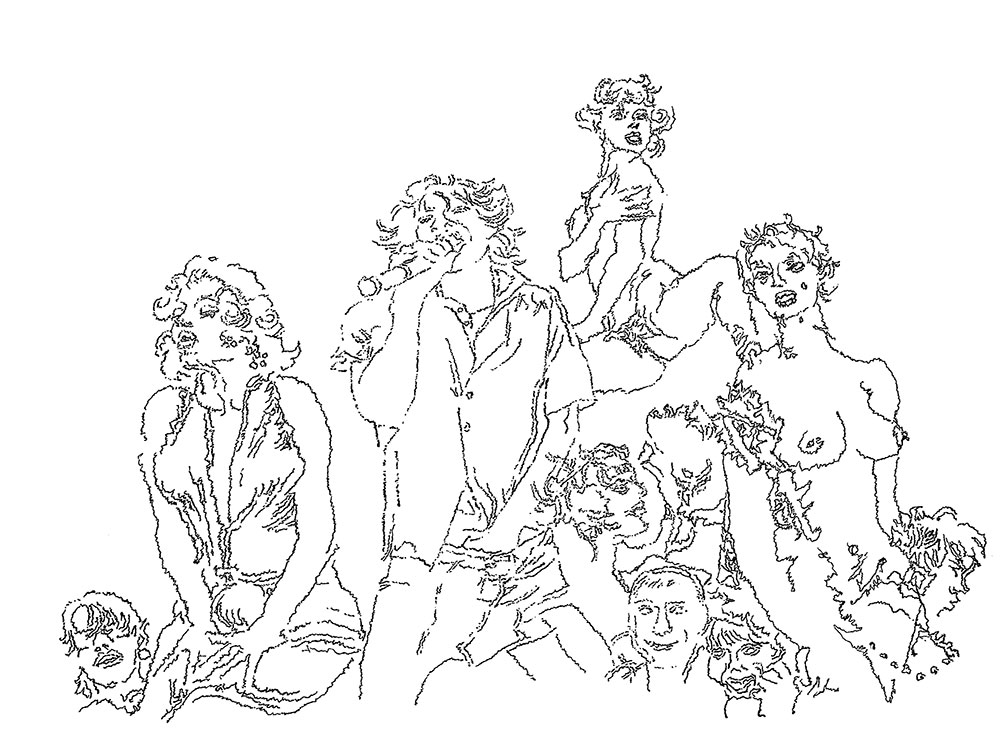
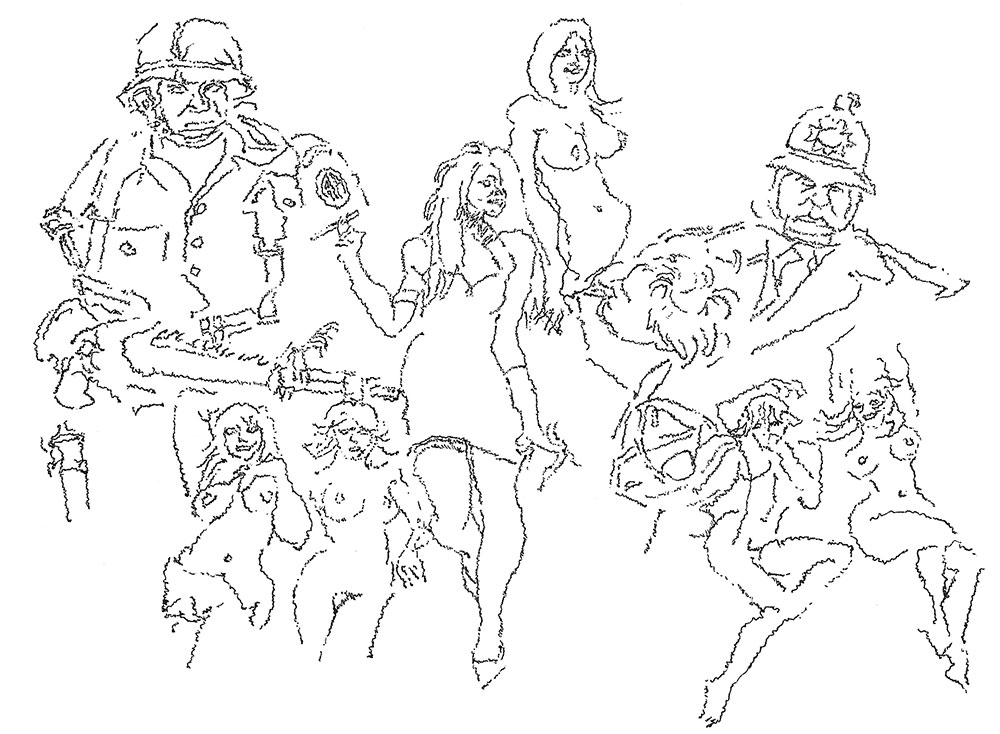
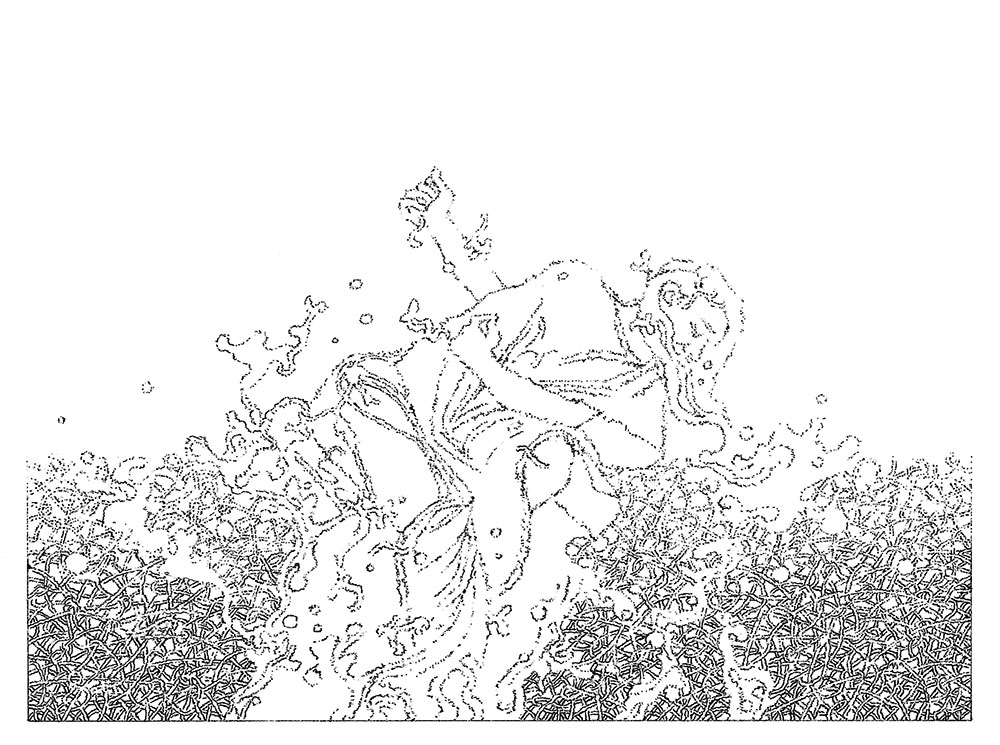
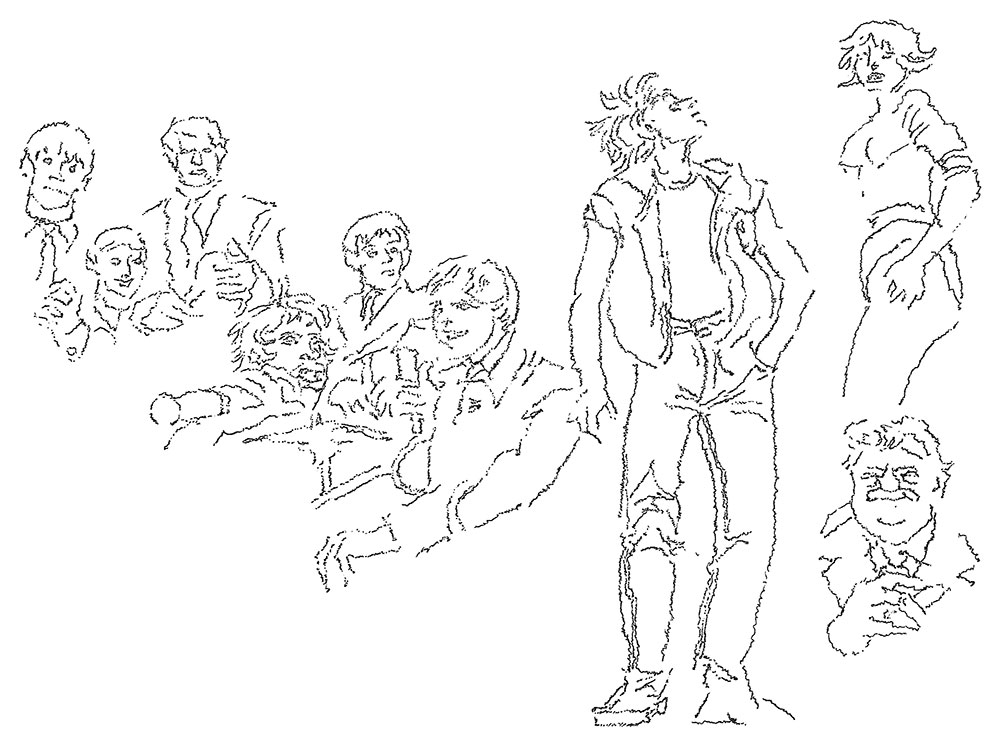
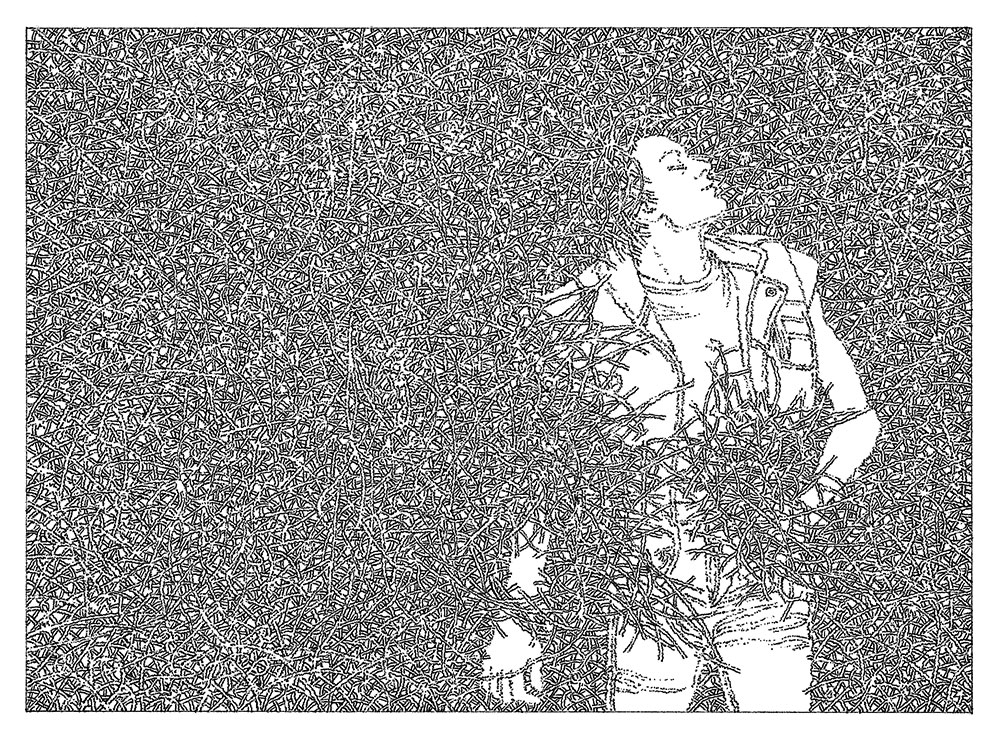
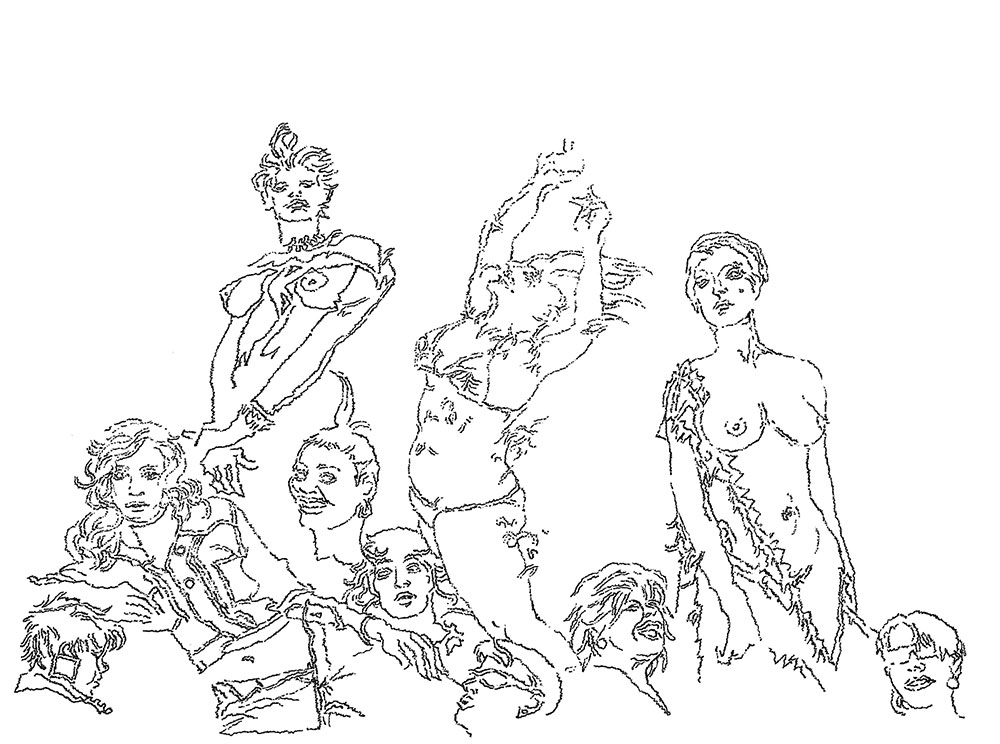
In a series of paintings created for the Fiatal Művészek Stúdiója (“Studio of Young Artists”) exhibition in the early 1980s, we can see a major influence in the development of the artist’s approach and style. In the spirit of the idea of ’living in our time’, Sárkány was influenced by pop, rock and beat culture alongside undeniable influences, a historical, encyclopaedic approach, respect for cultural heritage, and a millennial tradition of art history, as were the masses of his generation.
The drawings, appearing as graphic transcriptions of the nouveau réalisme movement, depict icons, well-known personalities, phenomena and symbols of the era, moments from the Woodstock festival, famous celebrities such as the Rolling Stones, Mick Jagger, Marilyn Monroe or the politician Franz Josef Strauss, stars hyped in the mass culture, infamous beauties and posing nude models, as symbols of a then newfound sense of life, sexual revolution and freedom. These examples of the newly adopted ethical behaviours of the period, symbolised with a single line, the almost documentary-like images, are all moments of ecstasy, euphoria, intoxication, and the rise above the everyday world, depicted by ink. Besides, typical of the counterpoint technique, the intensification of contrasts that runs through the artist’s entire oeuvre, vulnerability and misery are also present in certain scenes. An example of this duality is the additive editing of drawings reminiscent of a croquis, the intricate depiction of groups against a neutral background that asserts the colour of the paper, the counterparts of which are compositions in a densely drawn, vibrant web of threads that lift each character out of context.
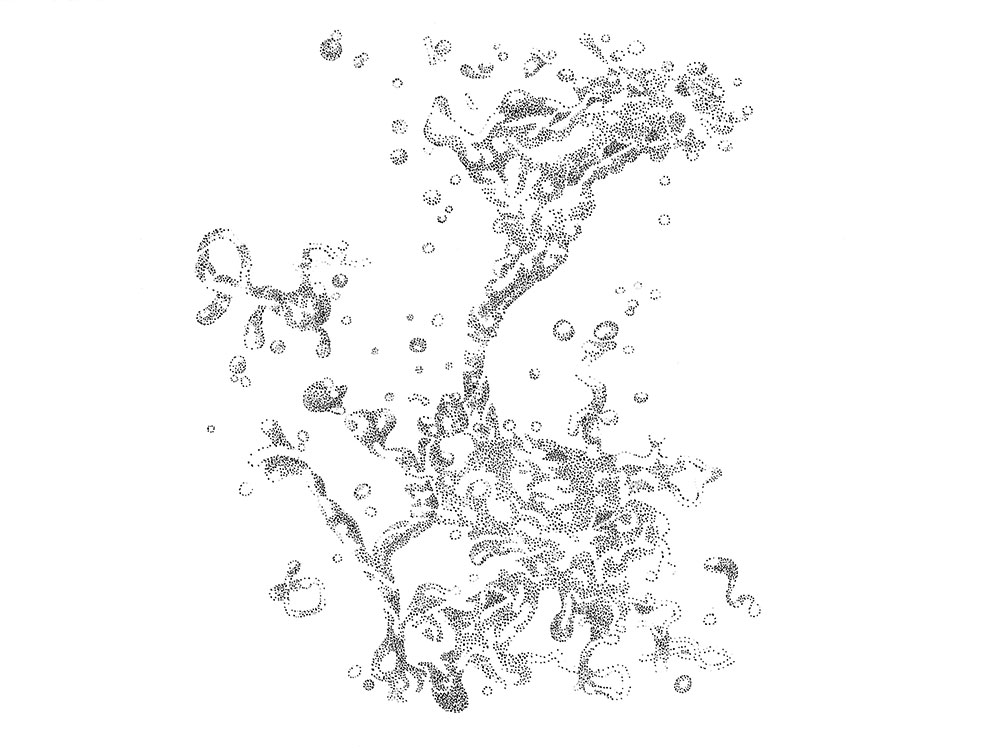
The rock and roll feeling that captures the fiery atmosphere of the concerts with a lightning-like intensity, running through improvisational series, is in fact a key feature of Sárkány’s oeuvre to this day. Similarly, the pulsating ripples of surfaces drawn with the pointillage technique can be found in his photographic and drawing series today, capturing the movement of the water surface, e.g. in Végtelen színjáték (“Endless Comedy”), Mikrofaktúrák (“Microfactures”) and Apokaliptikus algoritmus (“Apocalyptic Algorithm”). For him, the cultural heritage of the last third of the 20th century – with its sense of life, way of thinking, desire for freedom, and attitude of breaking taboos – is as important as Dürer’s woodcuts, Rembrandt’s etchings, Raphael’s Madonnas or the inimitable richness of nature.
Róbert Nátyi art historian