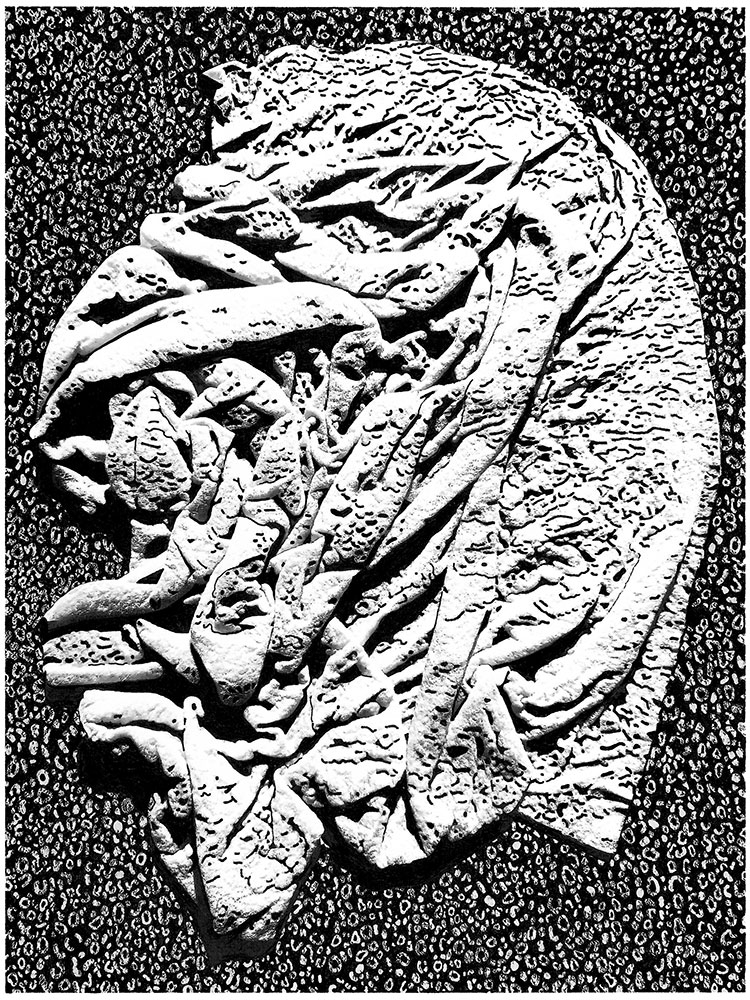
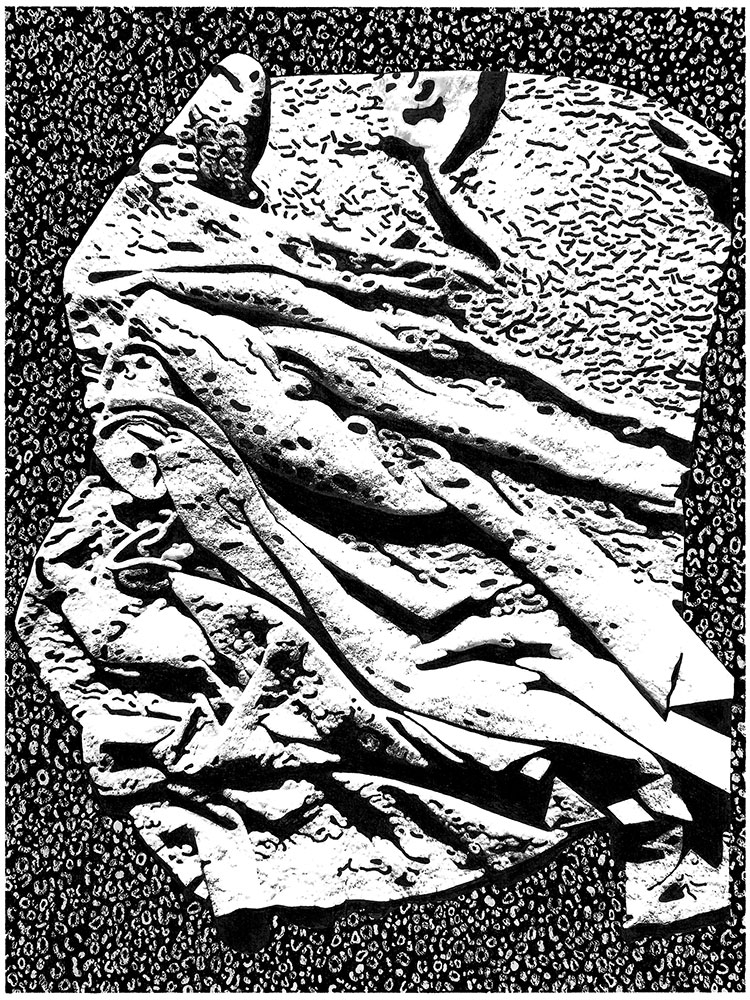
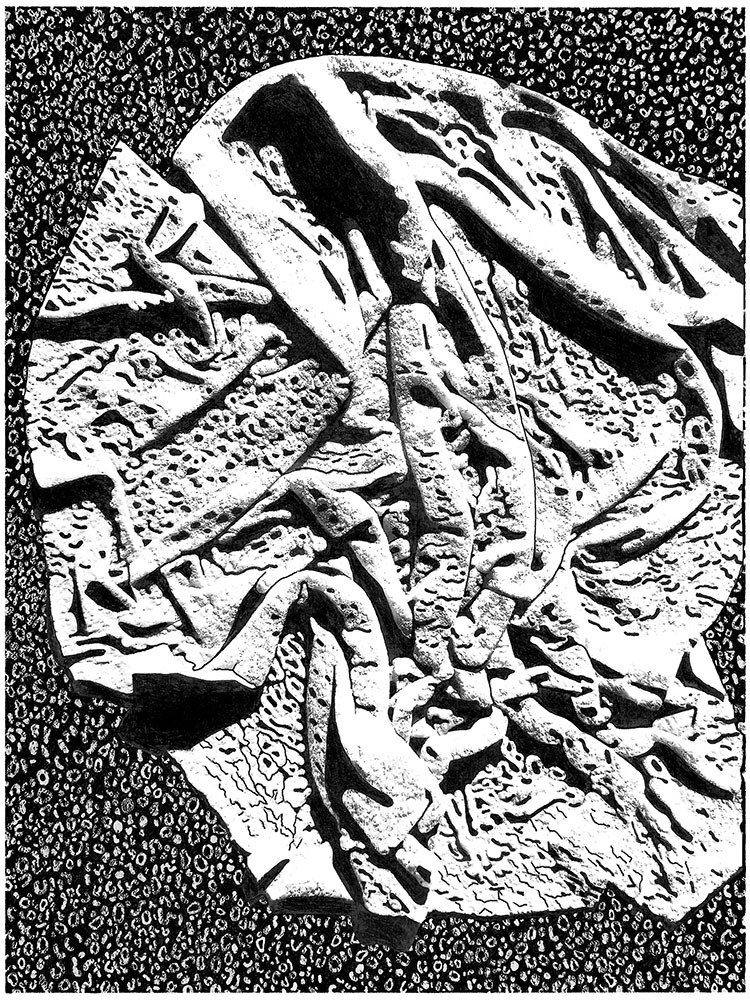
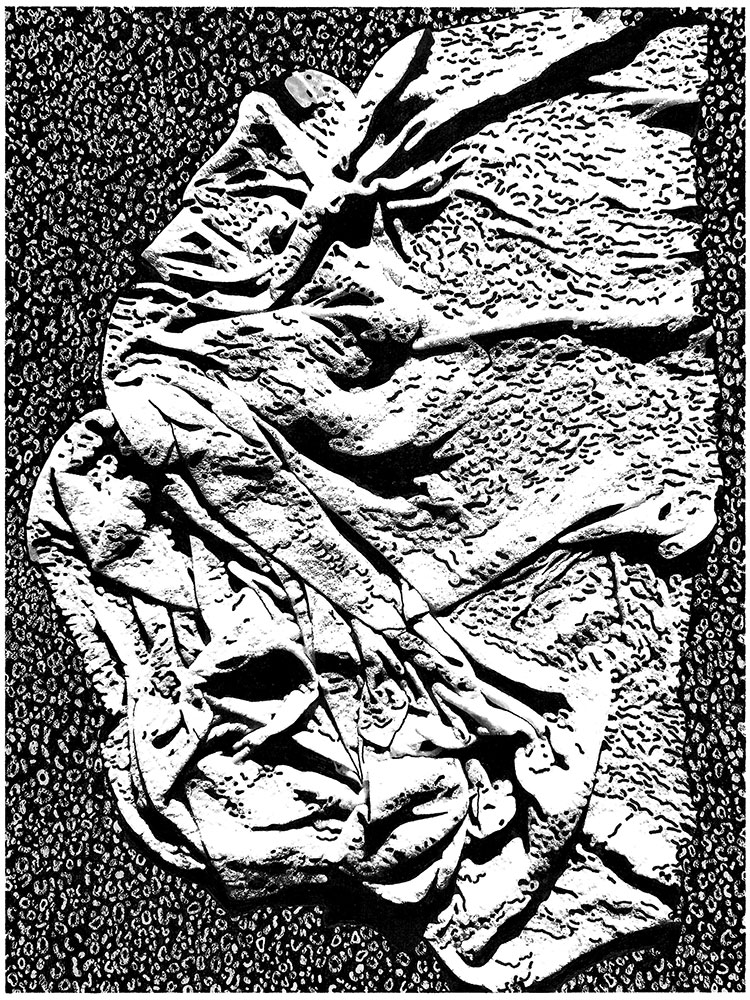
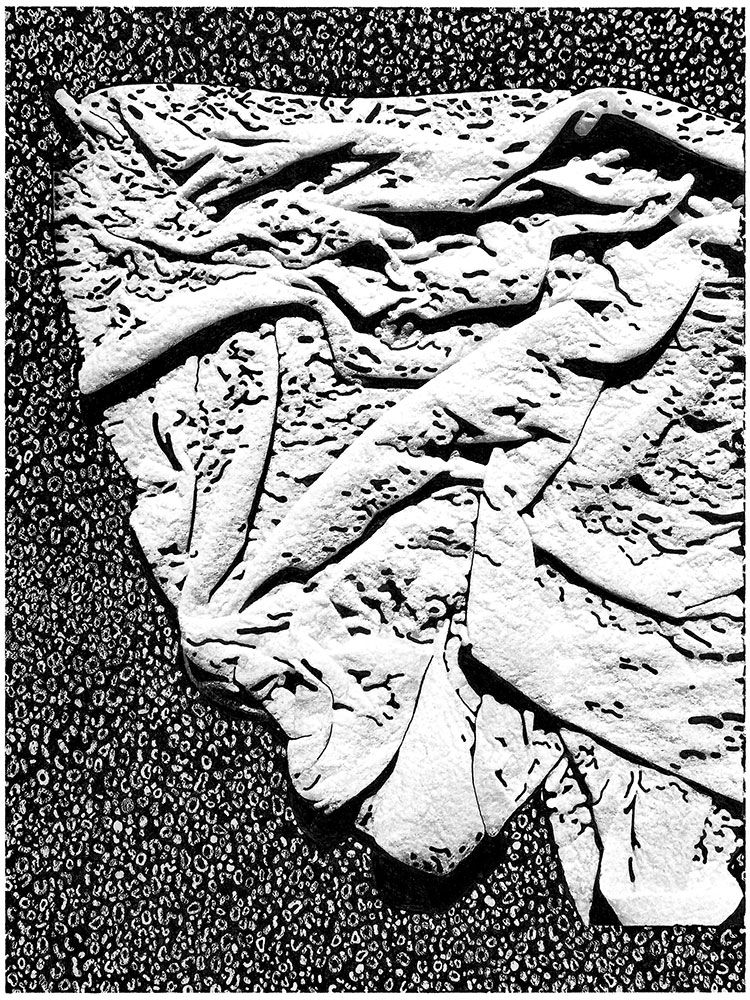
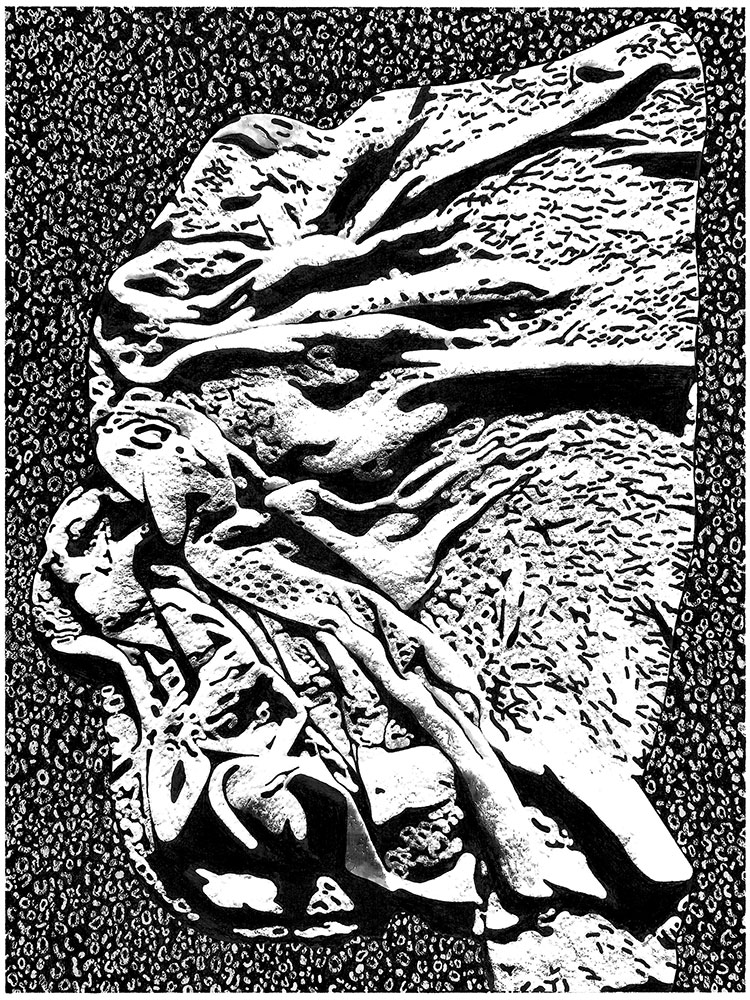
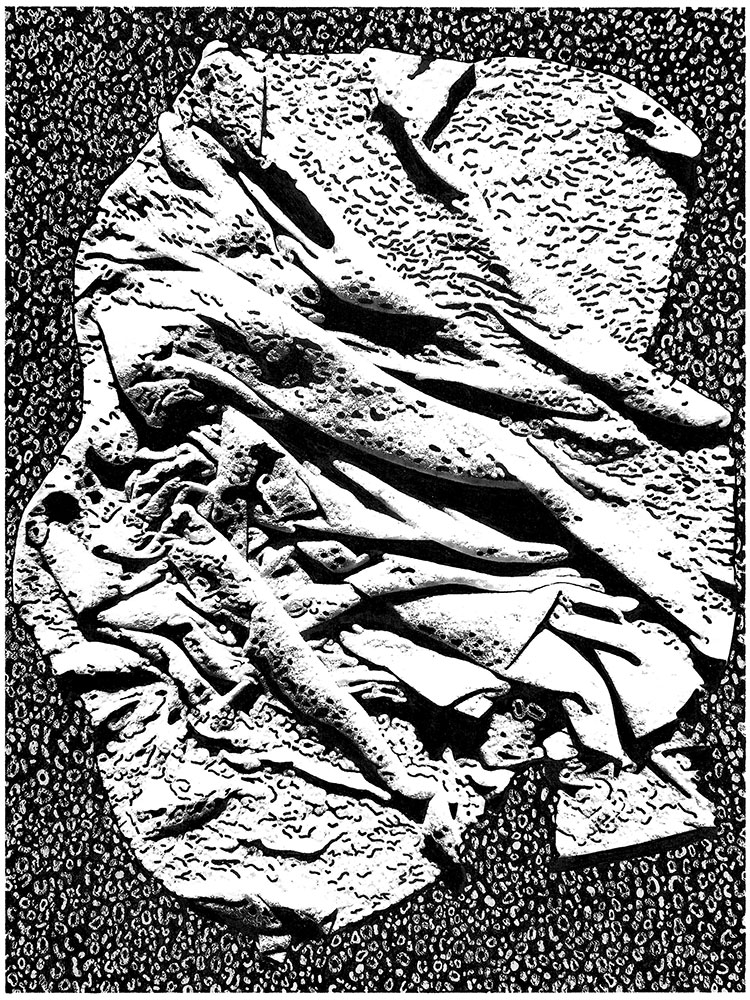
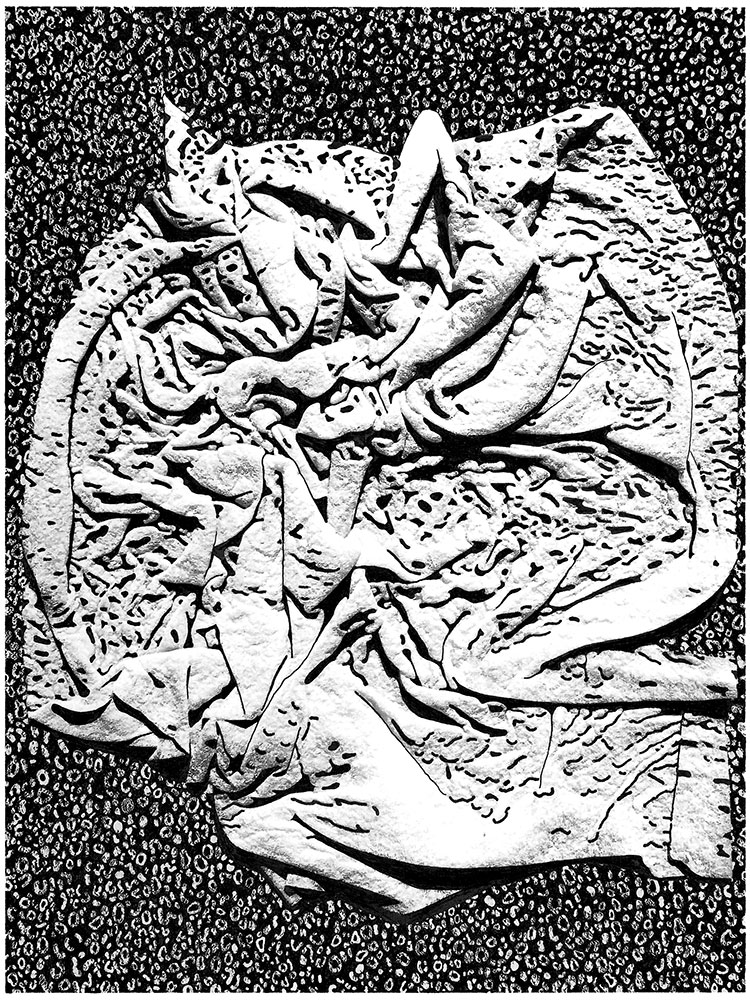
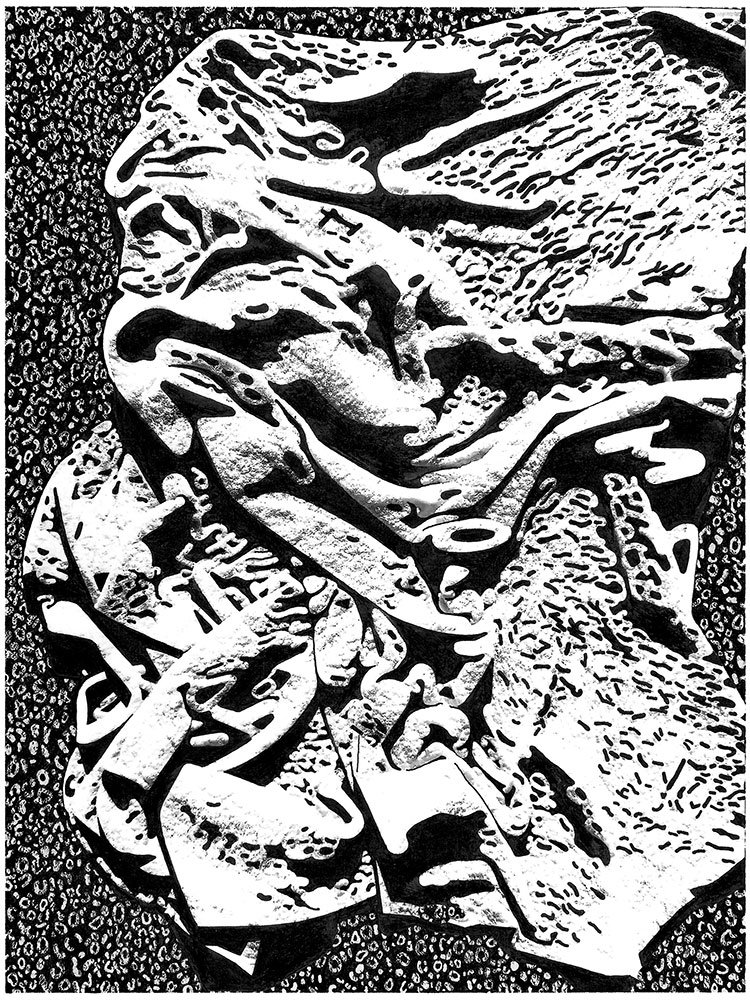
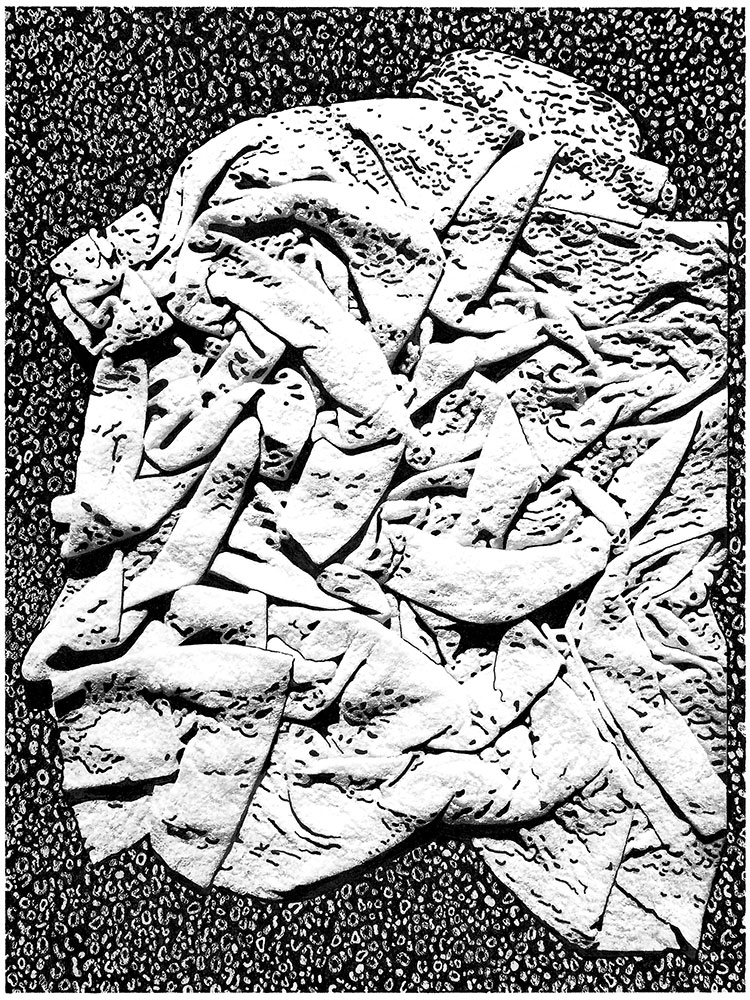
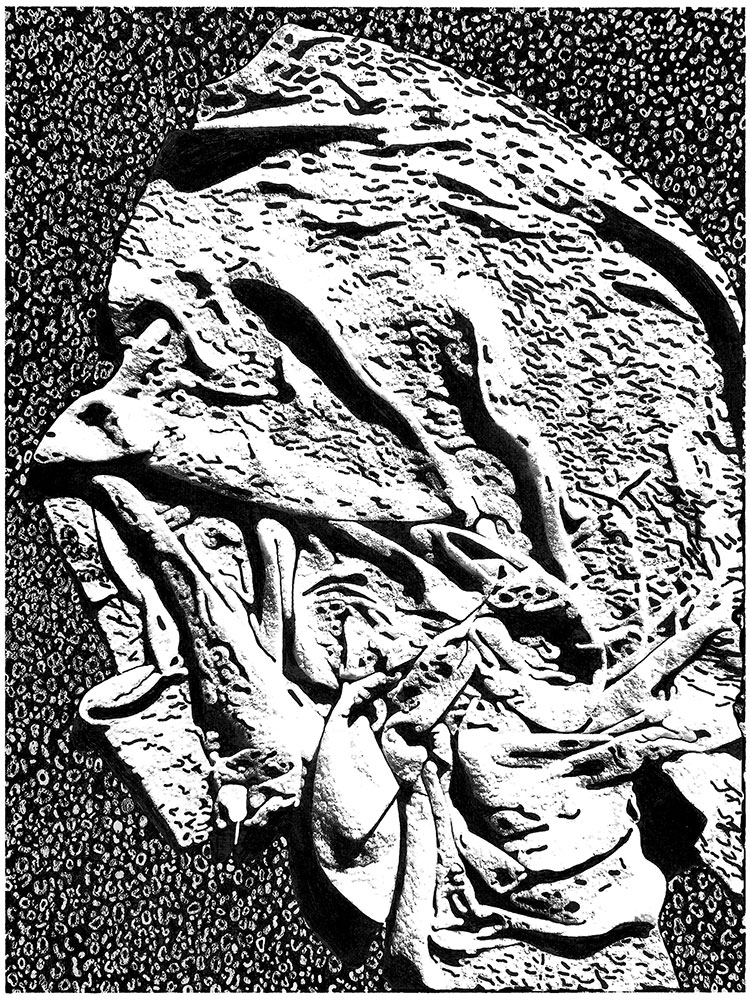
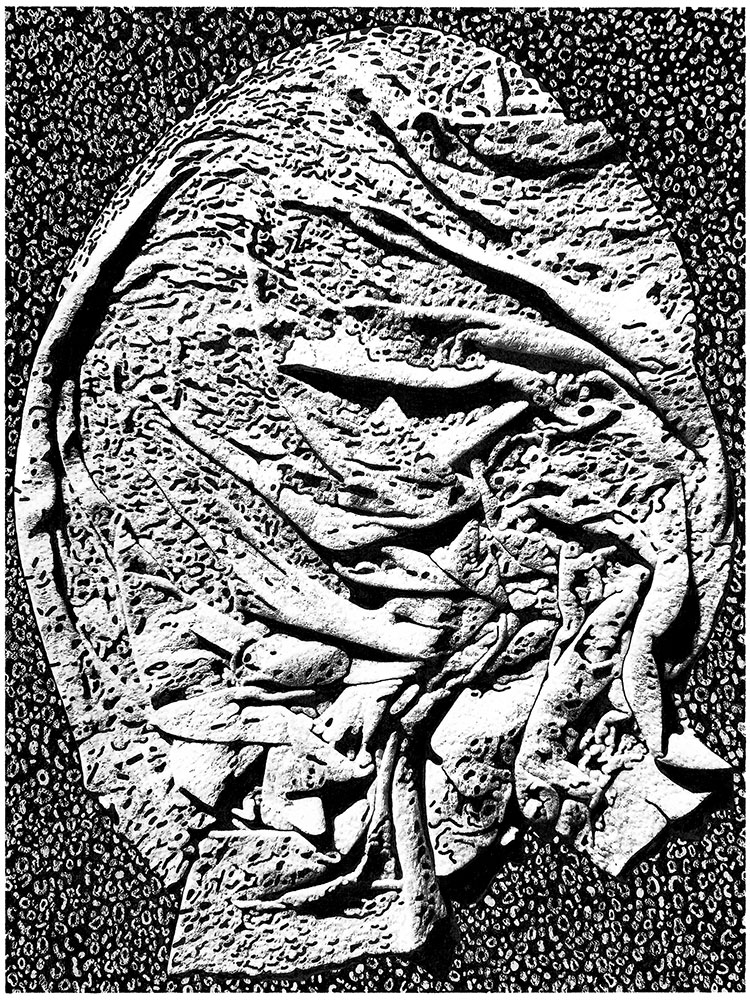
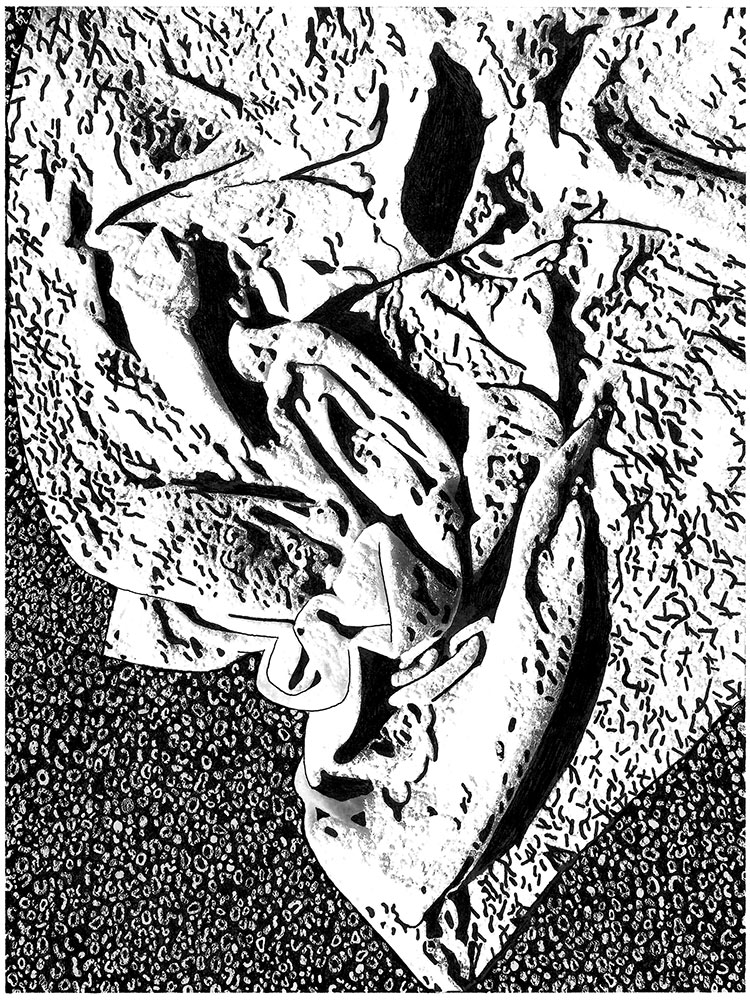
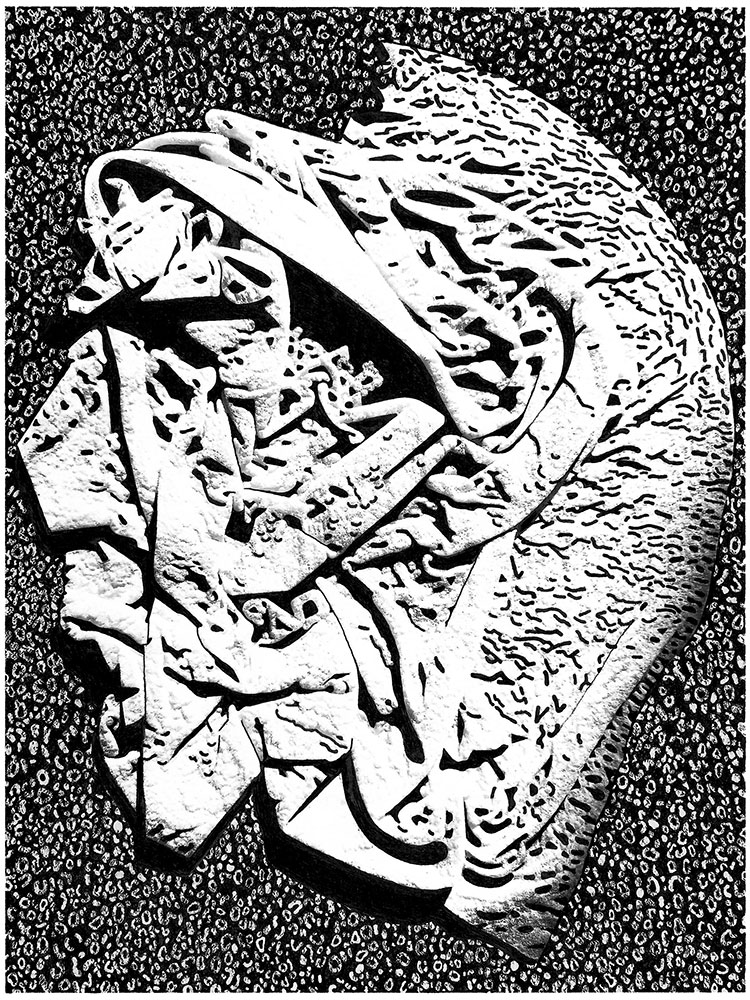
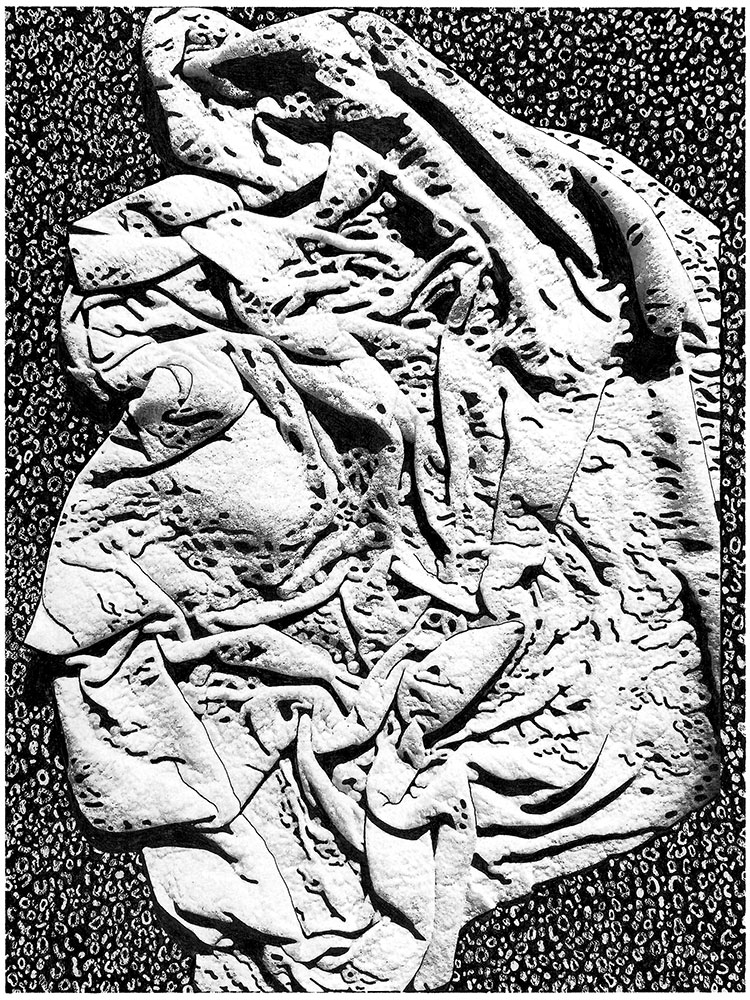
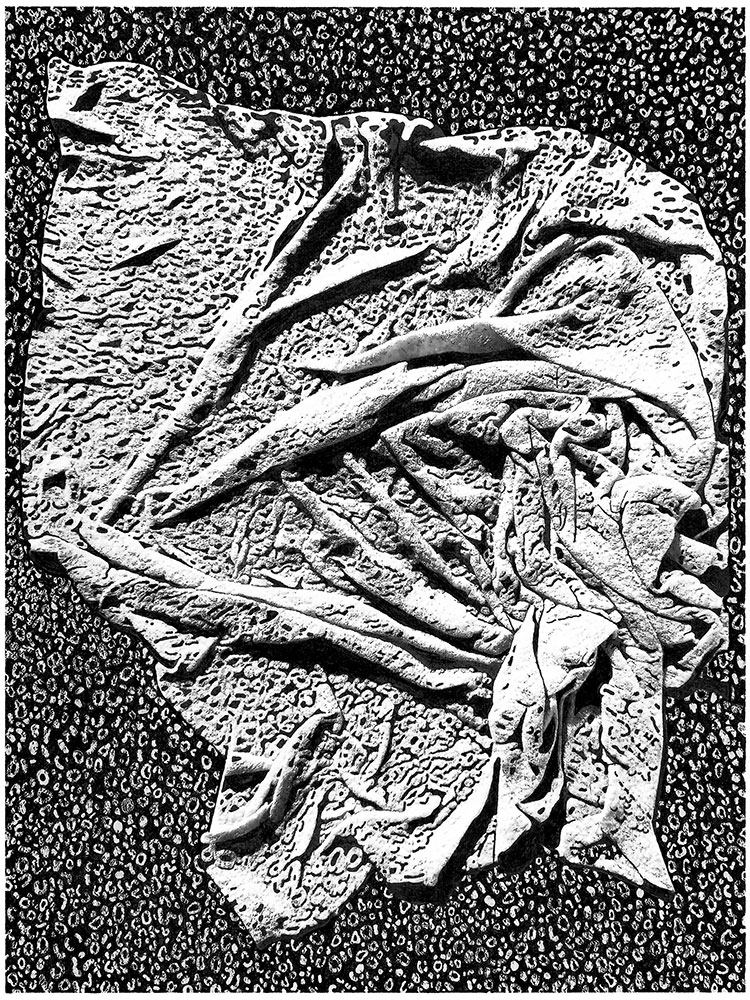
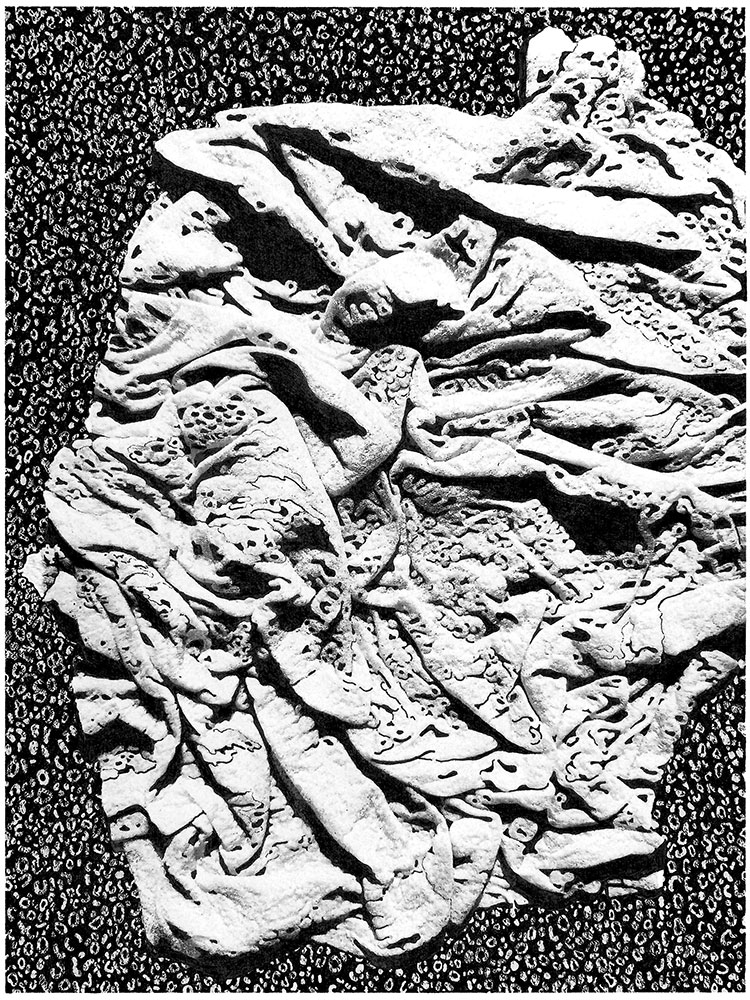
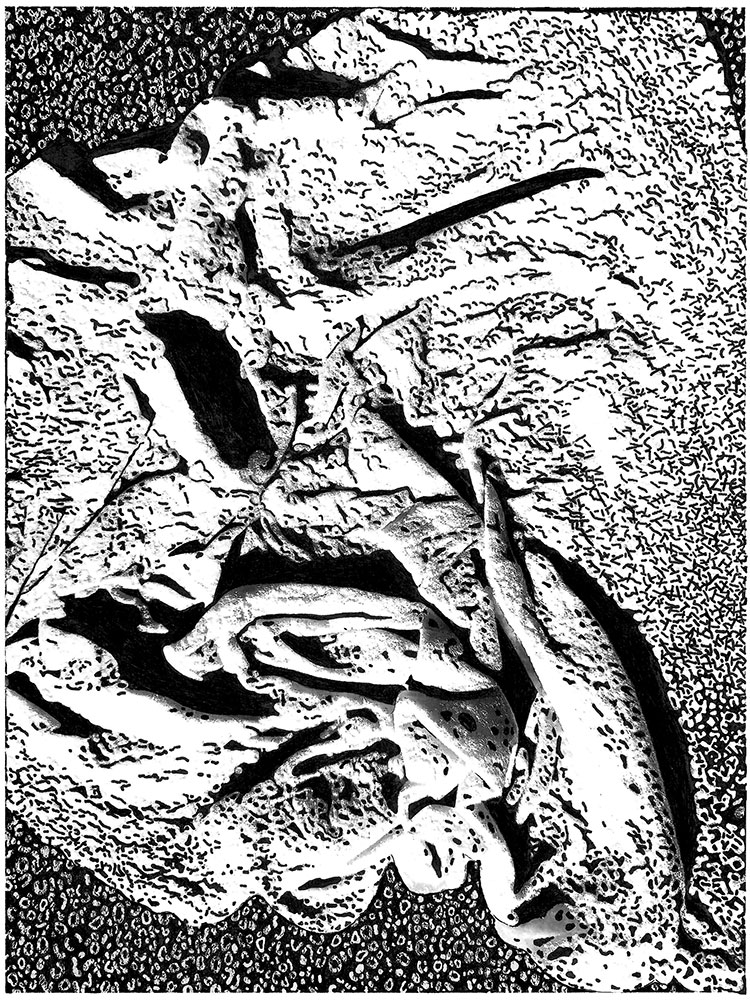
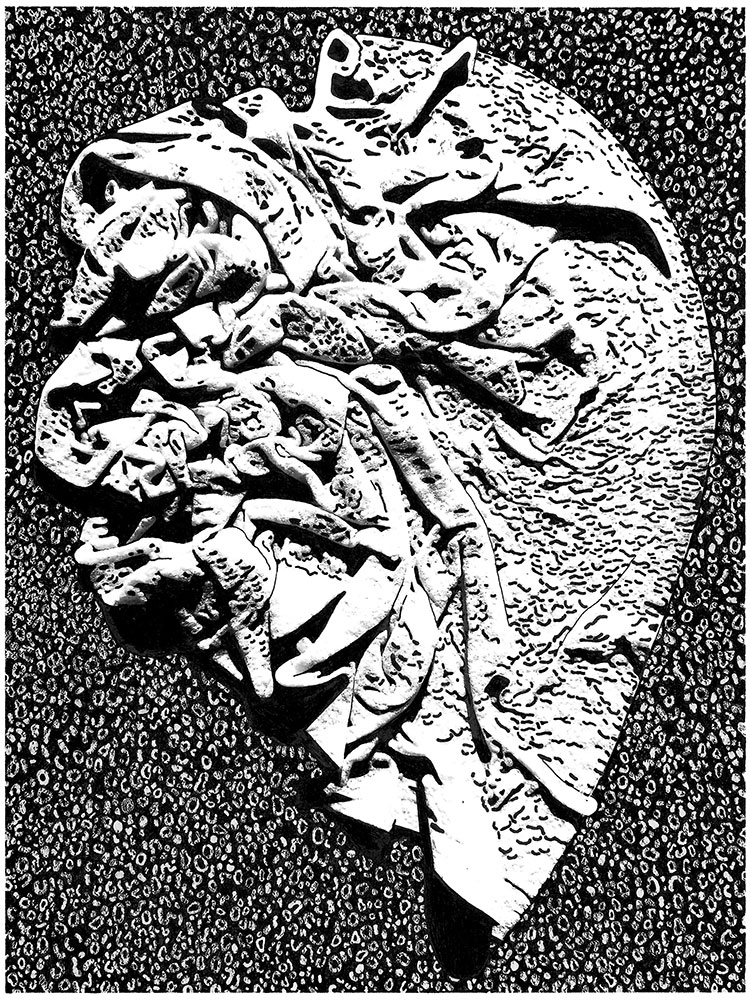
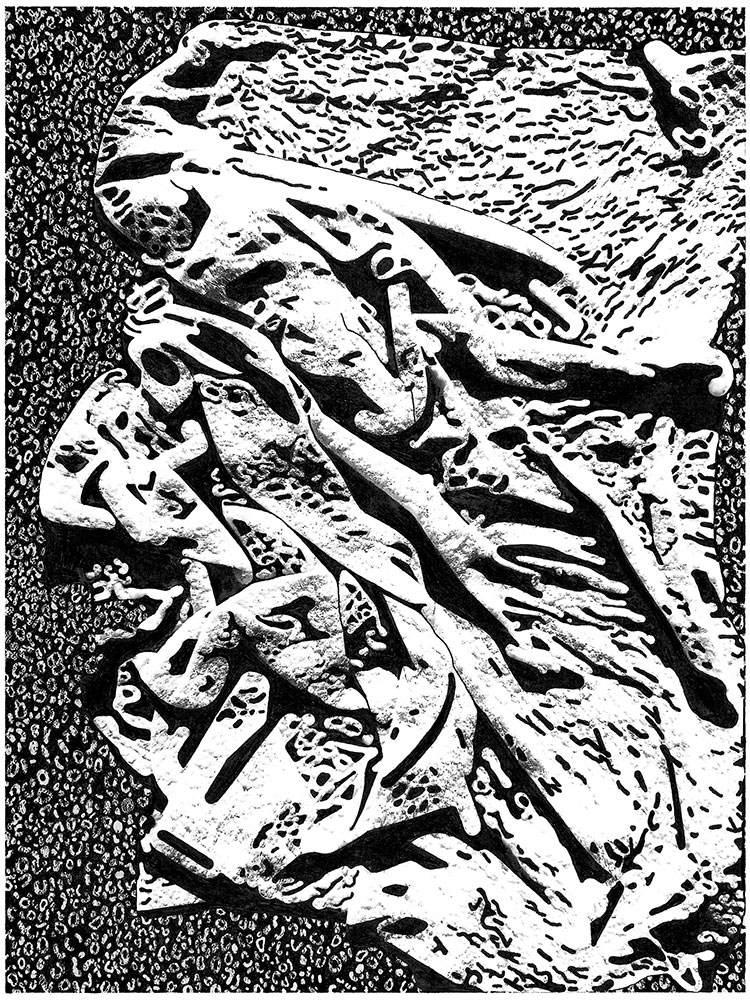
“For they are always the same, yet running through each other…” — this line from Empedocles’ On Nature came to mind when I encountered Győző Sárkány’s latest 20-piece series, Mutation. The term — if we set aside its strict scientific meaning — is commonly used to signify change or transformation. Sárkány’s compositions are marked by a dynamic flow and momentum, evoking this very sense of perpetual change, metamorphosis, and mutation. The powerfully plastic formations seem to emerge before our eyes from tiny particles streaming across the image space. They are nearly always the same, yet by “running through each other,” they take on a new shape in each piece. One of the key features of these compositions is their unique framing — the complete form is not always clearly contained within the image space. At times, shapes seem to move outward, at others, inward, and occasionally they fill the entire surface. In every case, we remain uncertain of their final boundaries, while still sensing the continuous motion and transformation.
While his previous two series were set against a homogeneous black background, in Mutation the separation between background and form almost completely loses its significance. The play of light and shadow in the drawings creates virtuoso, almost 3D-like textures on the flat surface. With the dissolution of foreground and background, we witness a horror vacui, as fleeting states become fixed within the matrix. Some of the shapes in the Mutation series resemble masks, reconnecting with one of the recurring themes in Sárkány’s oeuvre. For Győző Sárkány, mutation represents the infinite and at the same time unpredictable mechanism of evolution. Through his drawings, we too can witness how the minute elements of existence constantly cluster, split, reshape, and fall back into the eternal flow.
D. Udvary Ildikó művészettörténész