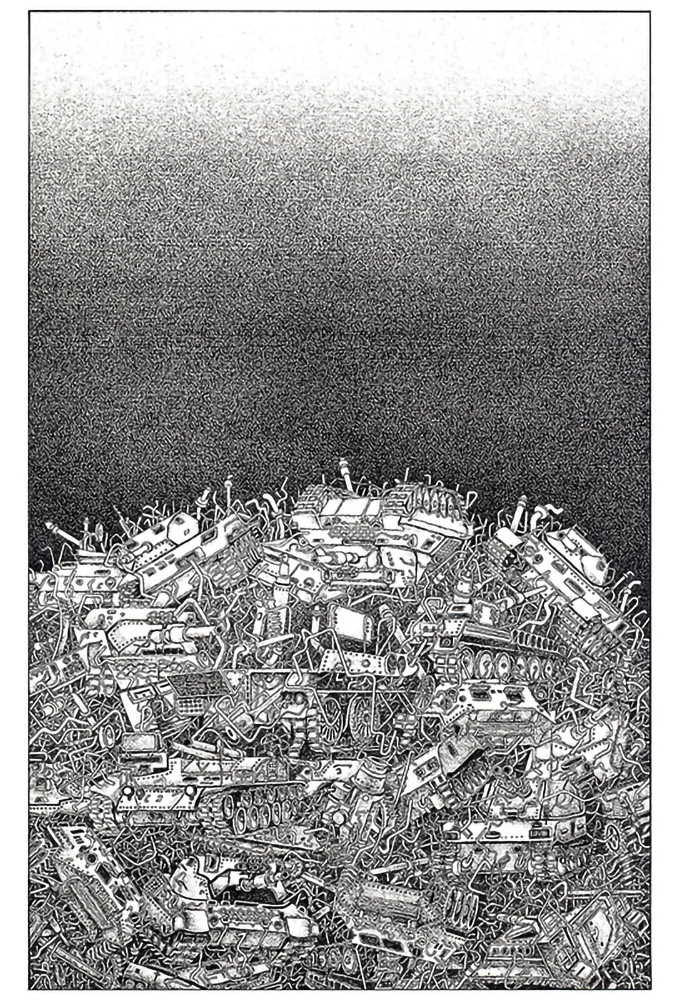
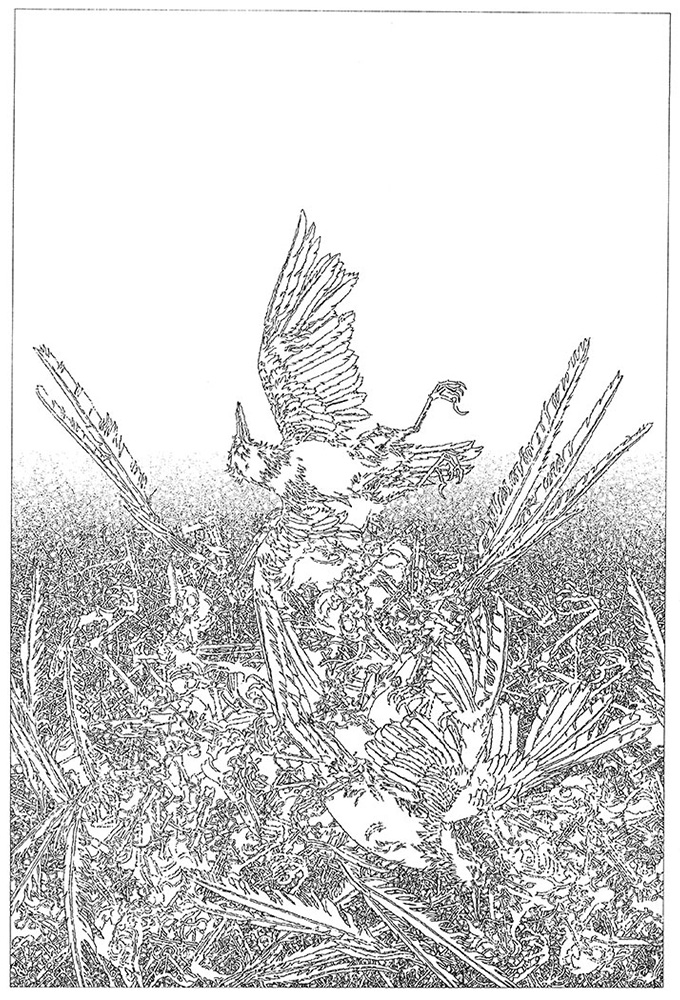
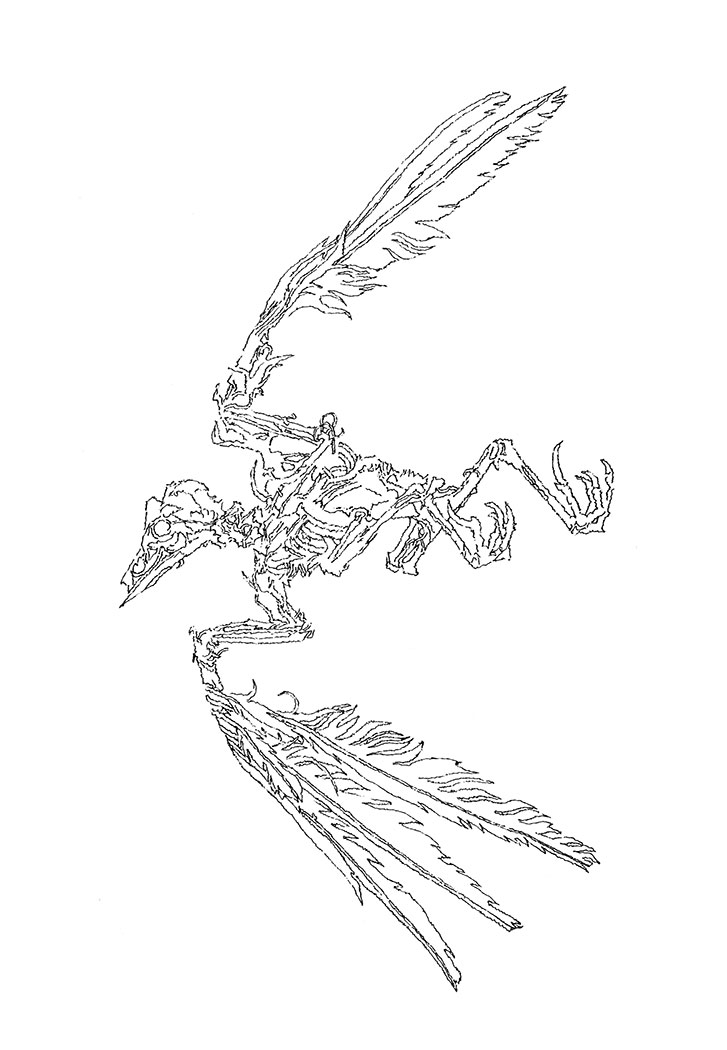
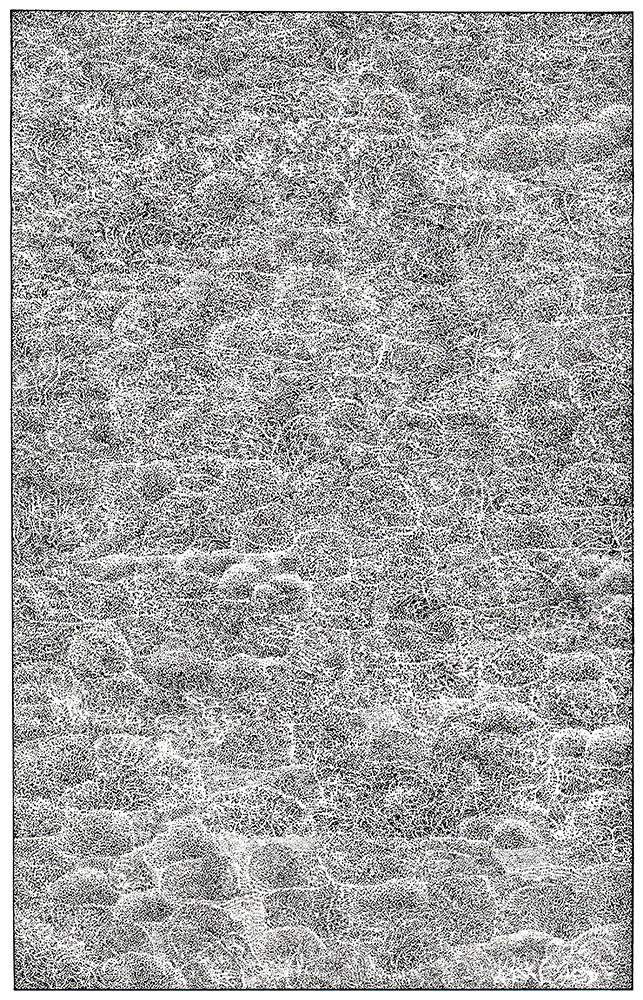
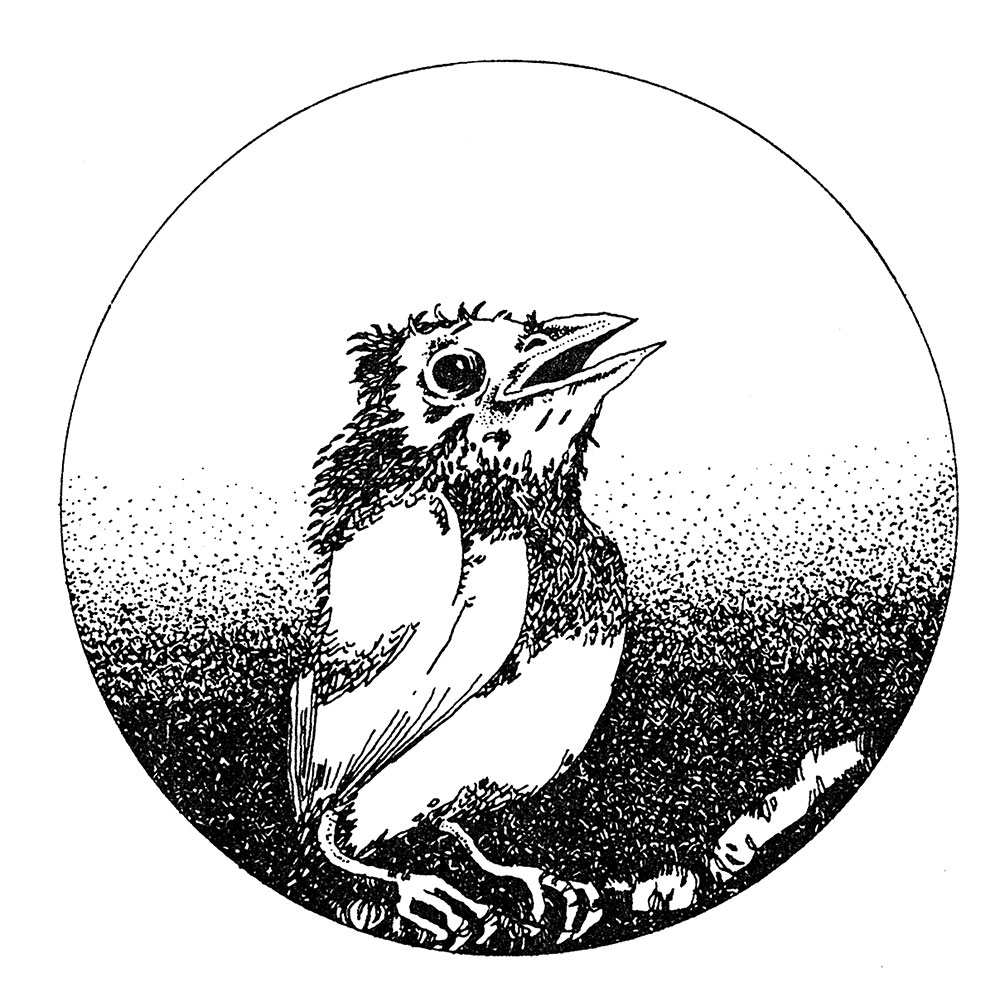
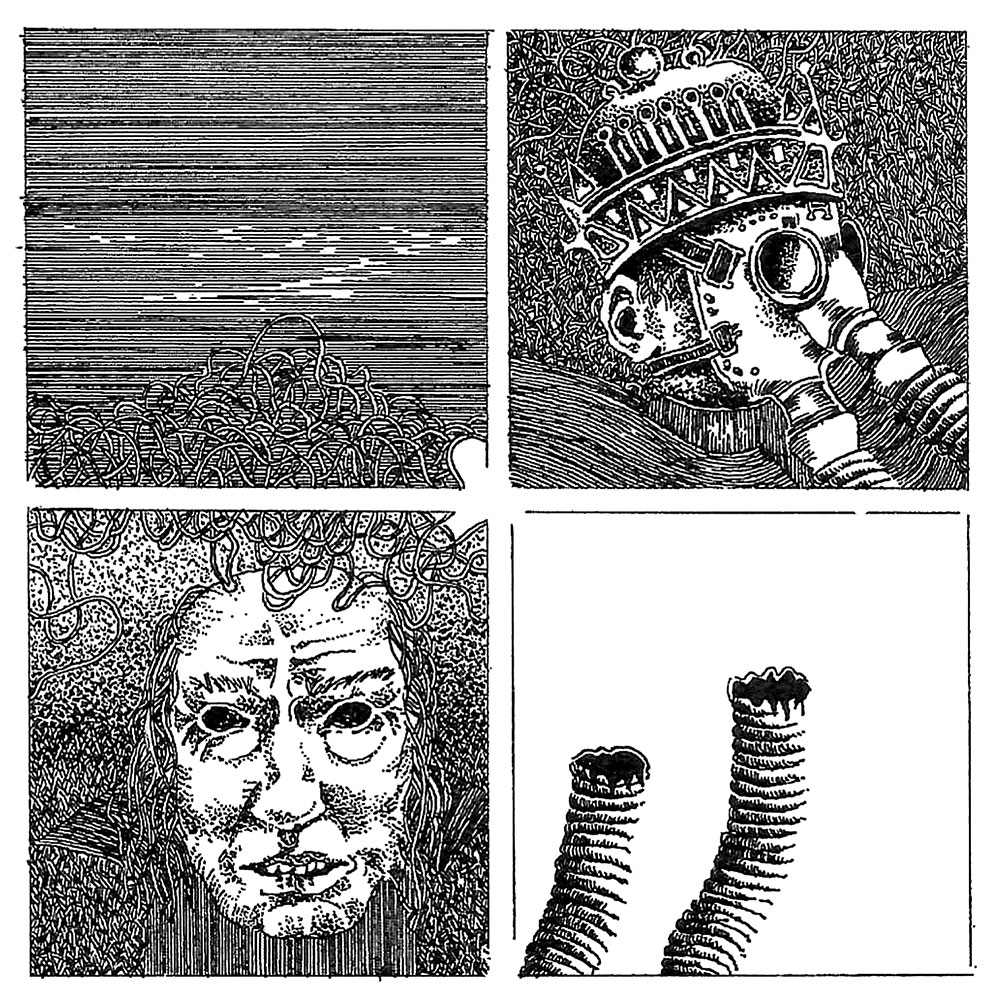
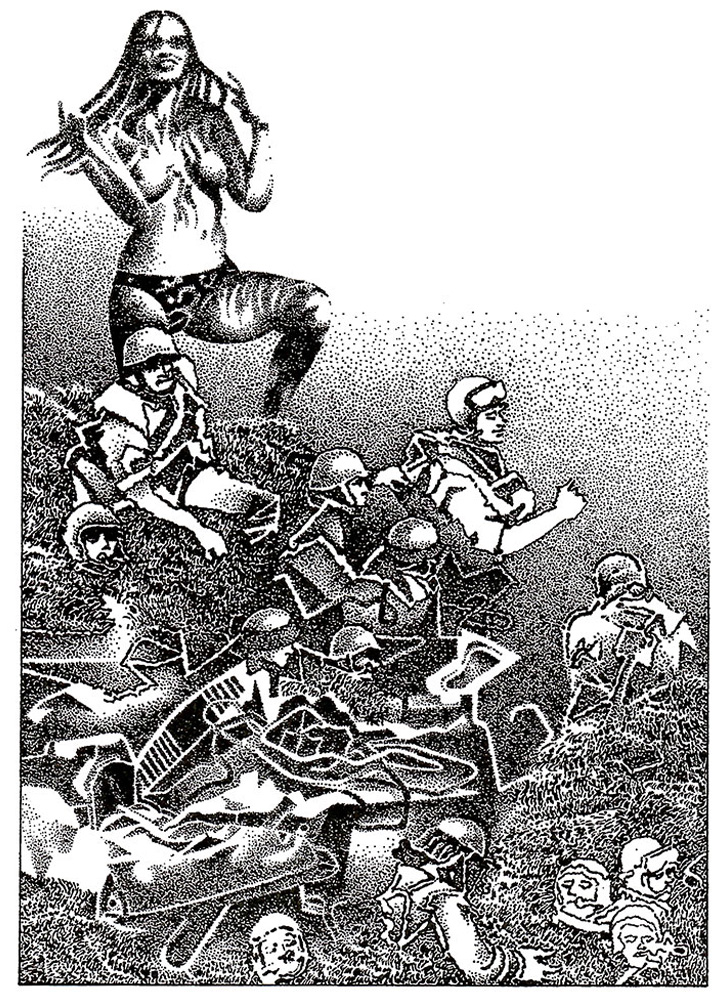
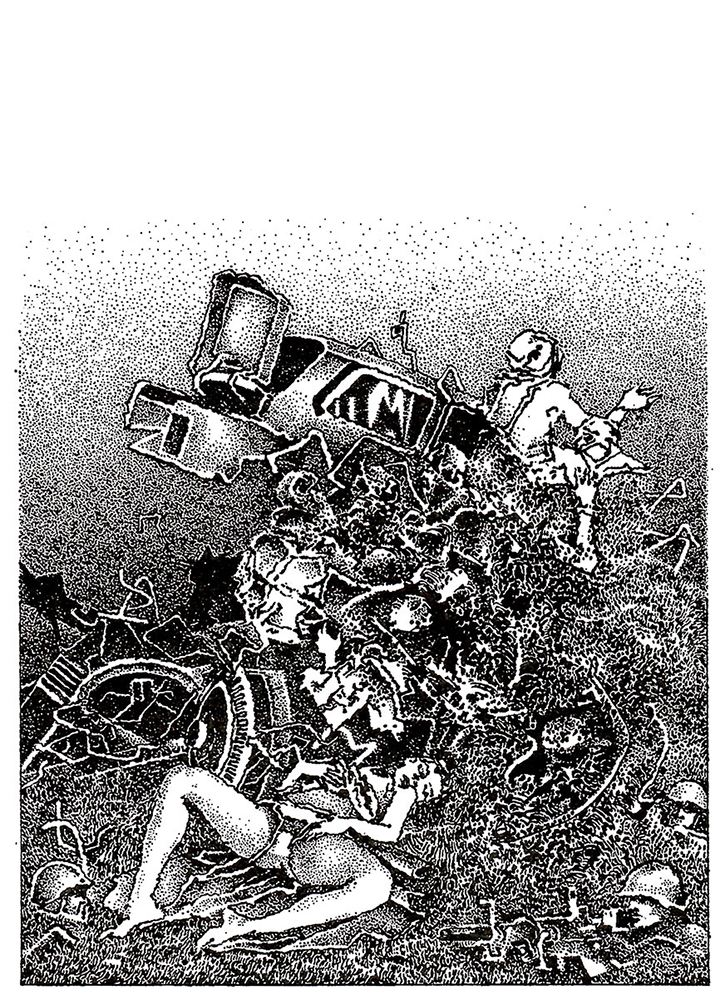
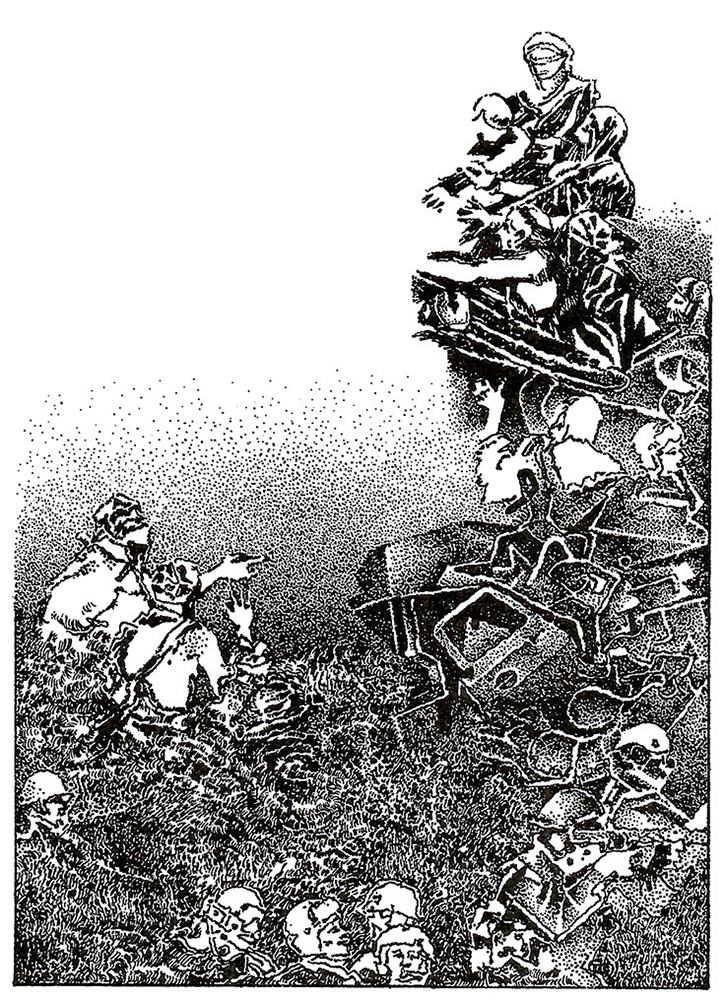
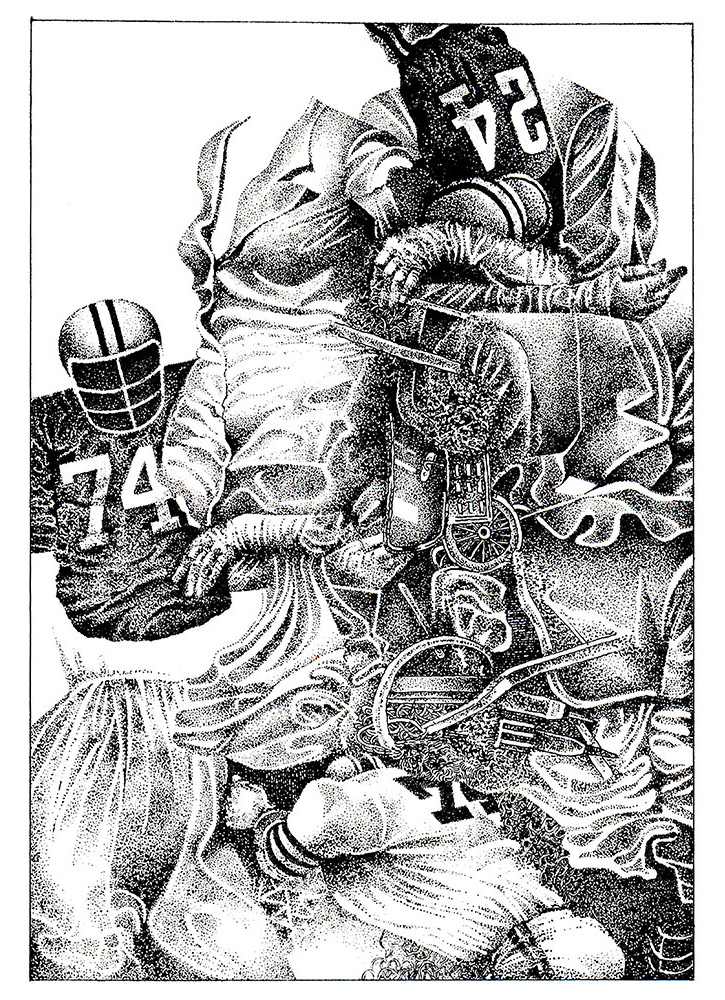
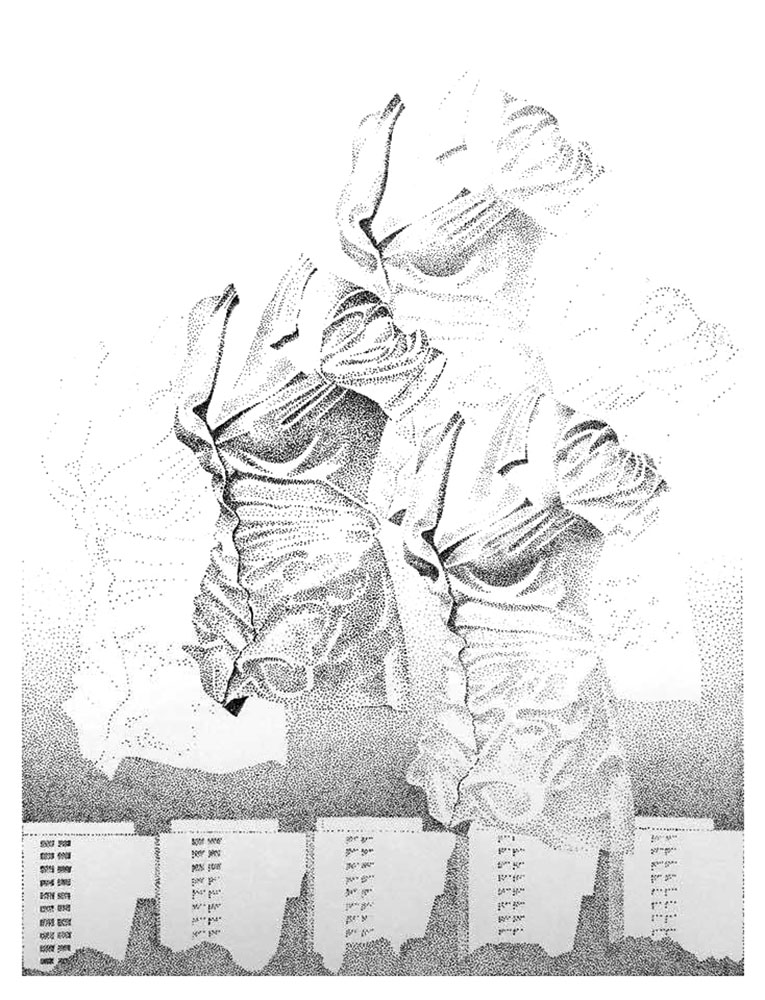
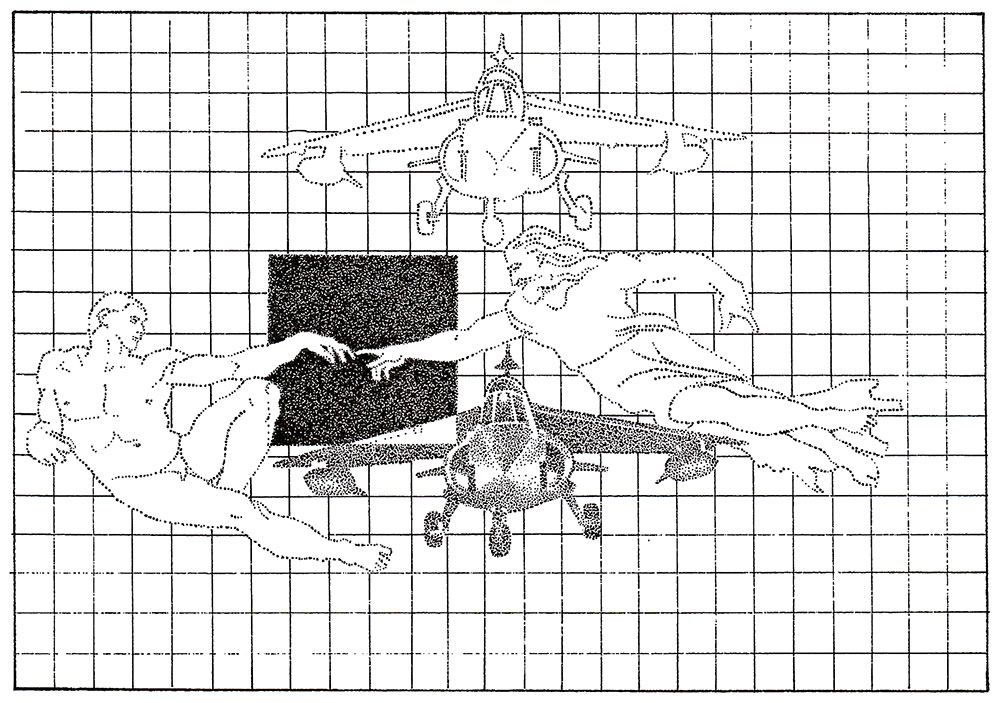
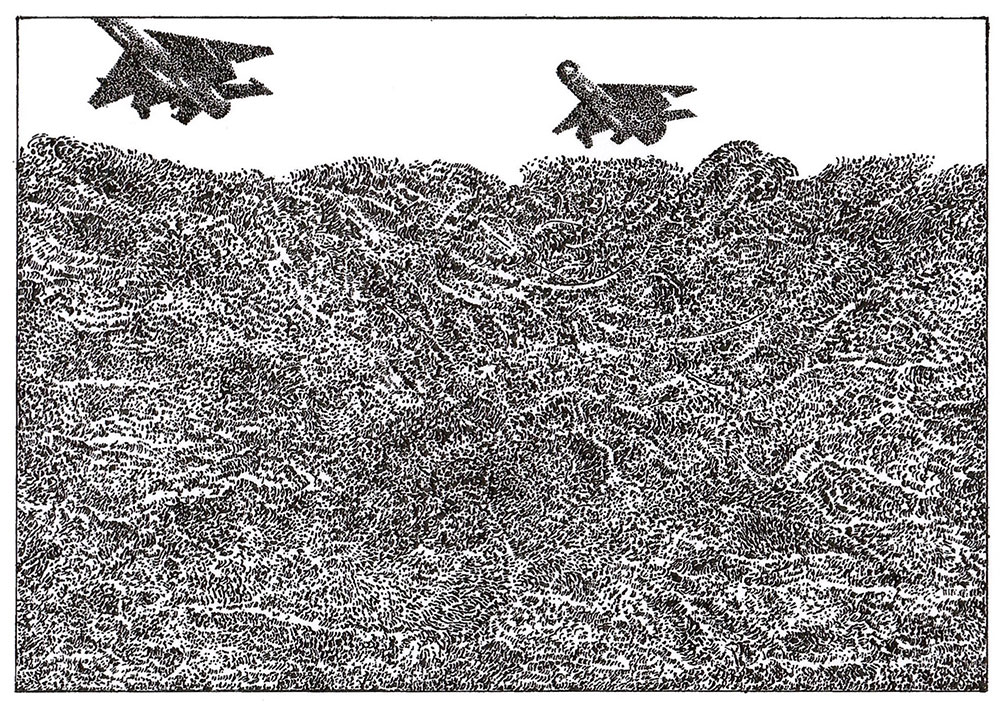
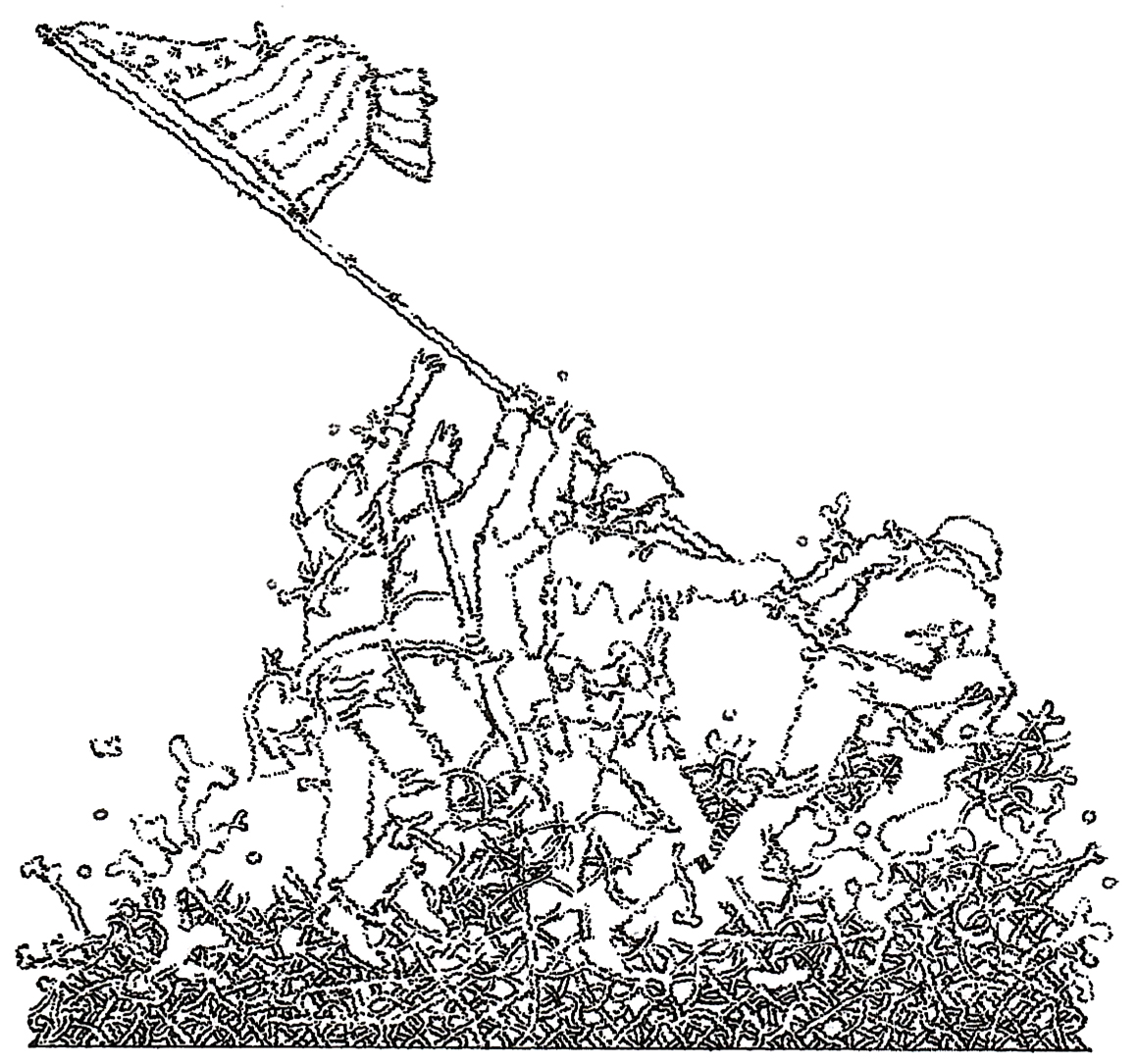
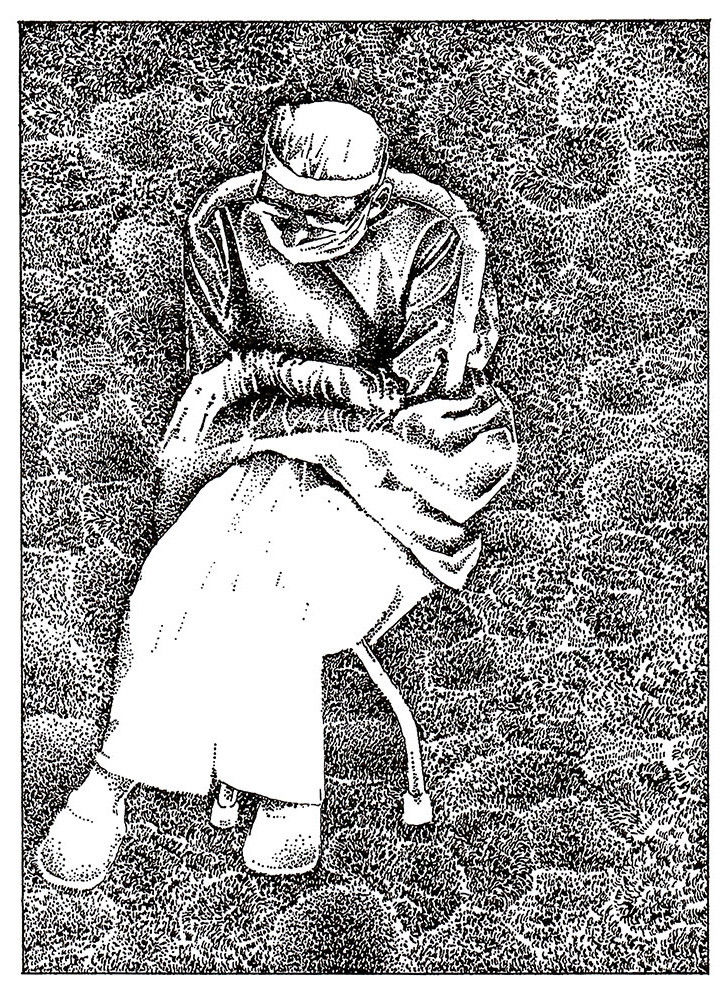
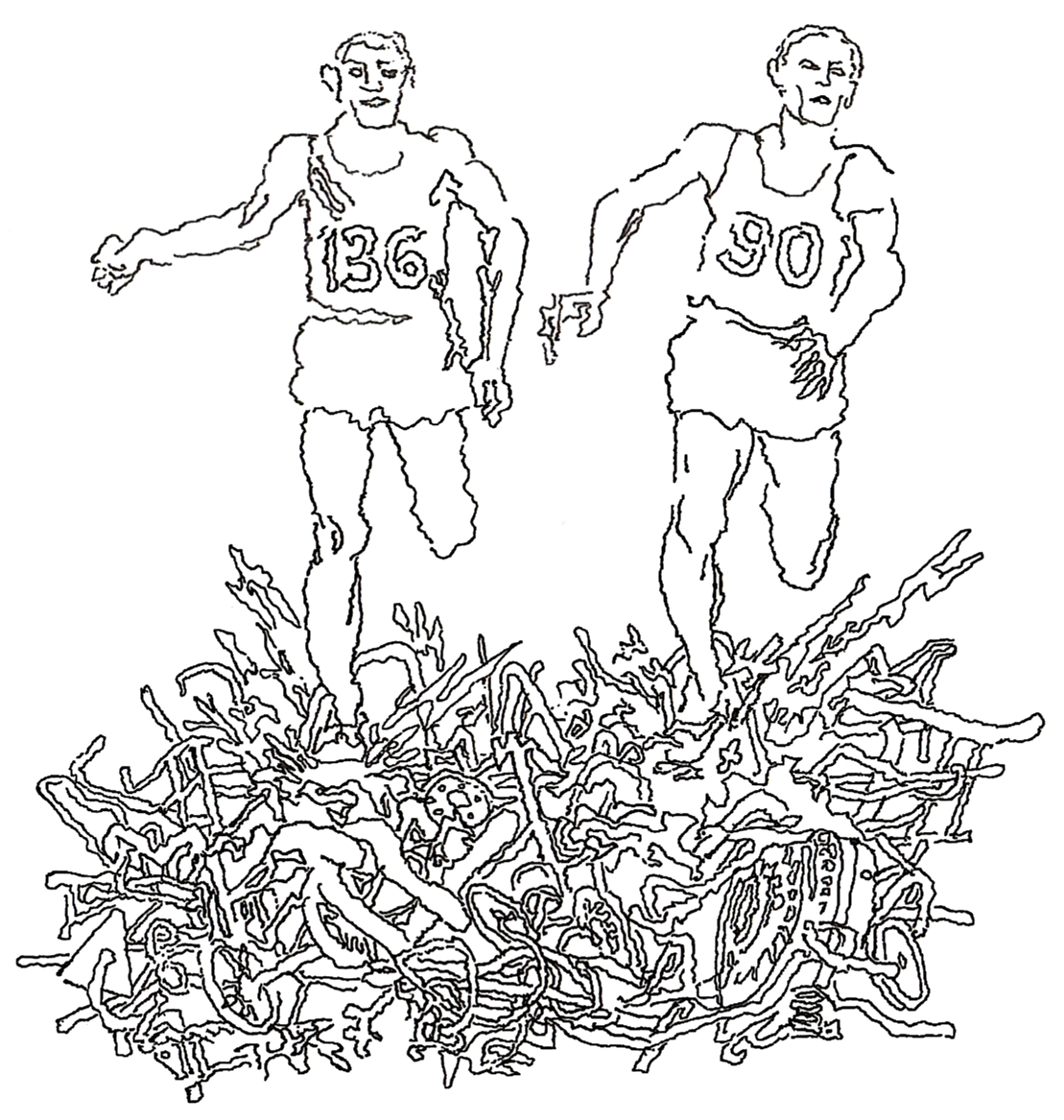
Győző Sárkány tried to learn everything from surrealism; he tried to ‚make’ literature with the means of graphic art, incorporating the outstandingly well-known figures and motifs from classical works of art into his works. However, his oeuvre and the results of his artistic career so far carry the same imagery and pictorial aesthetics in an astonishing, almost obsessive way. Quoted freely, he says: “I am interested in the studies of factures, that is, in the study of the working on surfaces”. And it is indeed the facture (the worked surface) of his graphics that provides their warp and woof. For him, the harmony of colours has no importance, and his colour works are almost a complete denial (almost a contempt) of the valeur (colour values). The decorative lines are often ‚broken’ in his works.
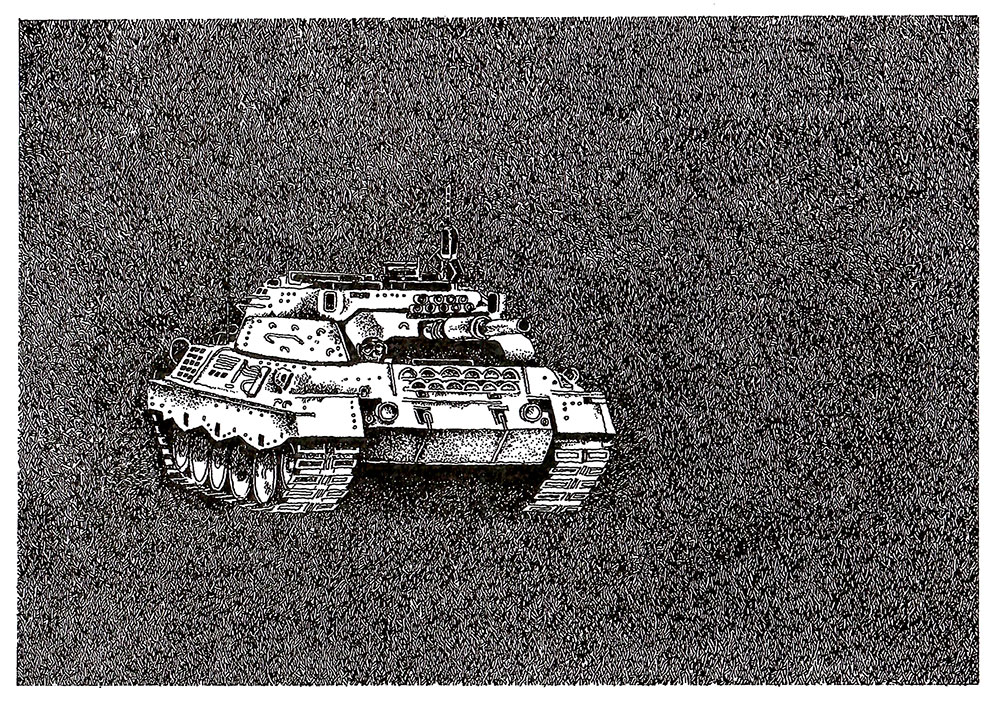
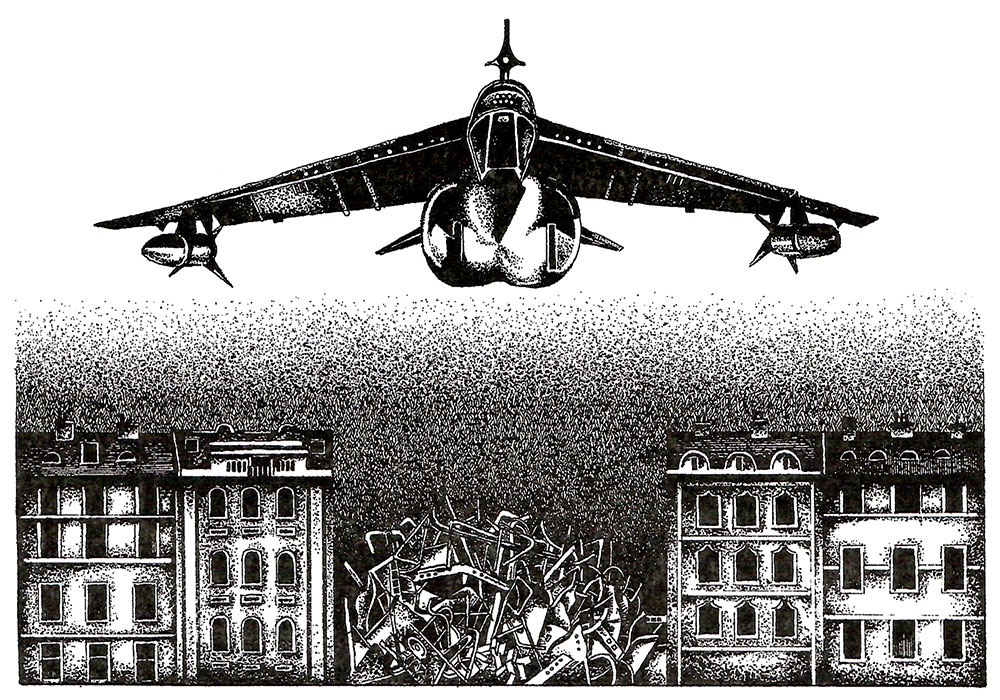
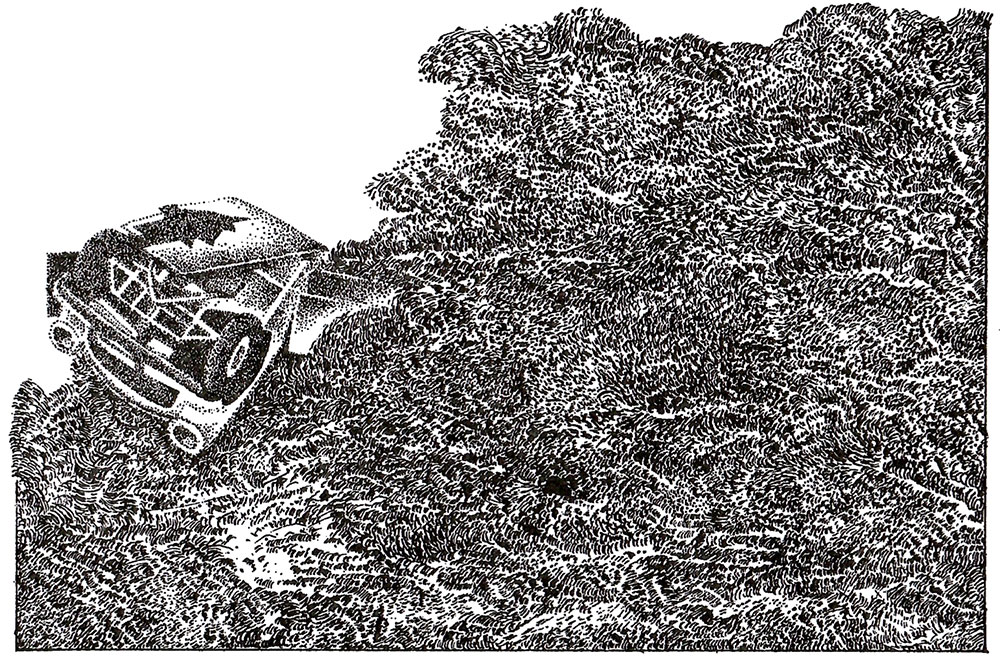
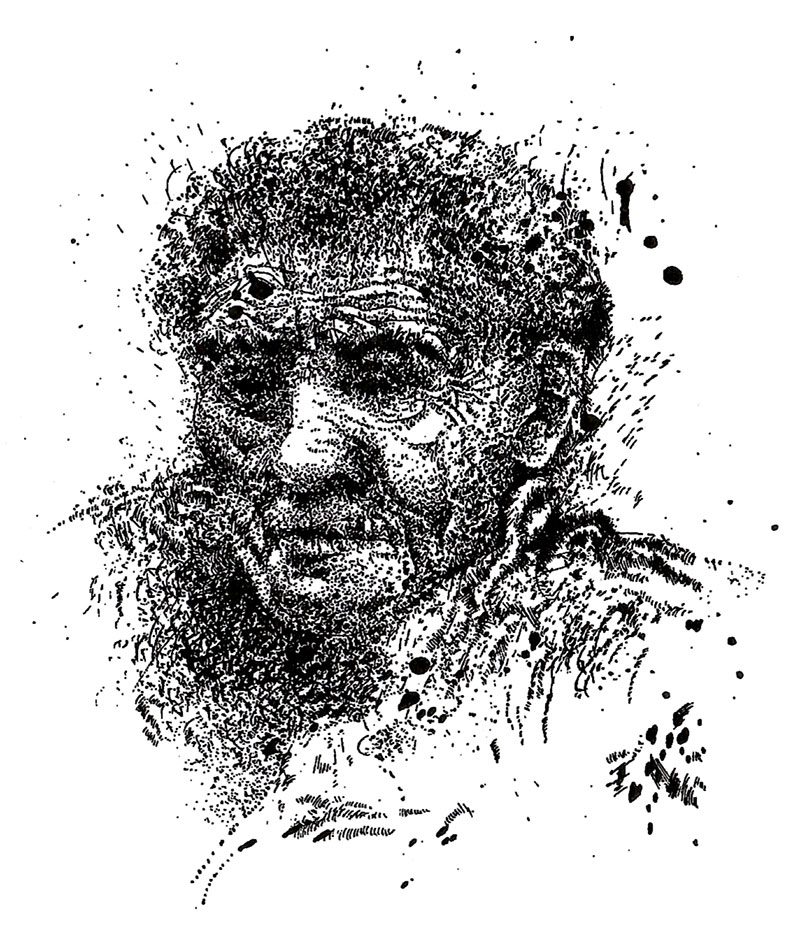
His drawings, applied on different materials, use various types of mixed media, filling, grooving and ploughing the surface with images, just like his ink drawings, where everything is more important than the stronger or weaker strokes of the pen, its faster or slower momentum, its airier, drier or denser ‘strokes’. The result is the only thing that counts: the surface full of ‘dirt’, the densely woven relationships of black and white spots and lines, the intricate organization of the facture that is complicated and difficult to understand, the almost relief-like rises and falls, the almost animal-like trembling, vibration, ‘breathing’ of the surface.
This art is naturalistic: trees, bushes, vegetation, houses, uniforms, armed men, figures appear on it and through it, but somehow this largely material world exists only by its surface – by its matte gloss, its more porous planes, its brighter and lighter fabric, its fluffy-tangled-cobwebbed exterior, and the indescribable complexity of the veining of its leaves touching at so many angles. The artist thus becomes an eye of the world (in the Goethean sense of the word), a specialist of the spectacle, a ‘scientist’ of its ripples, its delicate structure and, of course – providing the source of the shyness, tenderness and delicacy of his lyricism – a lover.
Kornél Vajda librarian, writer