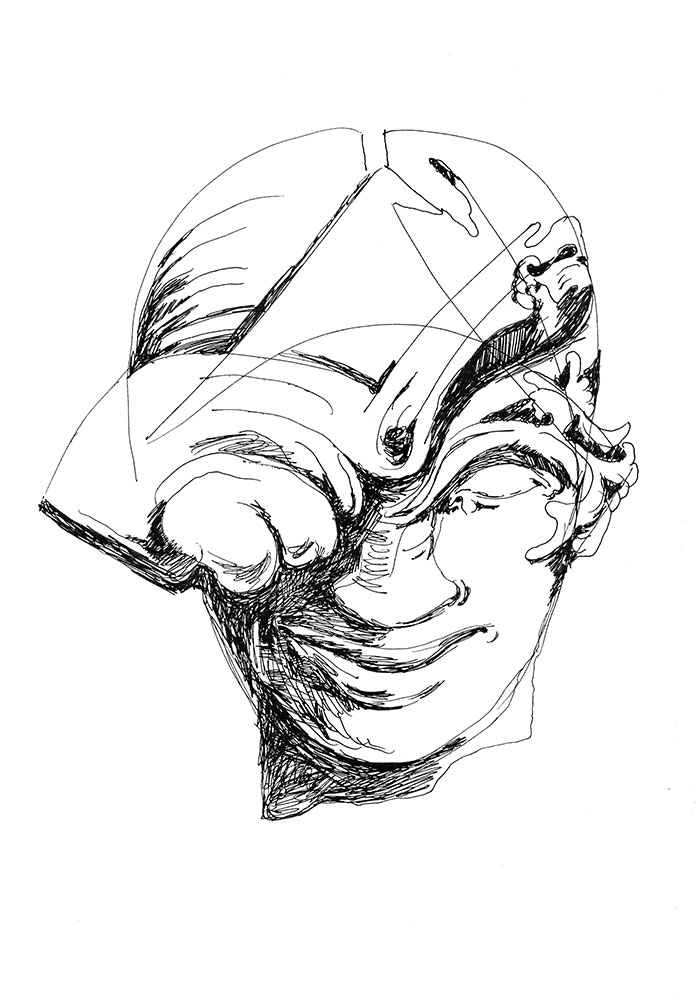
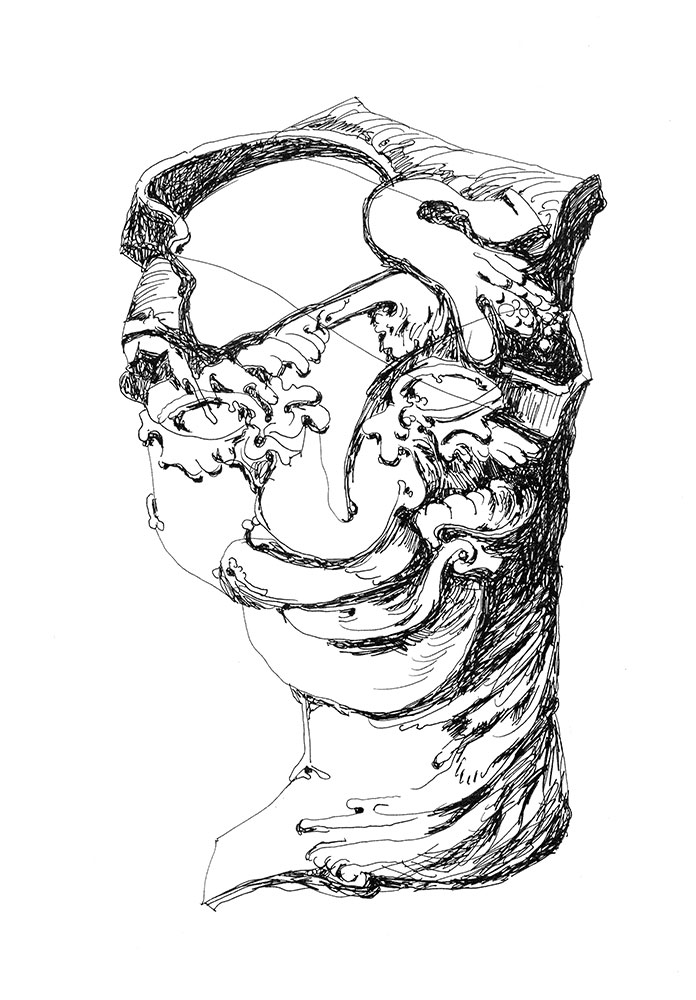
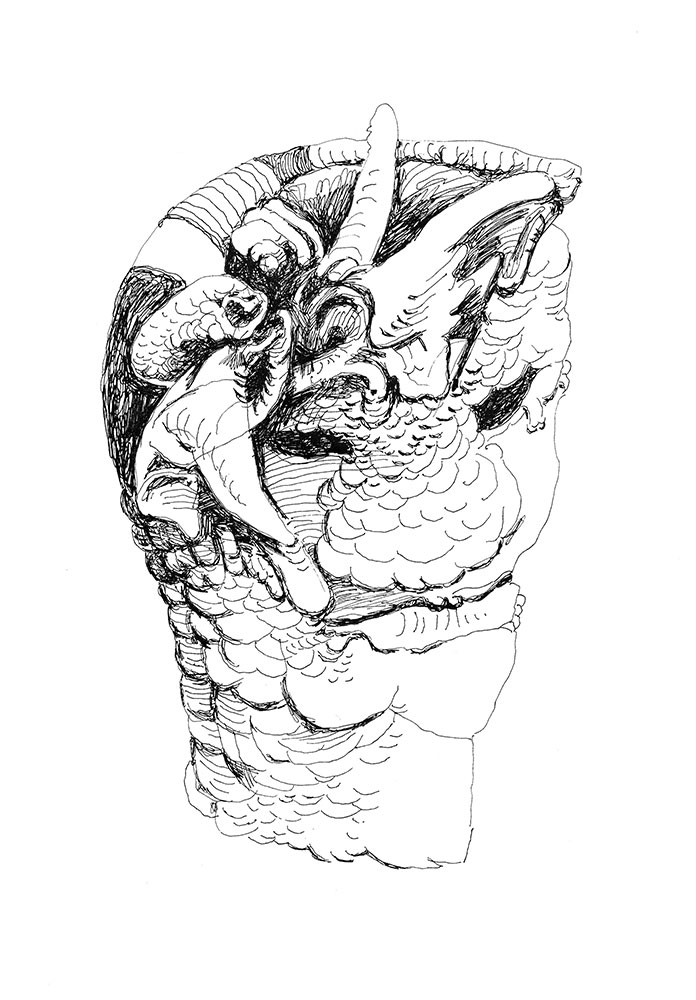
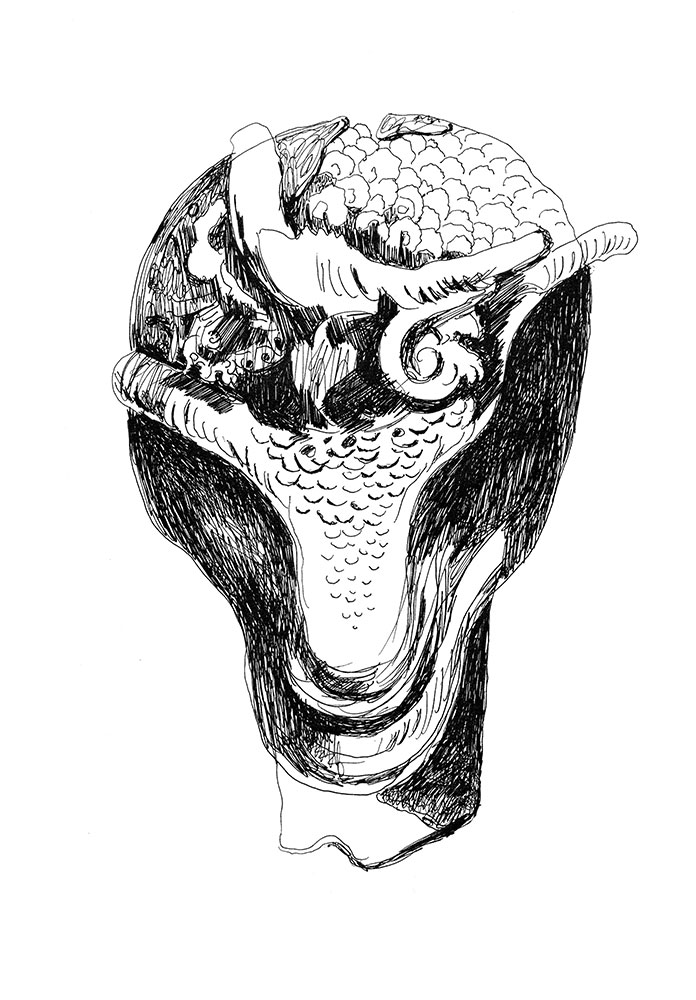
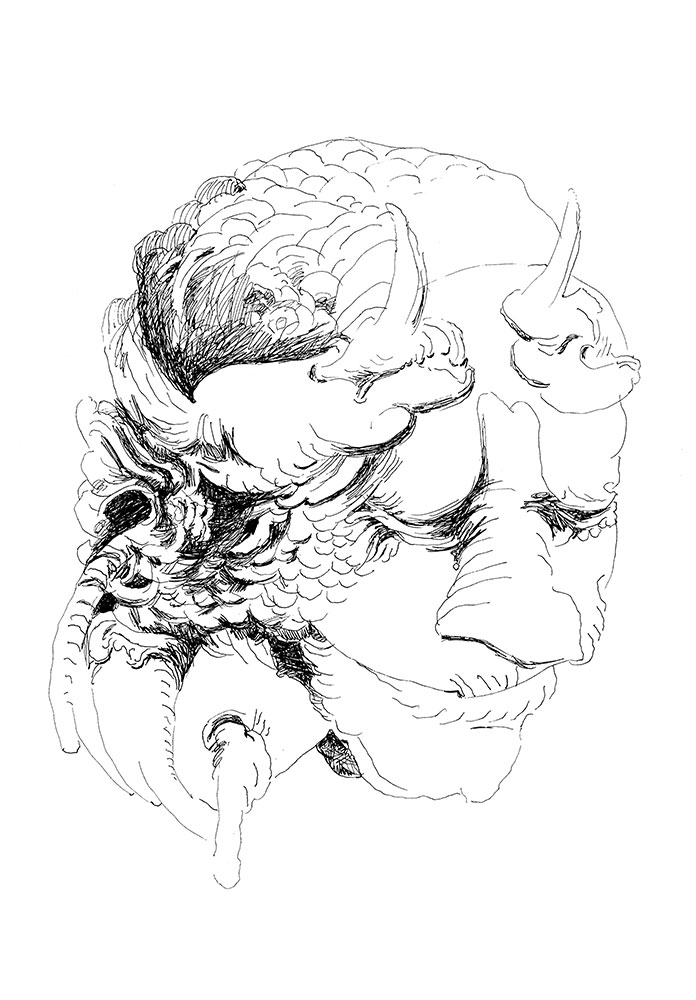
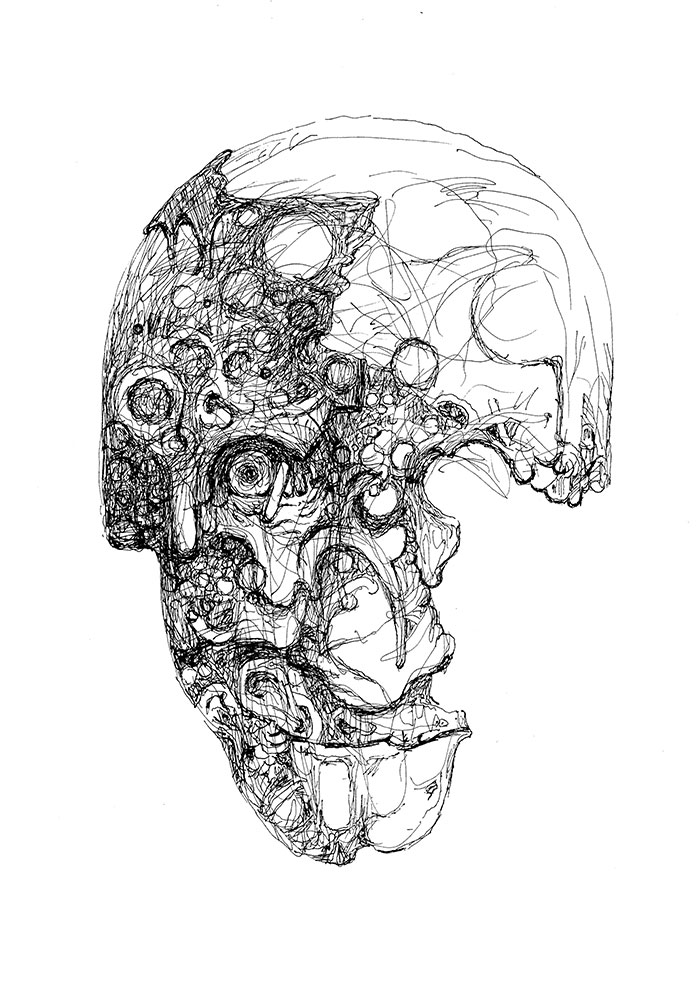
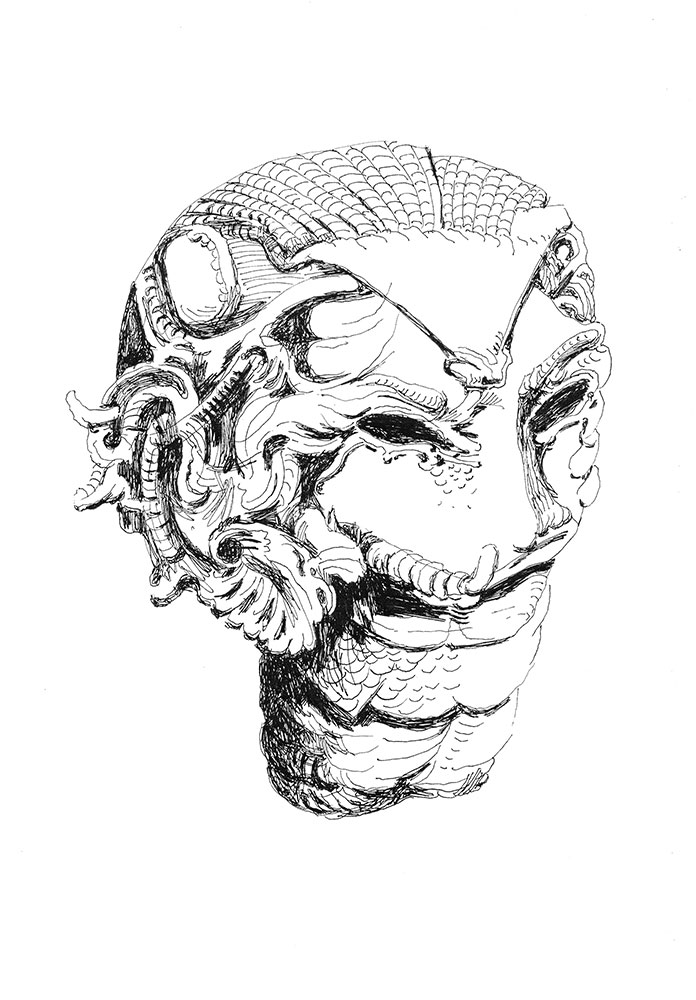
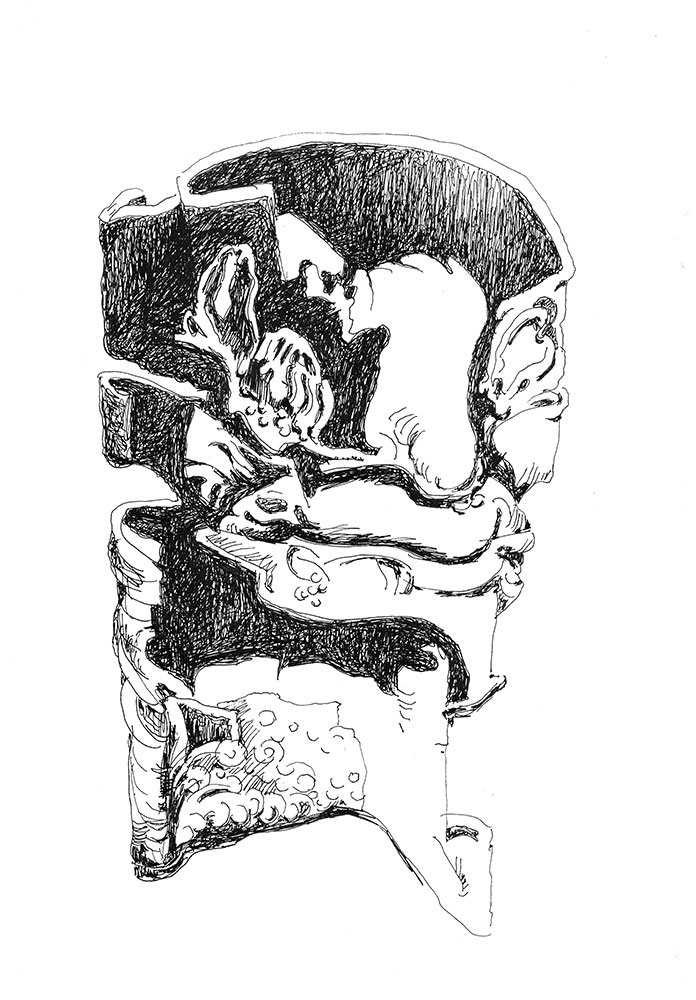
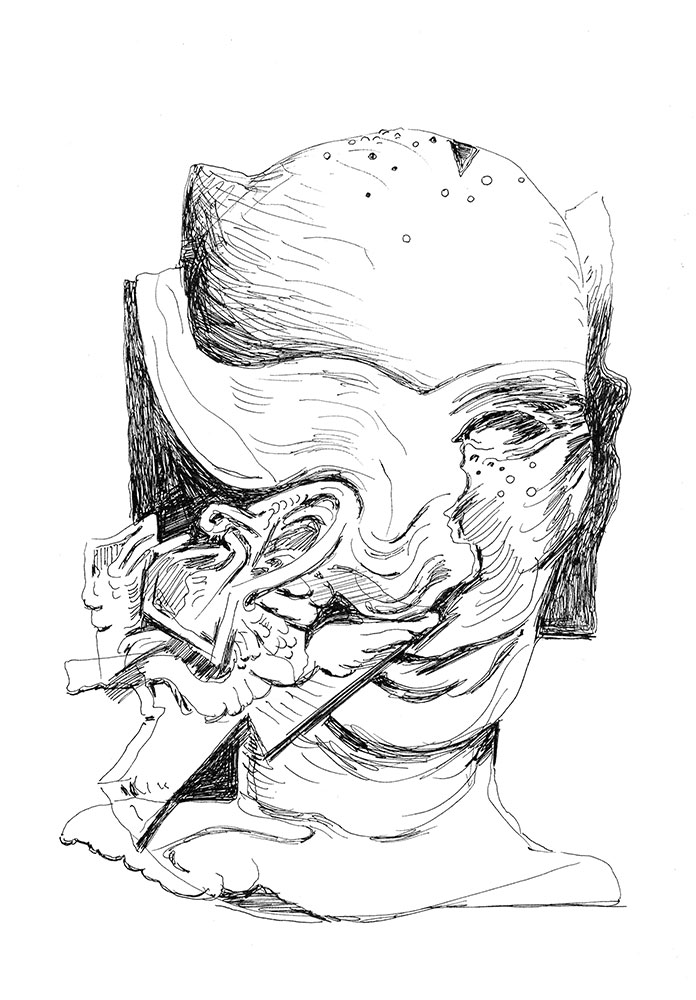
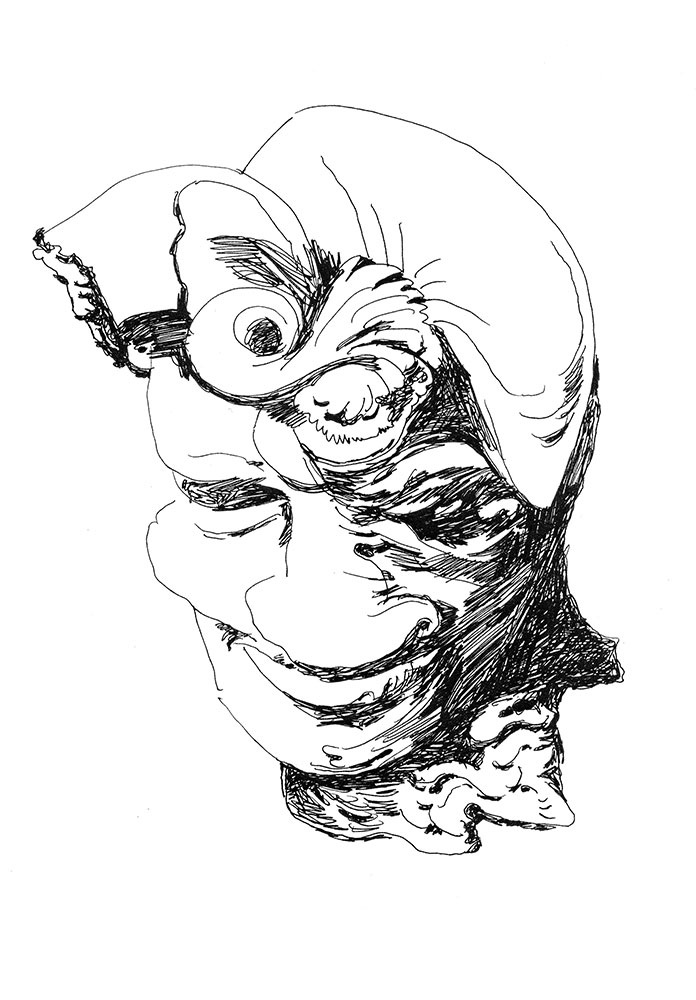
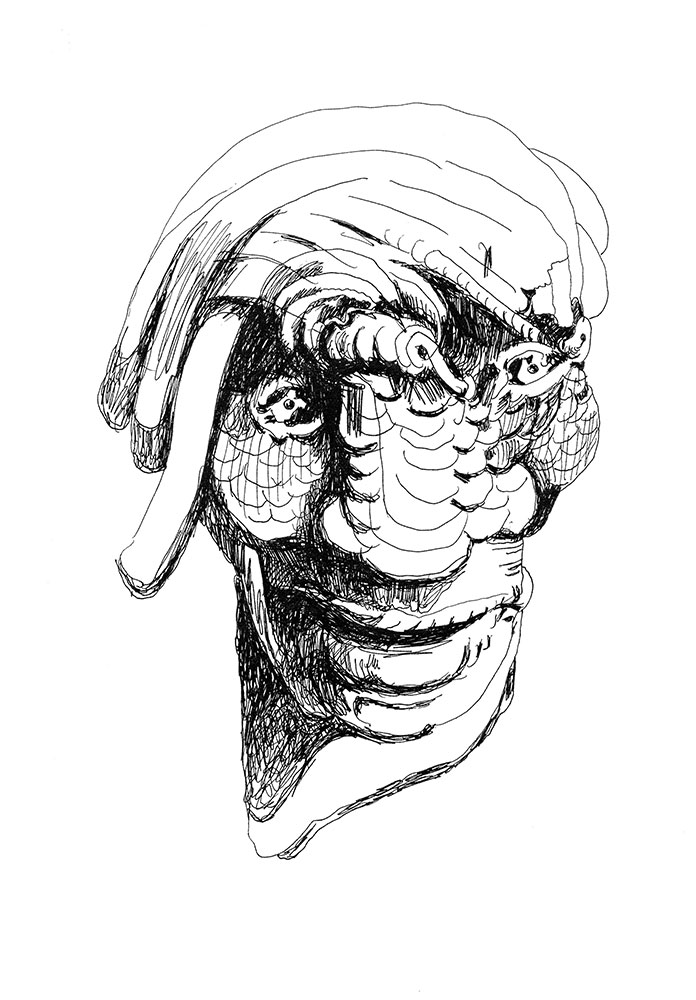
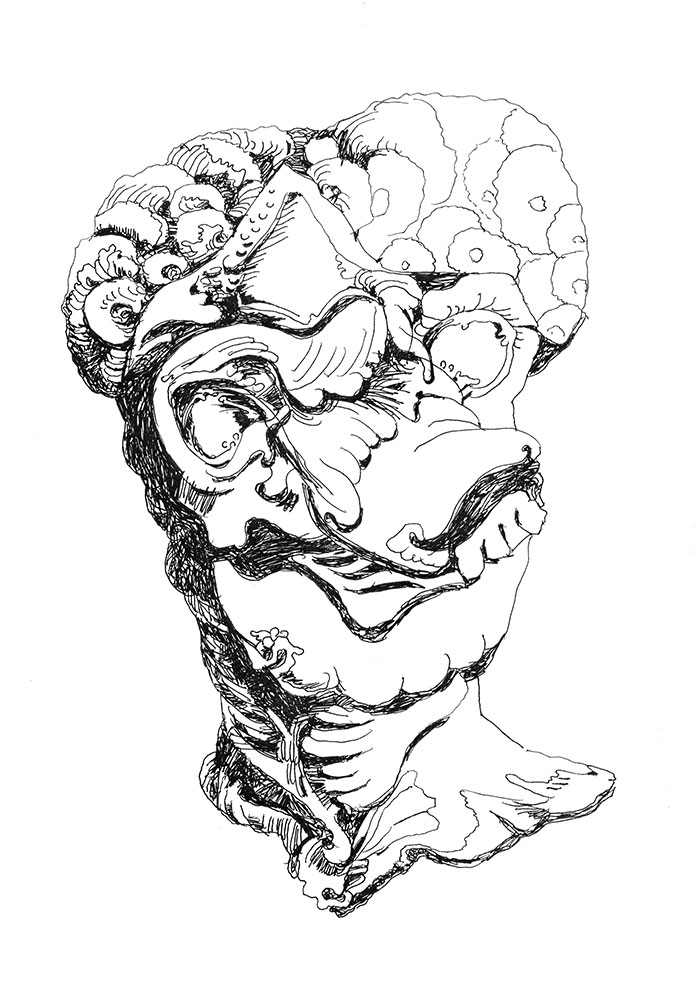
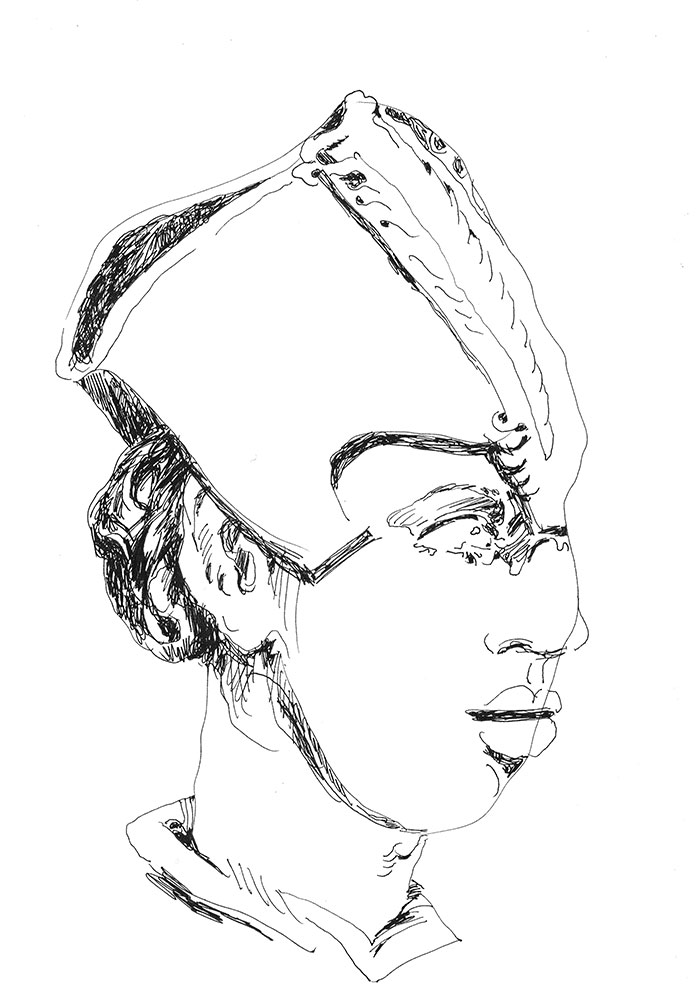
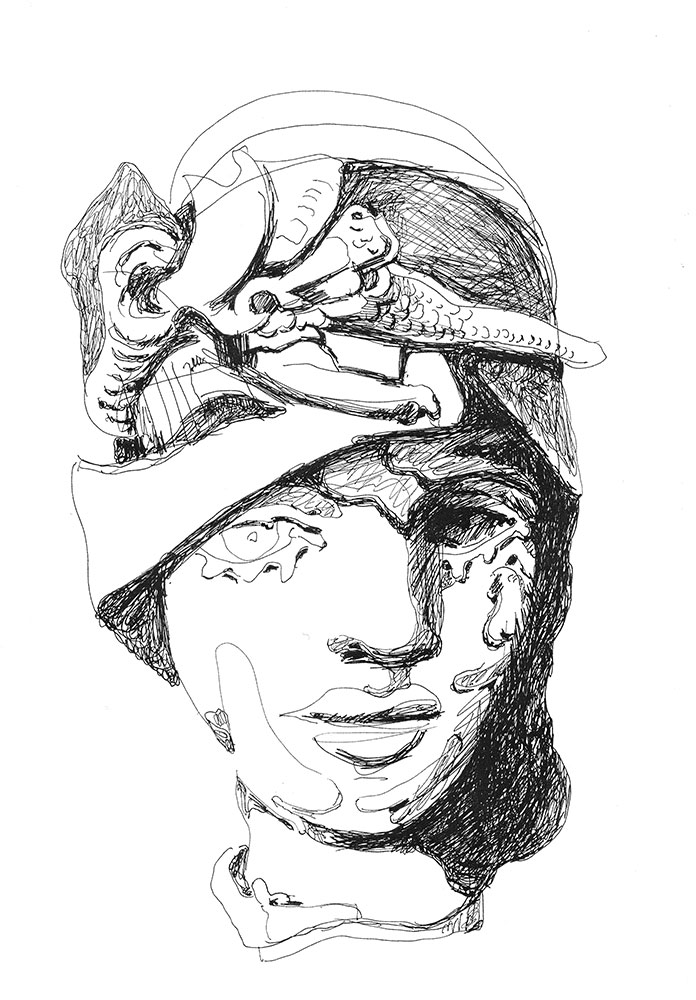
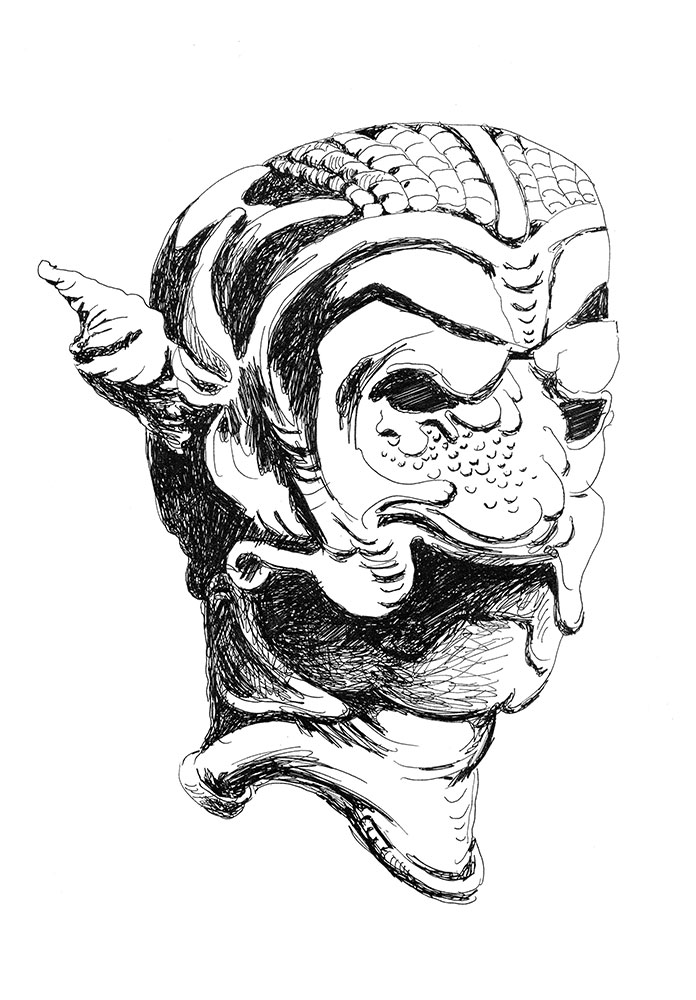
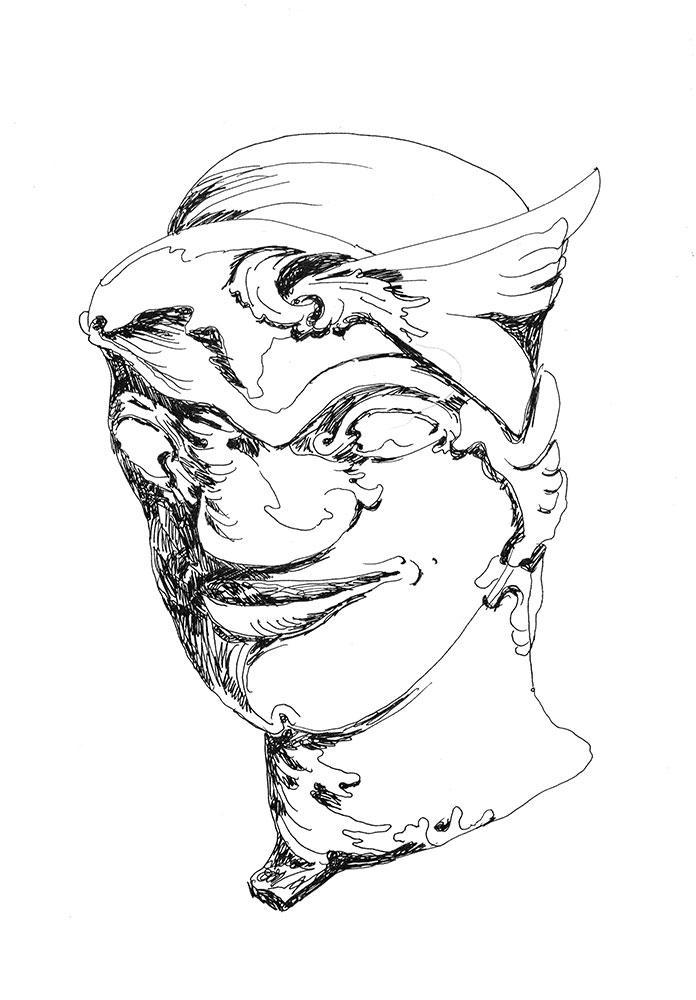
In Győző Sárkány’s Faces we witness the magic of line. The unique transformations of the faces, created from the momentary impressions of the artist’s state of mind, observations and emotions, almost baffle the viewer. For him, the world is a constant intertwining of forms, ages, stories and existences. He stiffens one such moment at a time with a black line on white paper, without any further decorative inclination. He does not strive for aestheticism, simplifying his tools almost to the extreme; he only focuses on the essential.
Faces appear and disappear as the lines appear, and figures of various past and upcoming eras are revealed. A curious interplay of historicism and fantasy, of matter and nature, takes place in the lush intermingling of the lines that embody each face. Before we are even sure of the message of the picture before us, a new possibility emerges: we may notice classical faces and enigmatic animal figures or cosmic visions, all unfolding with a naturalness that is self-evident. These faces with closed, marked or even covered eyes can also be seen as another stage in the mask series. One can also discover a skull with a quiet smile, but in this context the idea of memento mori, of passing away, does not provoke a feeling of revulsion.
Unconcerned with permanence and completion, the work – born from the juxtaposition of drawings – carries the possibility of further malleability as soon as it is born. We could say that there is no original work, or we could turn to Empedocles: ‘There is only a mixing and then separating of what was mixed.’
Ildikó D. Udvary art historian