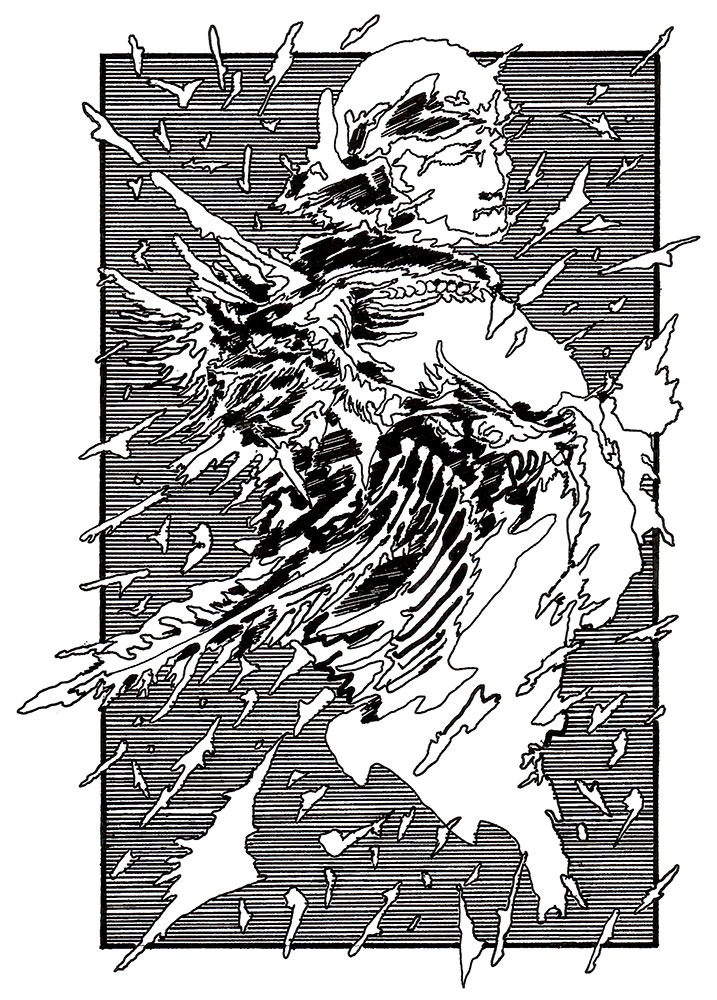
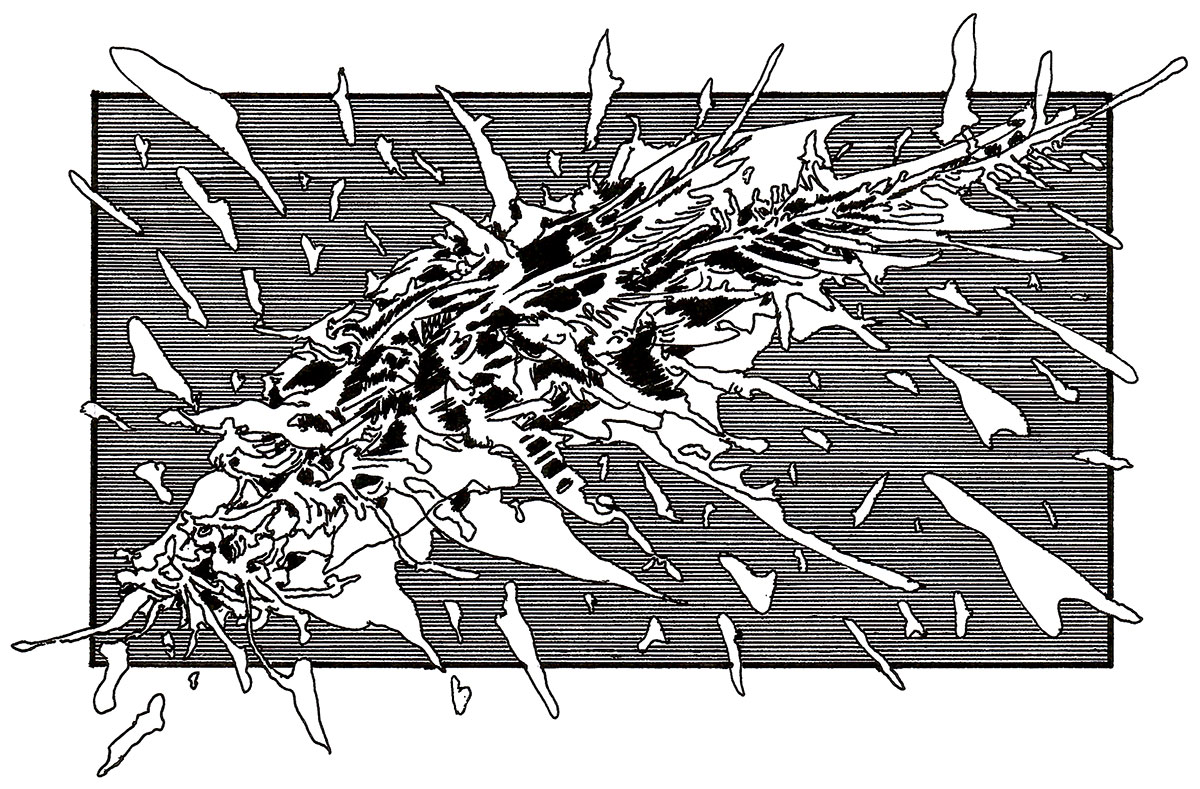
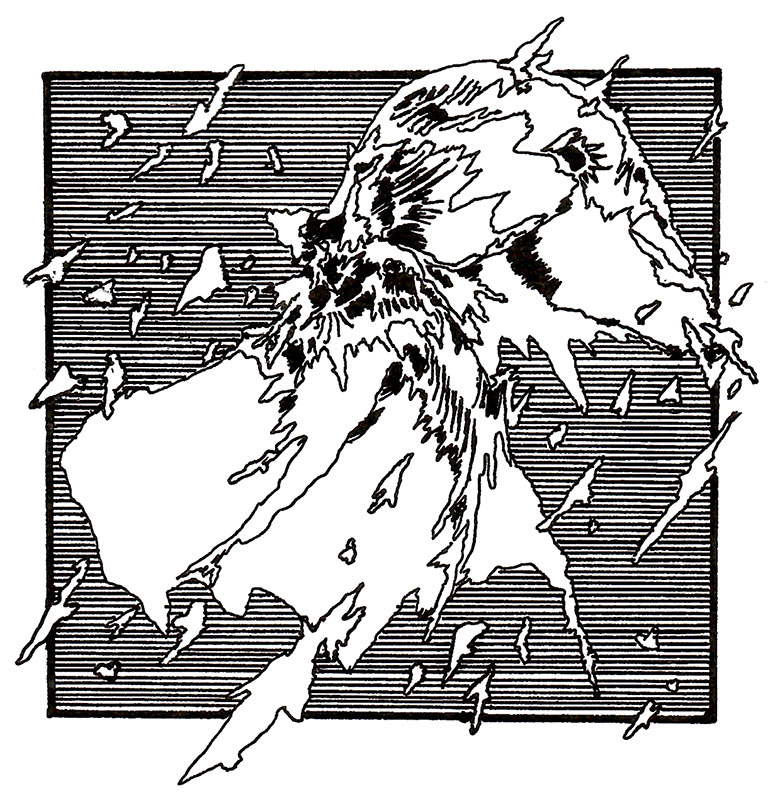
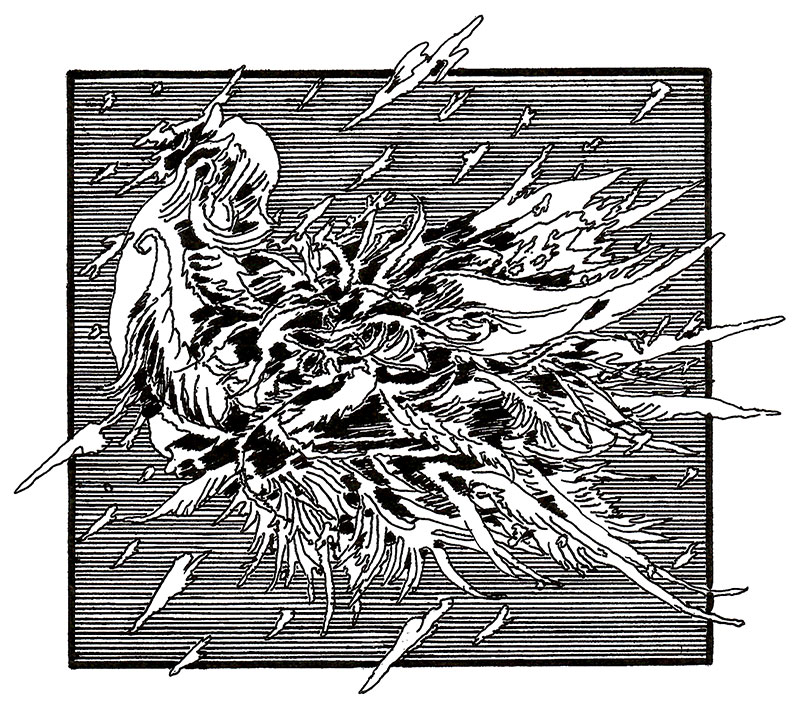
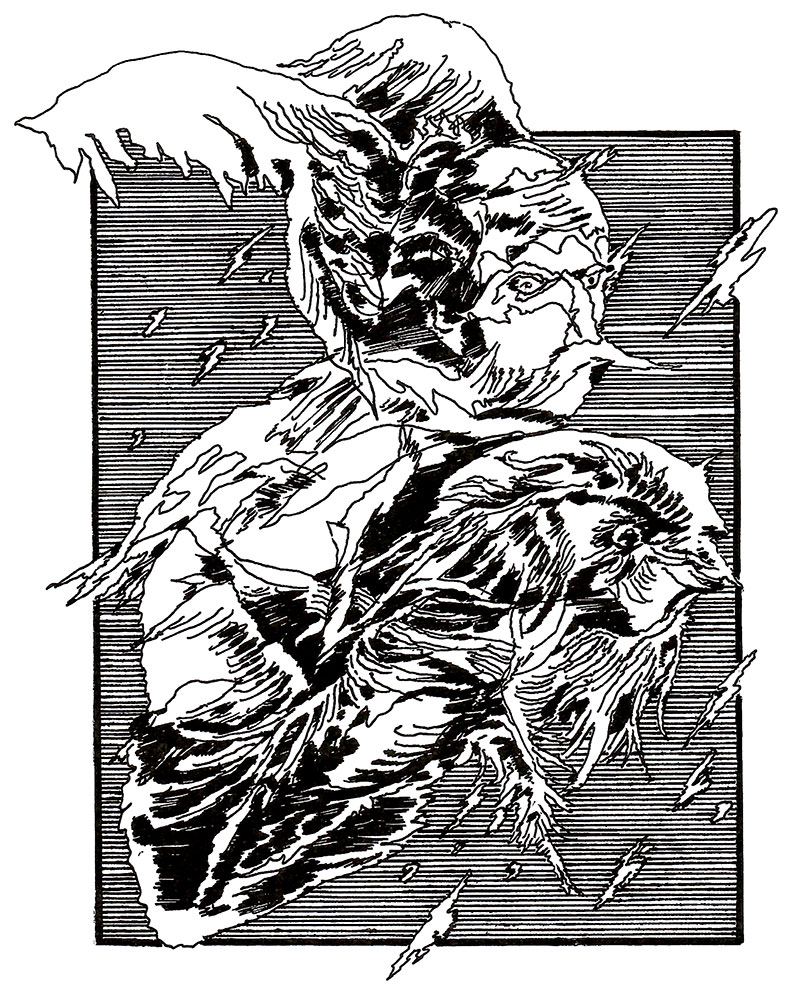
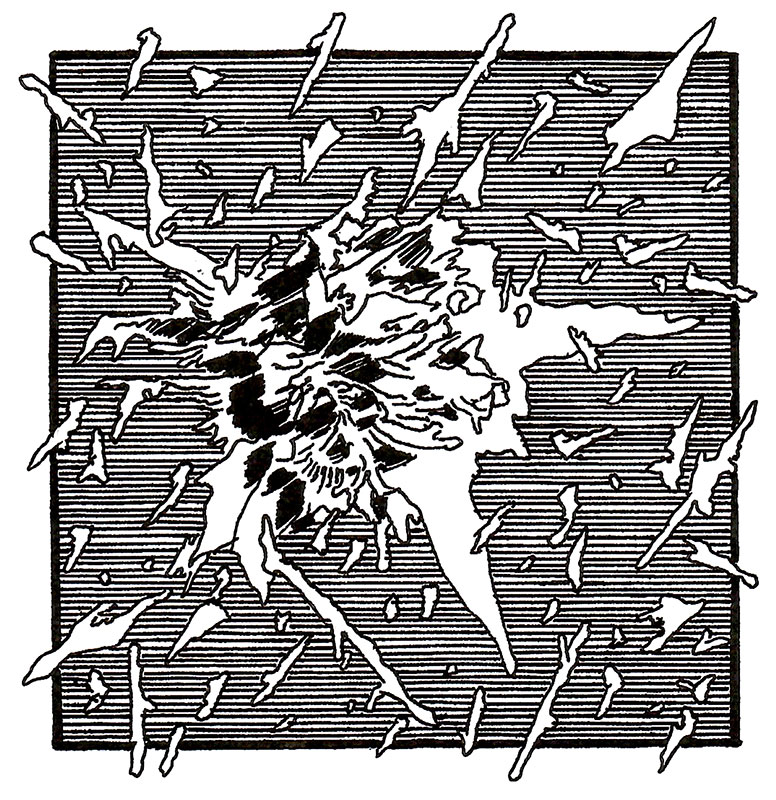
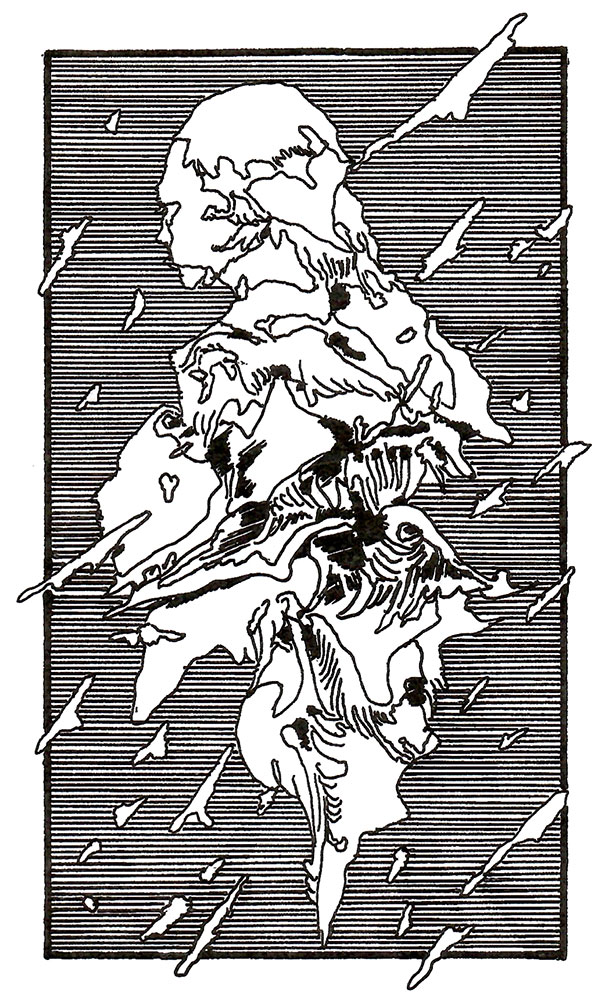
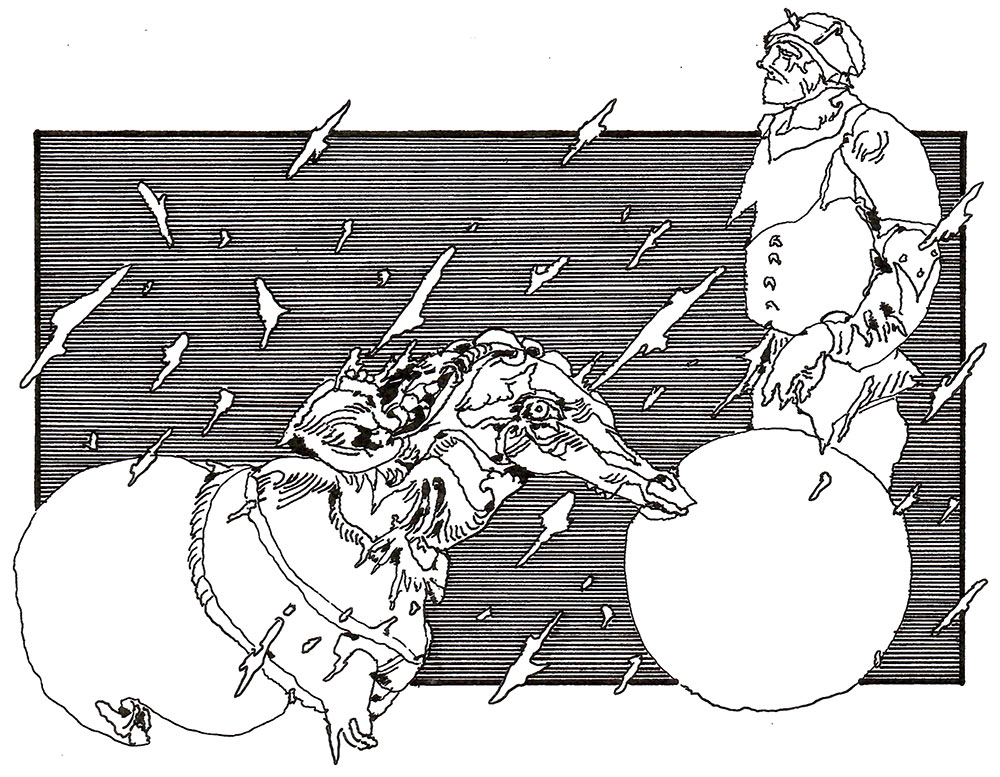
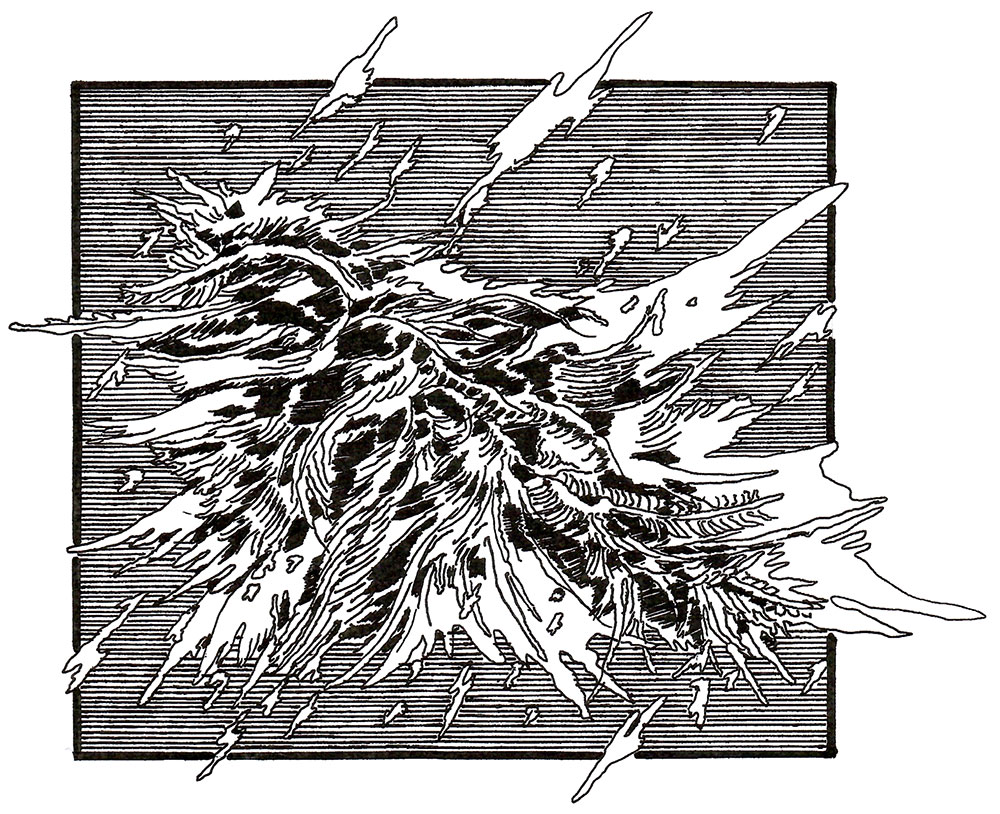
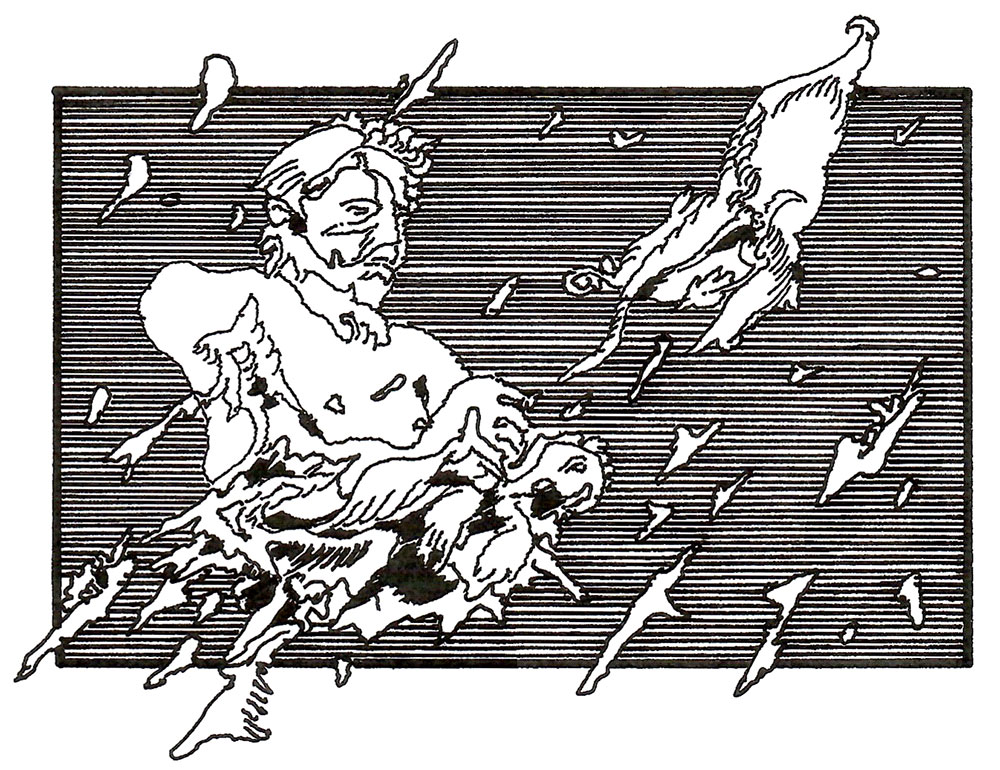
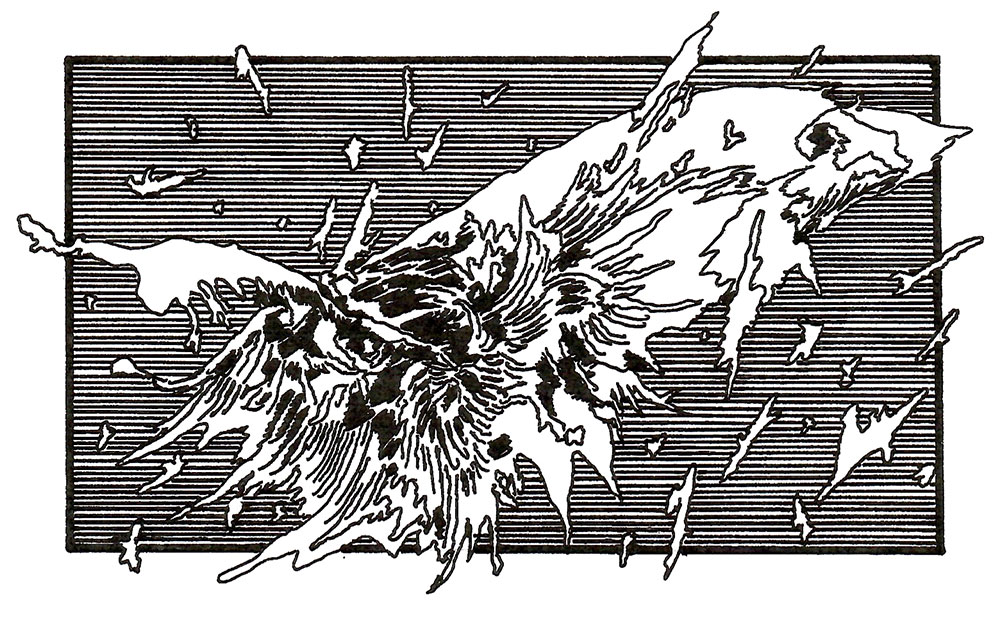
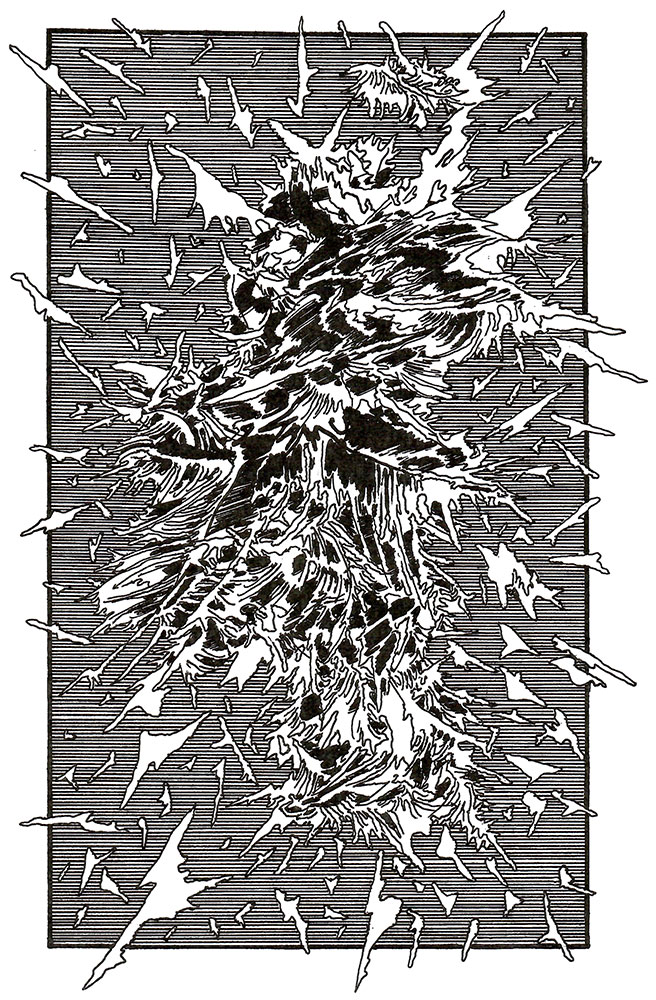
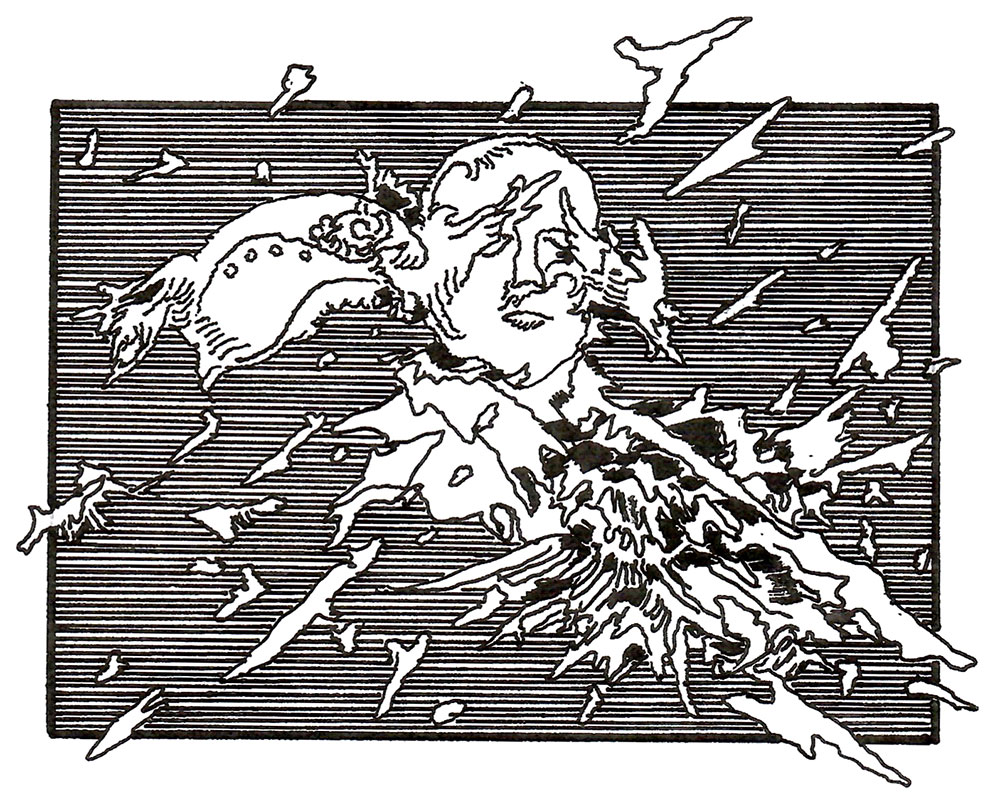
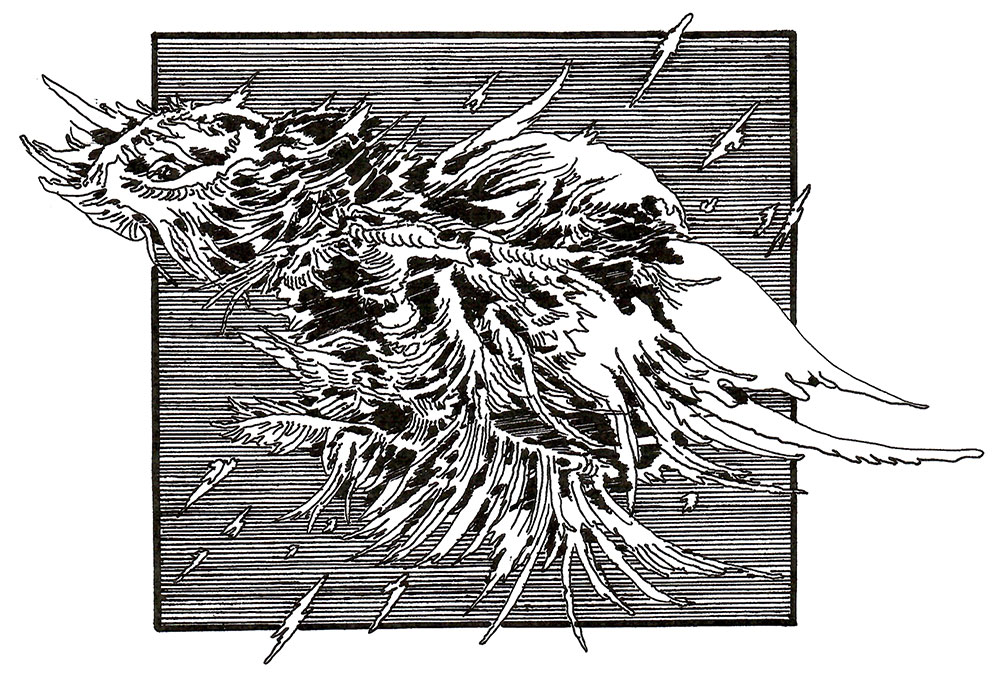
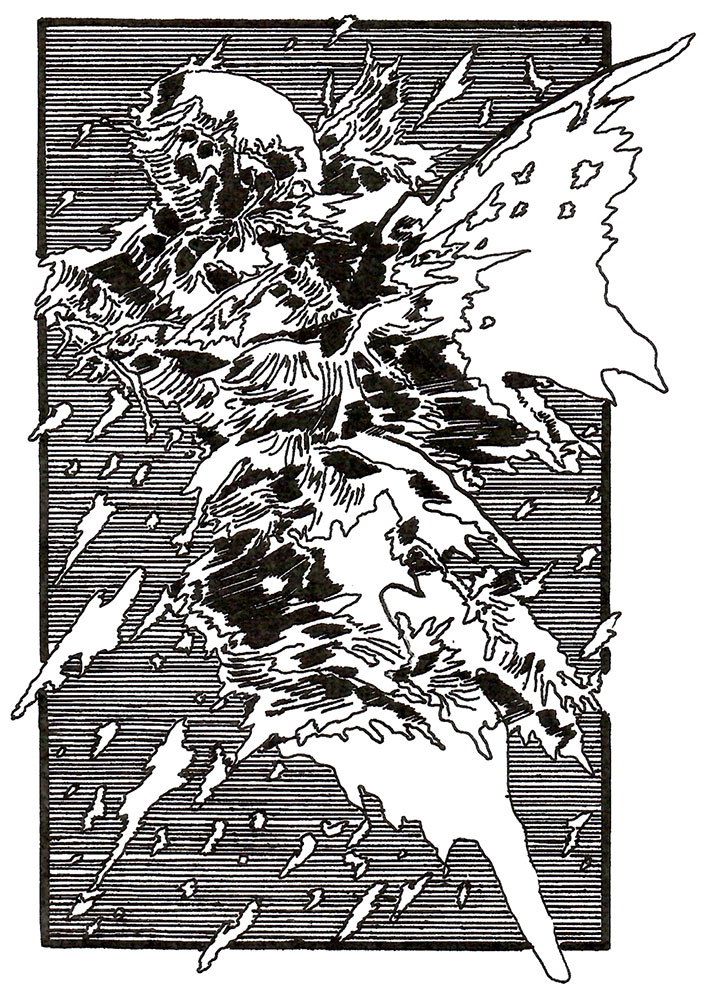
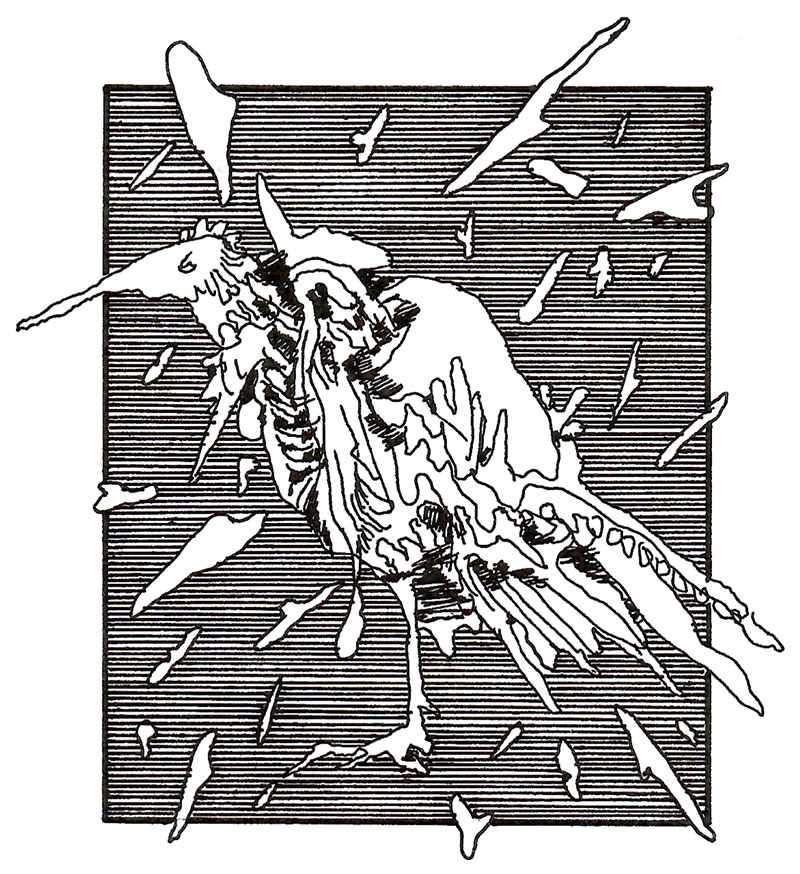
The pieces in the series are assembled into a single sequence, like illustrations in a book. Perhaps it was the drawings created for Márványfejecske (“The Marble Bust”) and the Christmas illustrations for the Szépirodalmi Kiadó publishing house that first outlined the visionary idea.
The artist has transposed the motifs that are important to him (angels, stars, fish, birds) into a neutral space enclosed by a definite line, foreshadowing the empty stage of the Fall of the idols twenty years later. The central element of each ink drawing is torn into components by some inexplicable, uncontrollable force. Time condenses into a single moment with the appearance of the breaking point, just in the moment of eruption, as the world is turning out of itself. It is almost as if, while the original form is still intact, the individual components are detached from the shape and the volcanic airwave of the mysterious, strong detonation shoots out a wind rose in all directions, scattering the shards of components into the boundlessness outside the black frame. Of course, it would not be possible to reconstruct the original patterns from the image of the disintegrating cosmos, from the fragments and pieces that have been torn off, but in this case the point is not that, but the drifting momentum of the invisible centripetal force, its dynamics reorganising and reordering everything, and its role in shaping the composition. The flying, floating shavings, which reveal the presence of imperceptible energies, are at the service of aesthetic expression, in opposition to destruction, following a new logic of artistic organizing principle. The dynamic, expressive formal formulas of the resulting fragments and the assembled horizontal line structures of the background function as a complex drawing concentrate.
The confusing use of fragments and seemingly incongruous components has always been a preoccupation for Sárkány as a result of their peculiar poetics. It is not a question of whether, for example, we see a bird’s wing in the Bukott angyal (“Fallen Angel”), or a dragon from a fairytale is unfolding, or the foams of Hokusai’s great wave are coming to life before our eyes, but rather of the variable means which may make the artist freely reinterpret the richness of the world, creating an autonomous quality in the white-glowing universe of paper.
Róbert Nátyi art historian