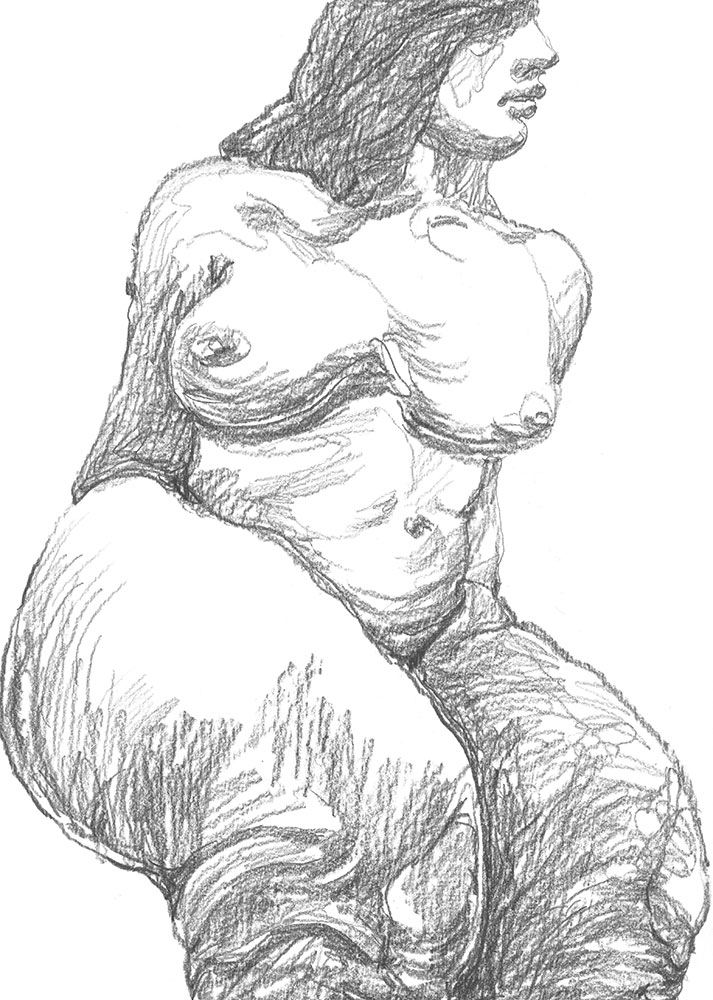
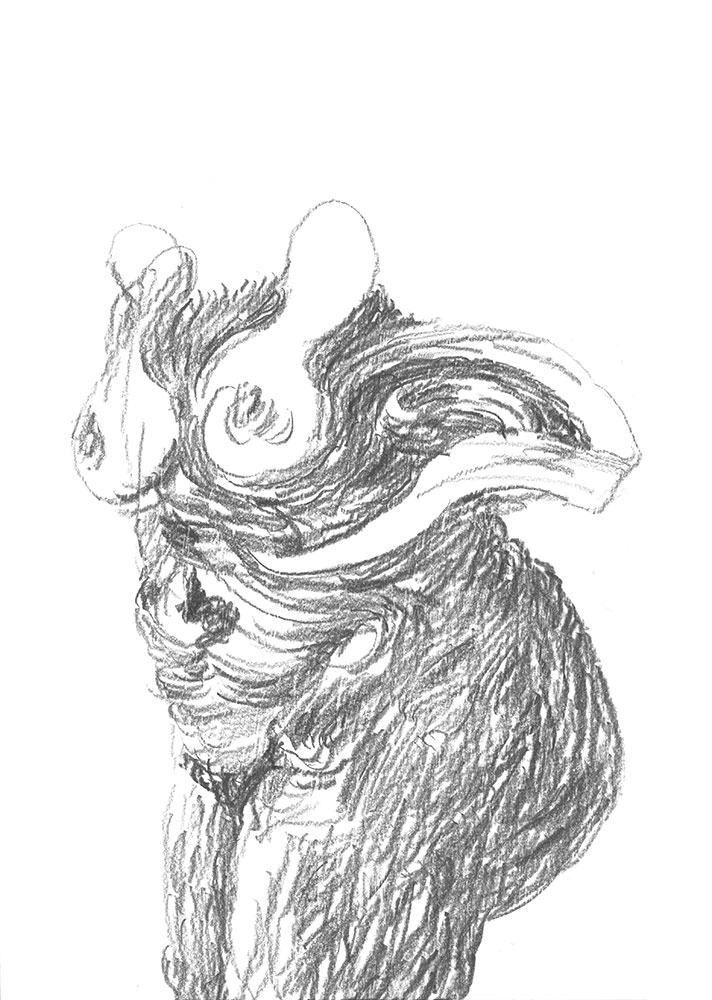
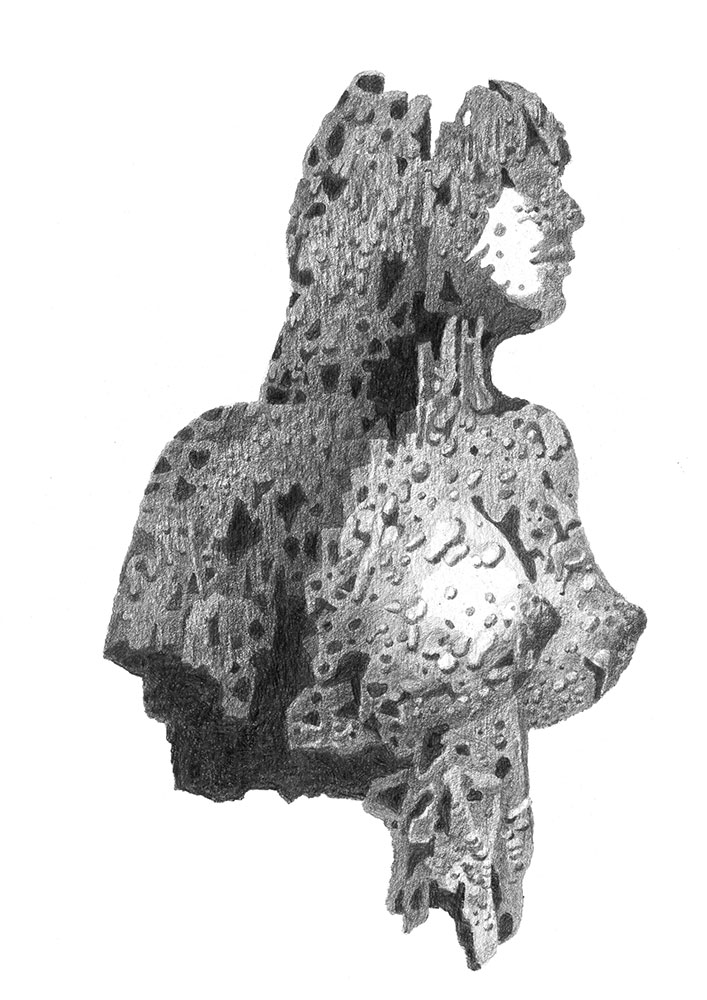
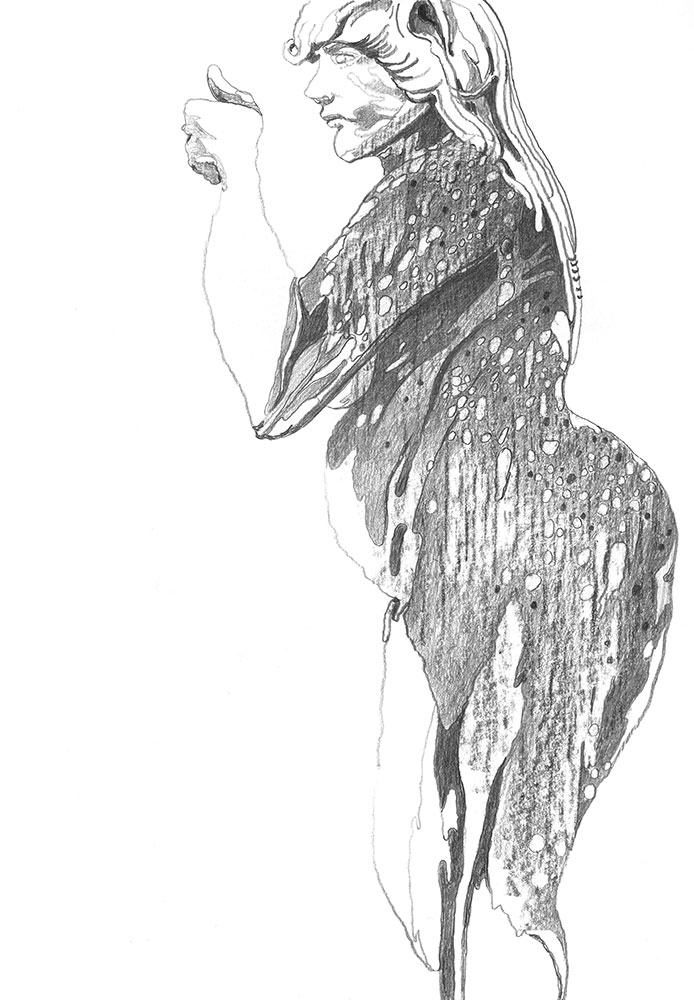
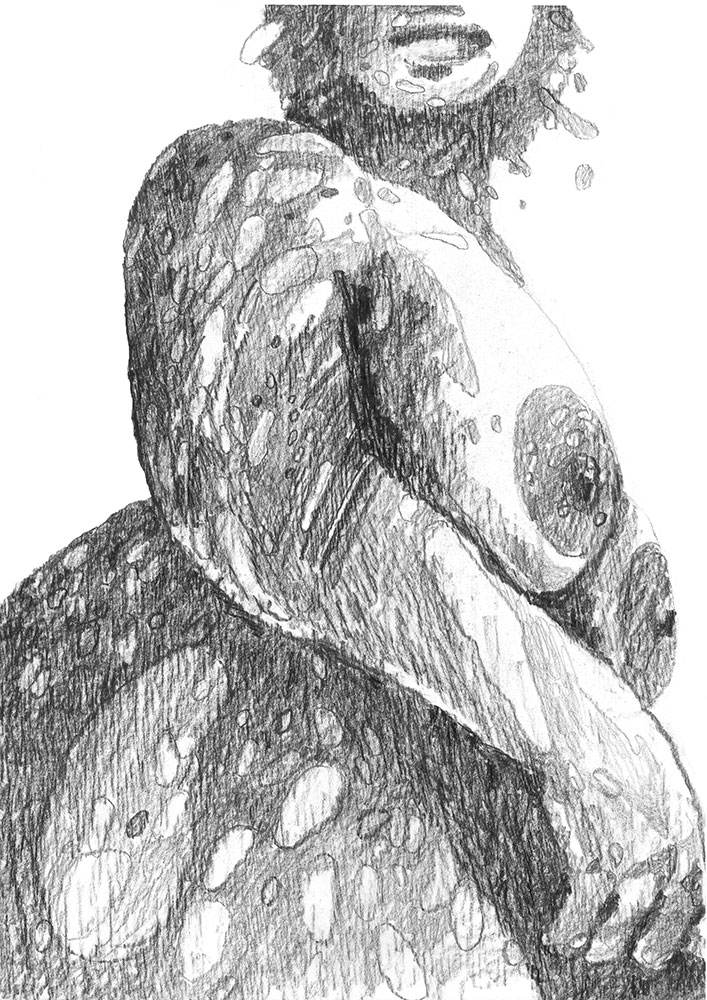
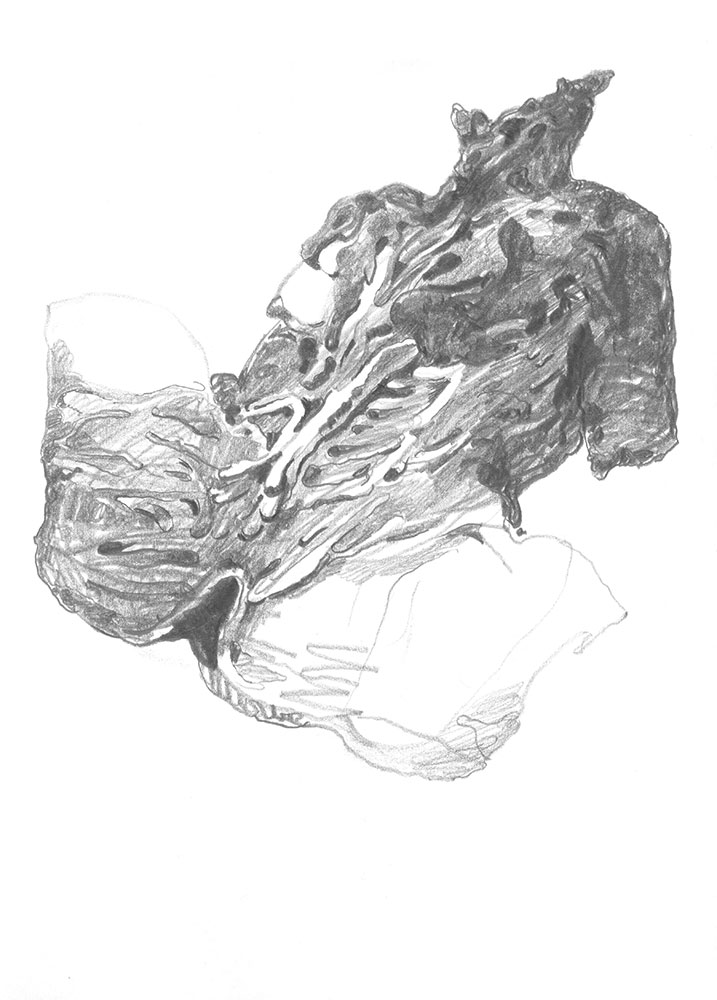
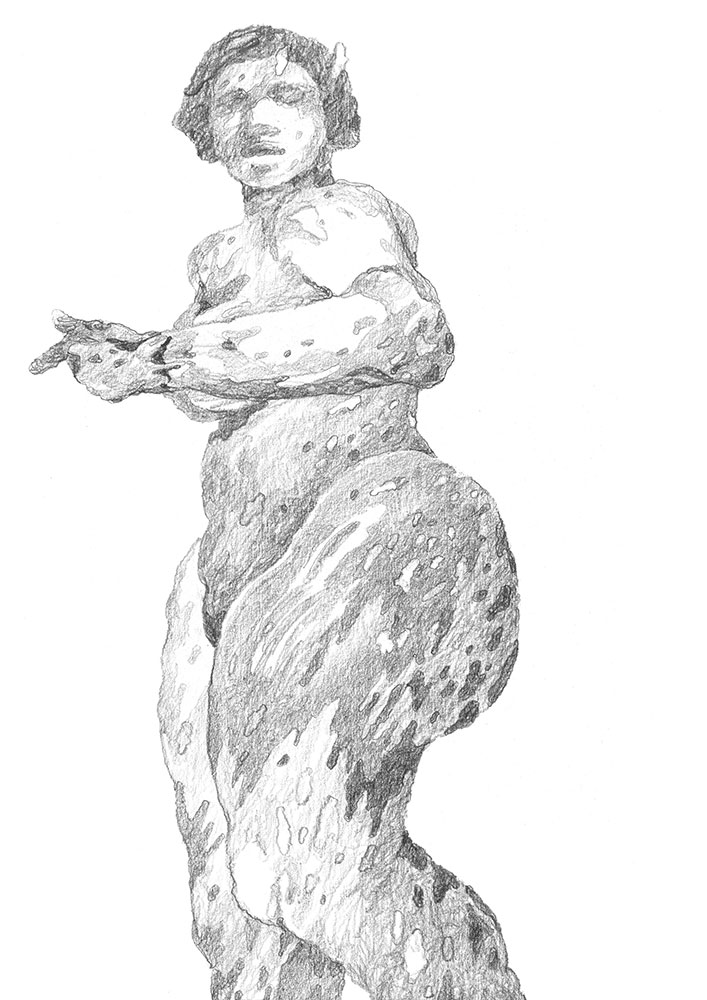
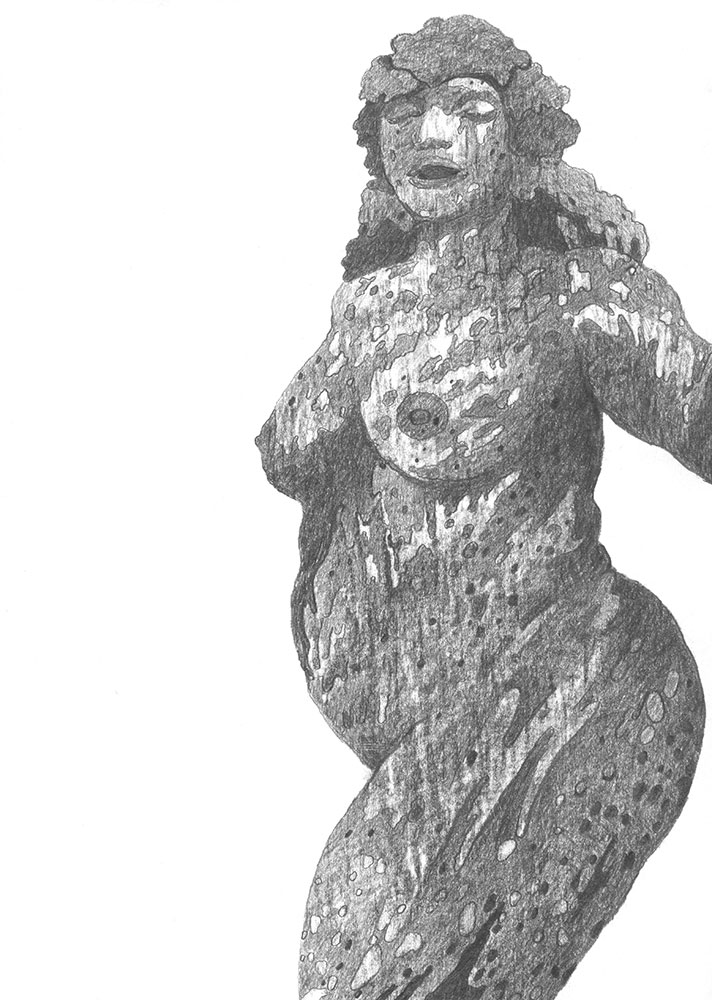
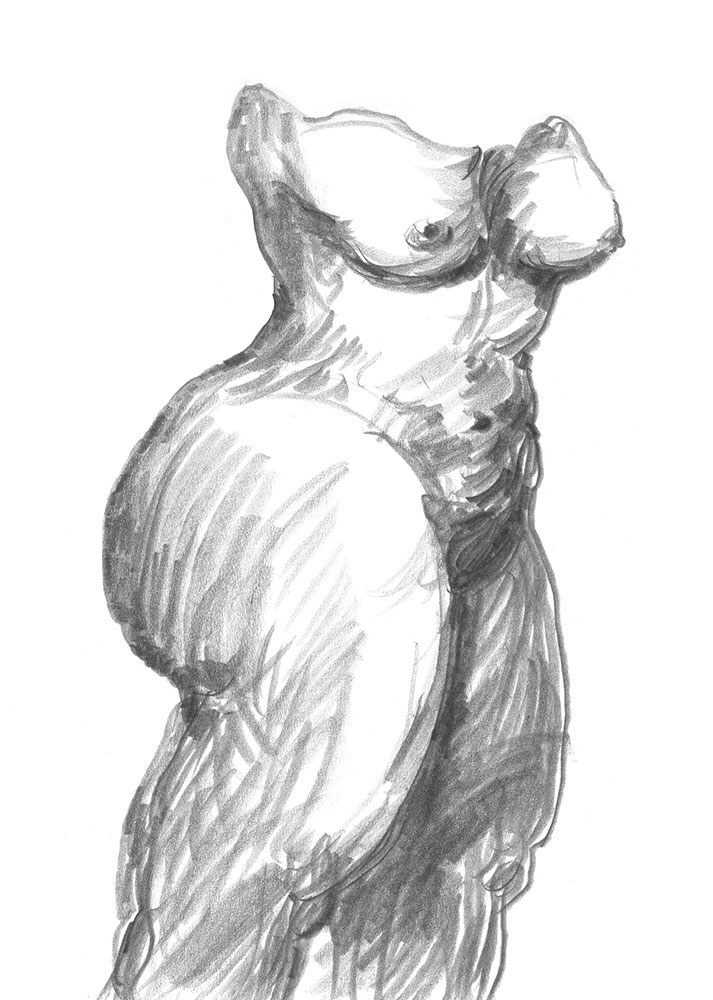
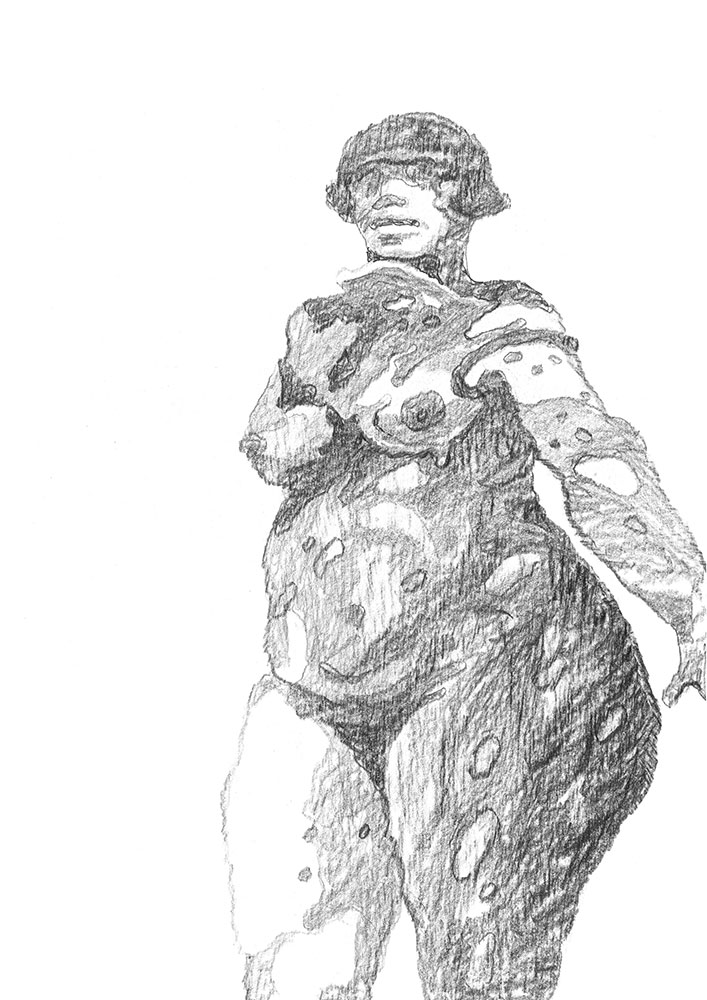
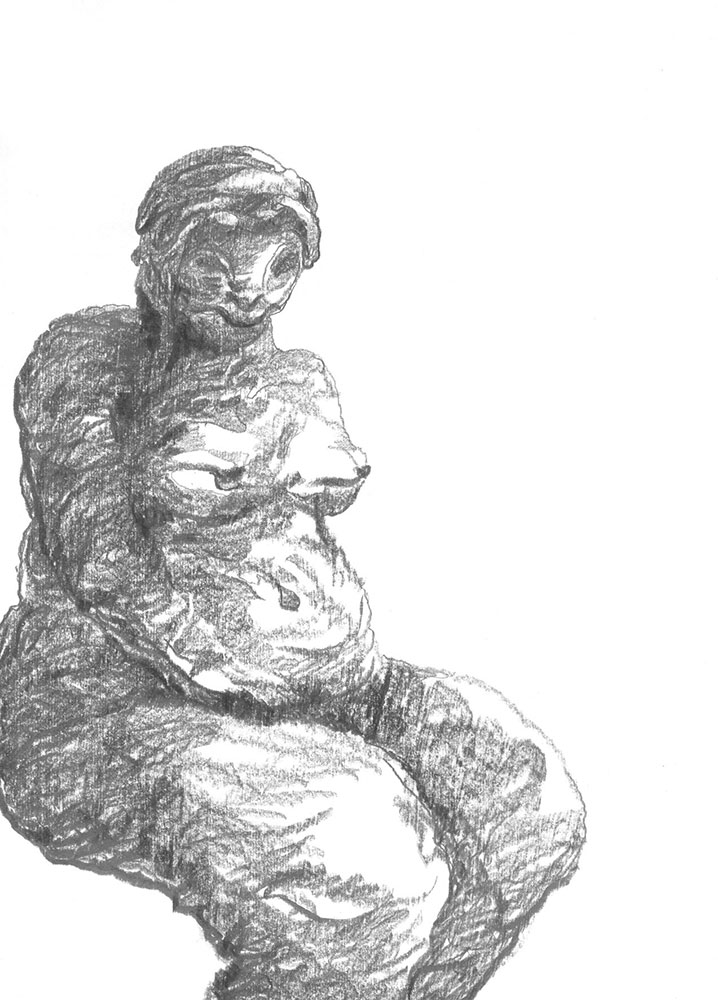
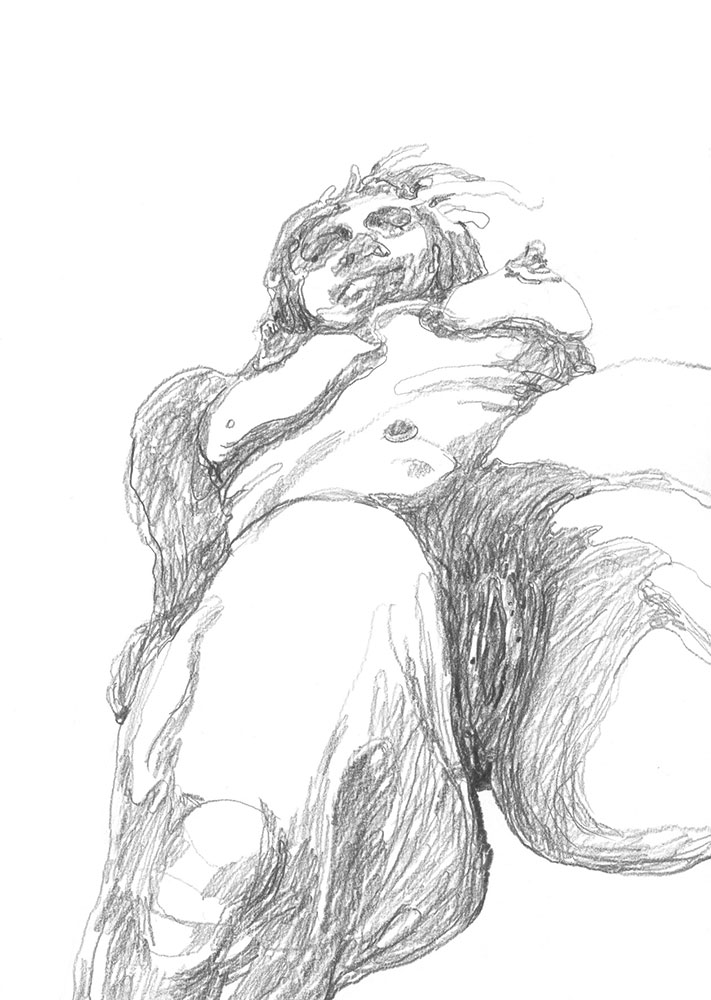
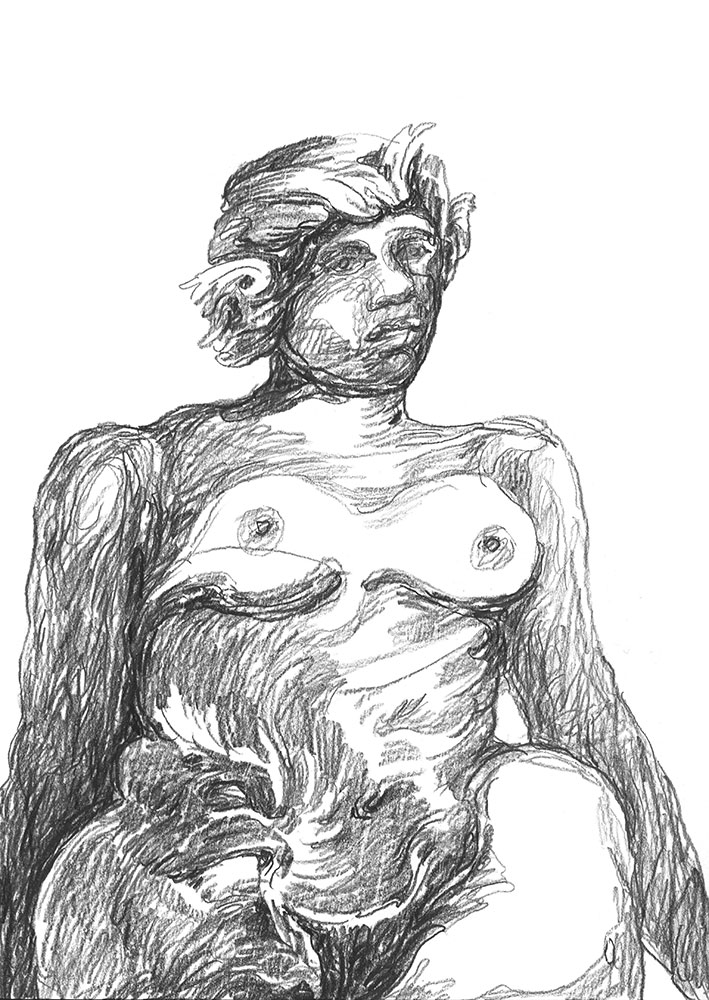
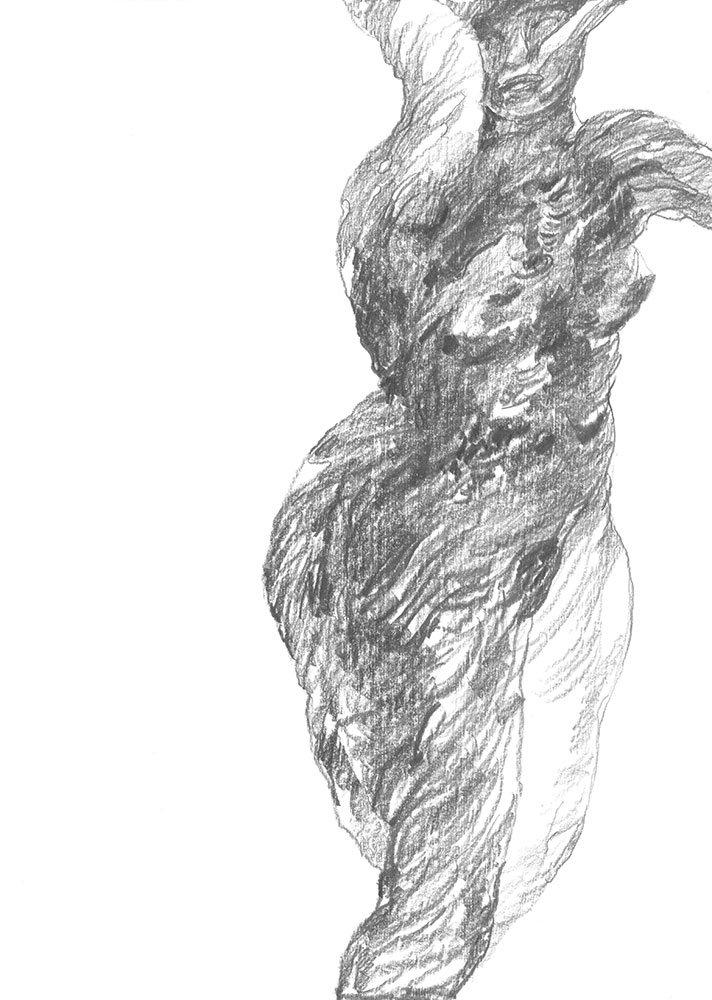
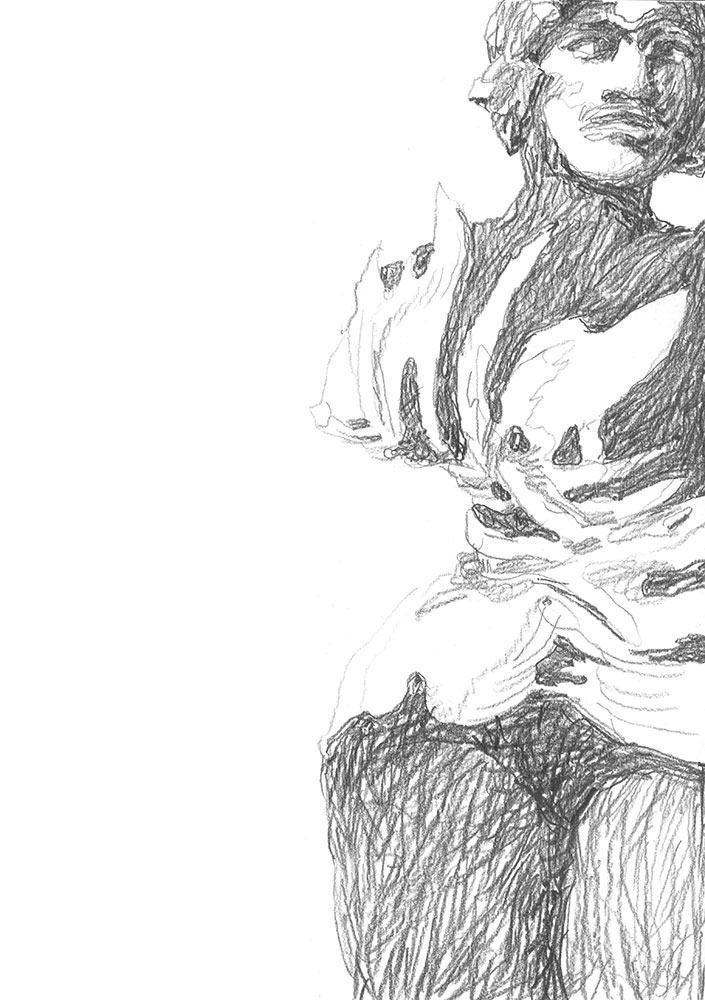
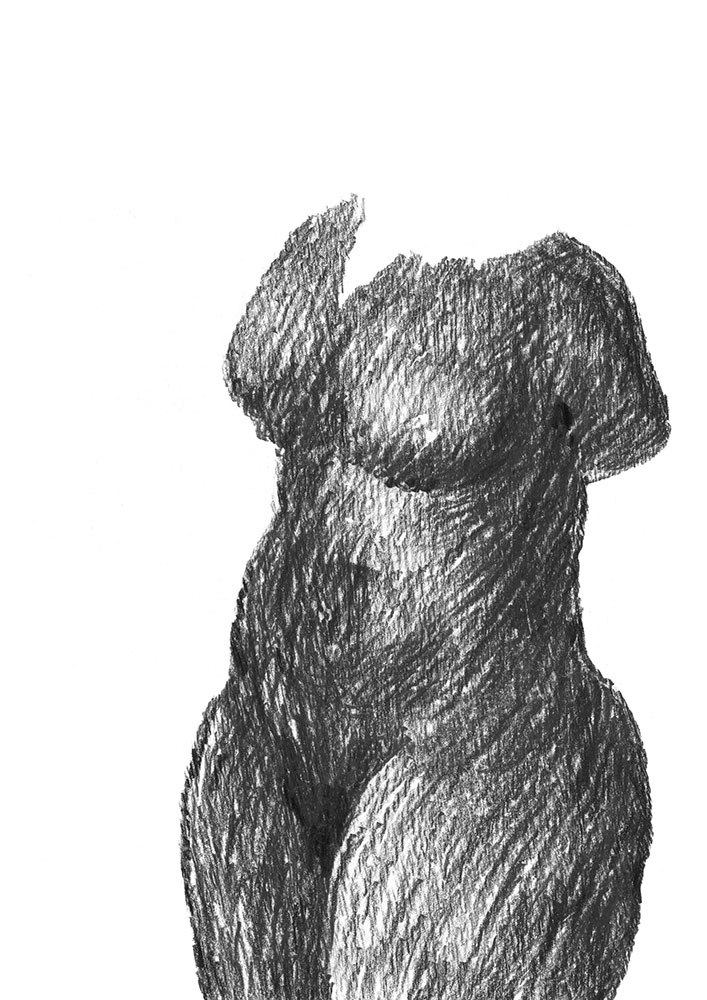
I don’t think – and it would be too simple an explanation – that it is only raw instinct that automatically leads the artist towards the depiction of women, although the figures often come to life when their faces are depicted, looking back with flirtatious smiles, but mostly they are torsos. In such cases they are impersonal, or rather the ‚body mask’ of the female soul itself appears. The titles of the graphic marginal notes, which form a series, also suggest a more abstract, symbolic world. It is as if the body masks reveal something, but the mystery remains unresolved, because the representation of the corporeality creates new enigmas, the representation of the body only adds to the mystery.
Because what is a body mask? It is the form, the idealized, stylized representation of the ephemeral vessel, and however contemporary, the origin of the form is still the Venus of Willendorf, but, having left the sacral enclosure, it is elusive and intangible, like Daphne who has become a tree. So many drawings unfold from arabesques evoking plant vegetation or dissolve in the flowing formal bundles. Intangible as a woman, the decomposing and composing fragment nevertheless becomes objective; it becomes a sculpture, an architectural ornament. So much so, that they solidify into pitted fossils, so that even vegetation becomes a carved ornament. Objectivity and floating merge. Fragments, torsos, the beauty of the unfinished drawing increase this duality. Sometimes we feel that it is the crumbling ornament of some strange and destroyed building, at other times it is an effortless representation of an alluring and seductive woman, a capture of the moment.
Variations, searches and guesses. In this way, incompletion is never a failure, but an abandoned game, a constant desire to see new and new female forms emerge. It is a search for the certainty of Woman, something essential that gives birth to more and more body masks. To dissolve in the elusive and all-embracing power of the anima, the divine core. Perhaps it may be the unconscious desire, not a complex or a motor compulsion, but the free path of man’s innermost nature. The respect of the mother, the affection of love, the warmth of the woman that gives security, the worship of the other pole… All this is born from the unconscious dance of lines.
József Gaál visual artist, art writer