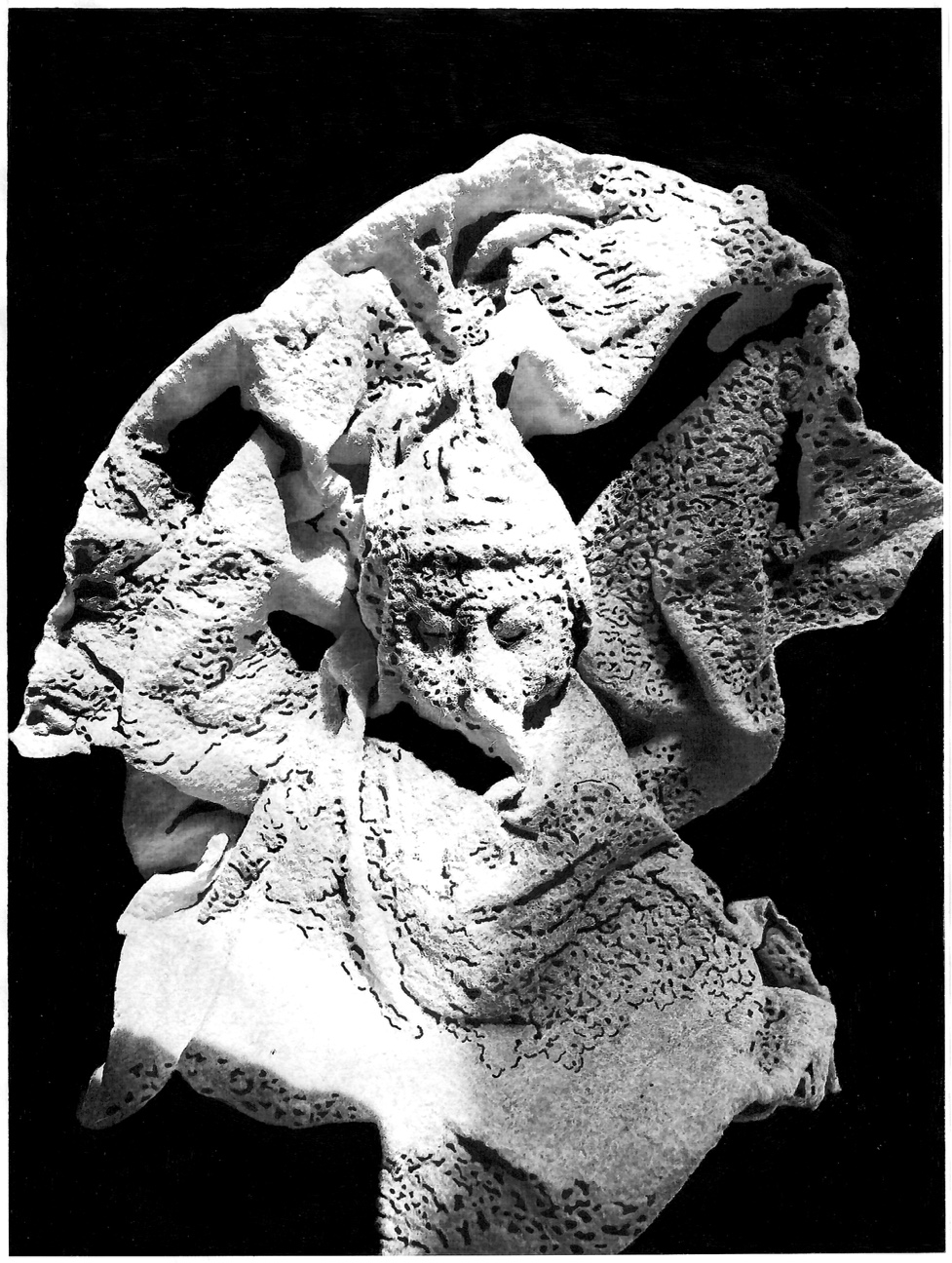
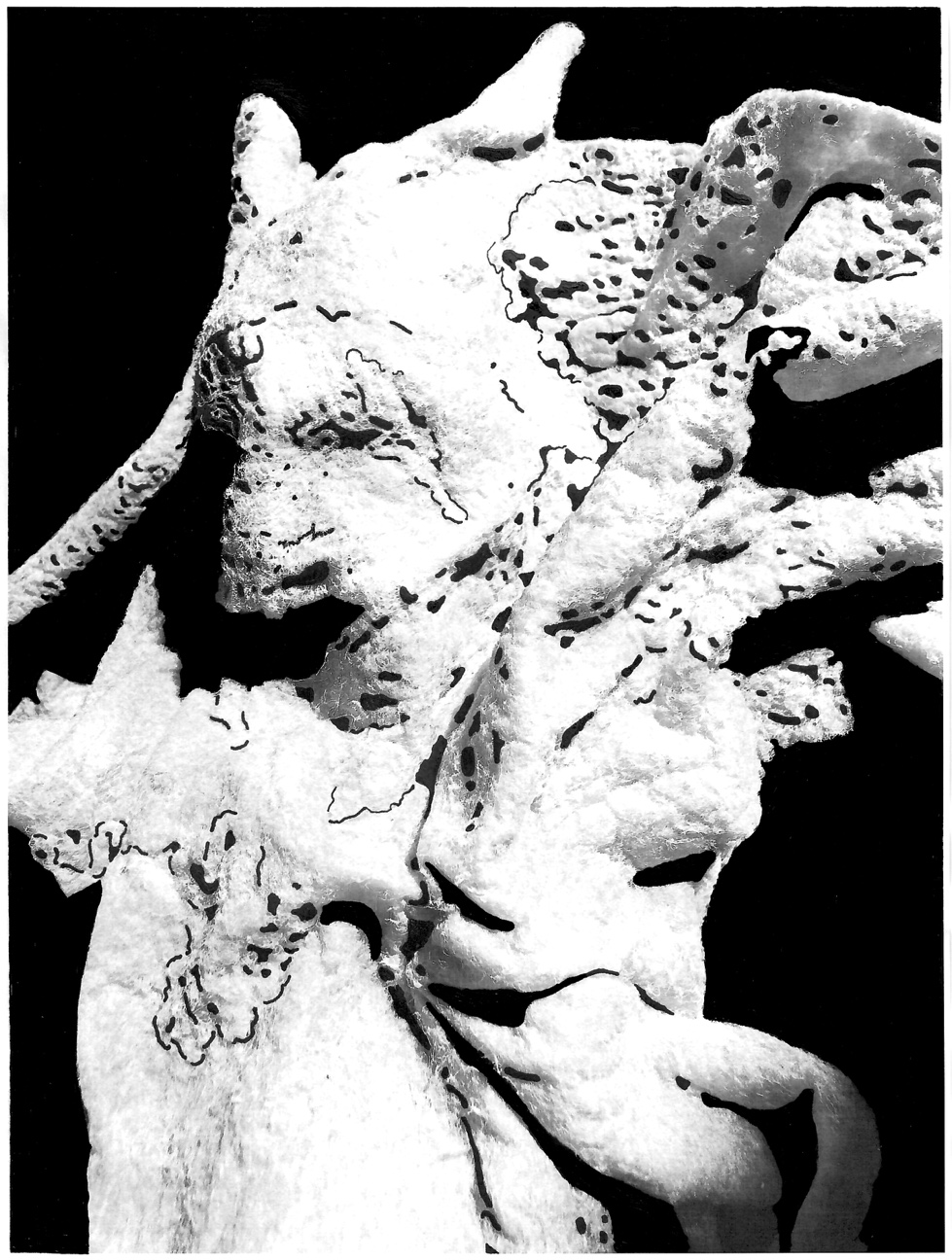
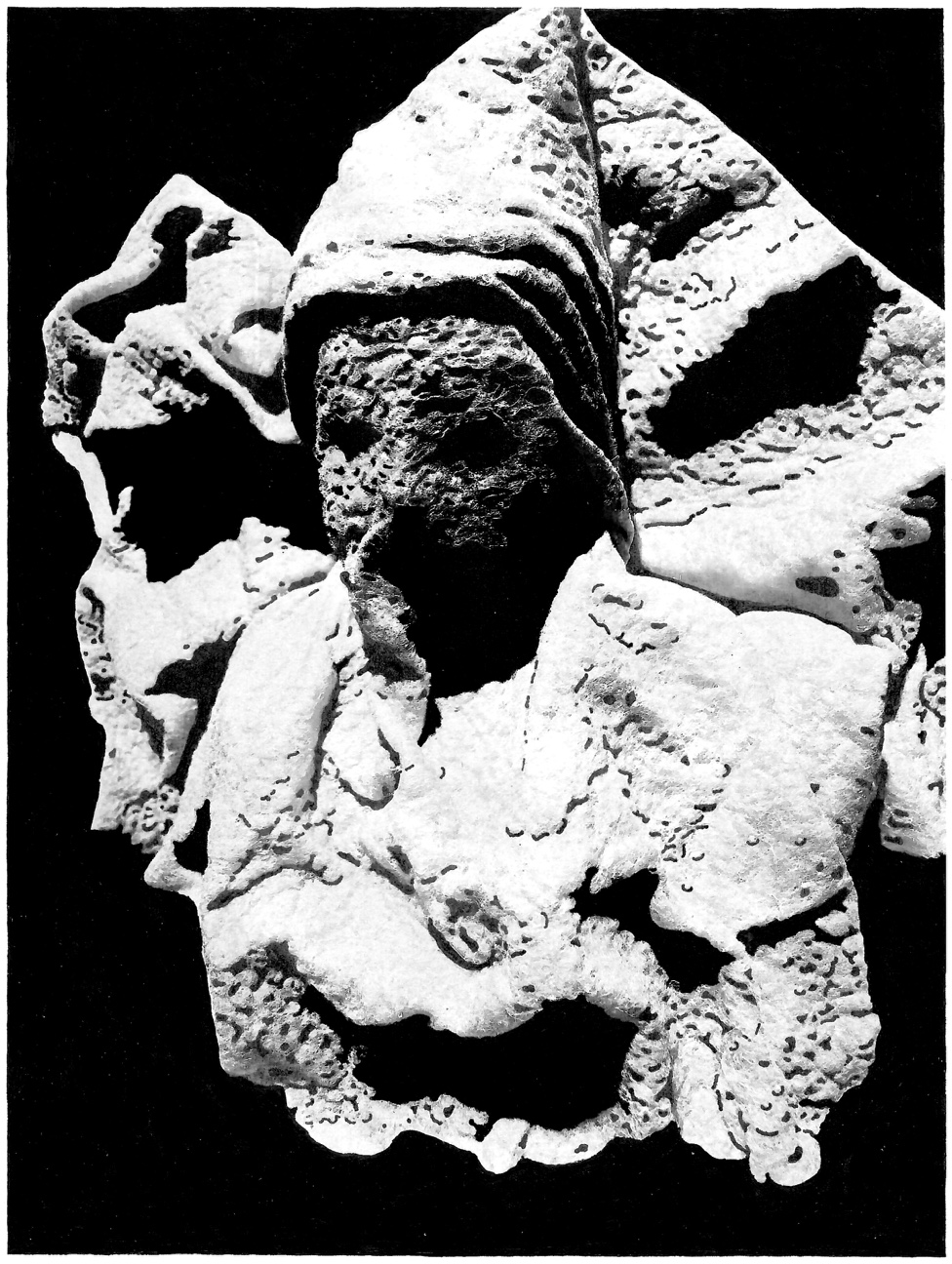
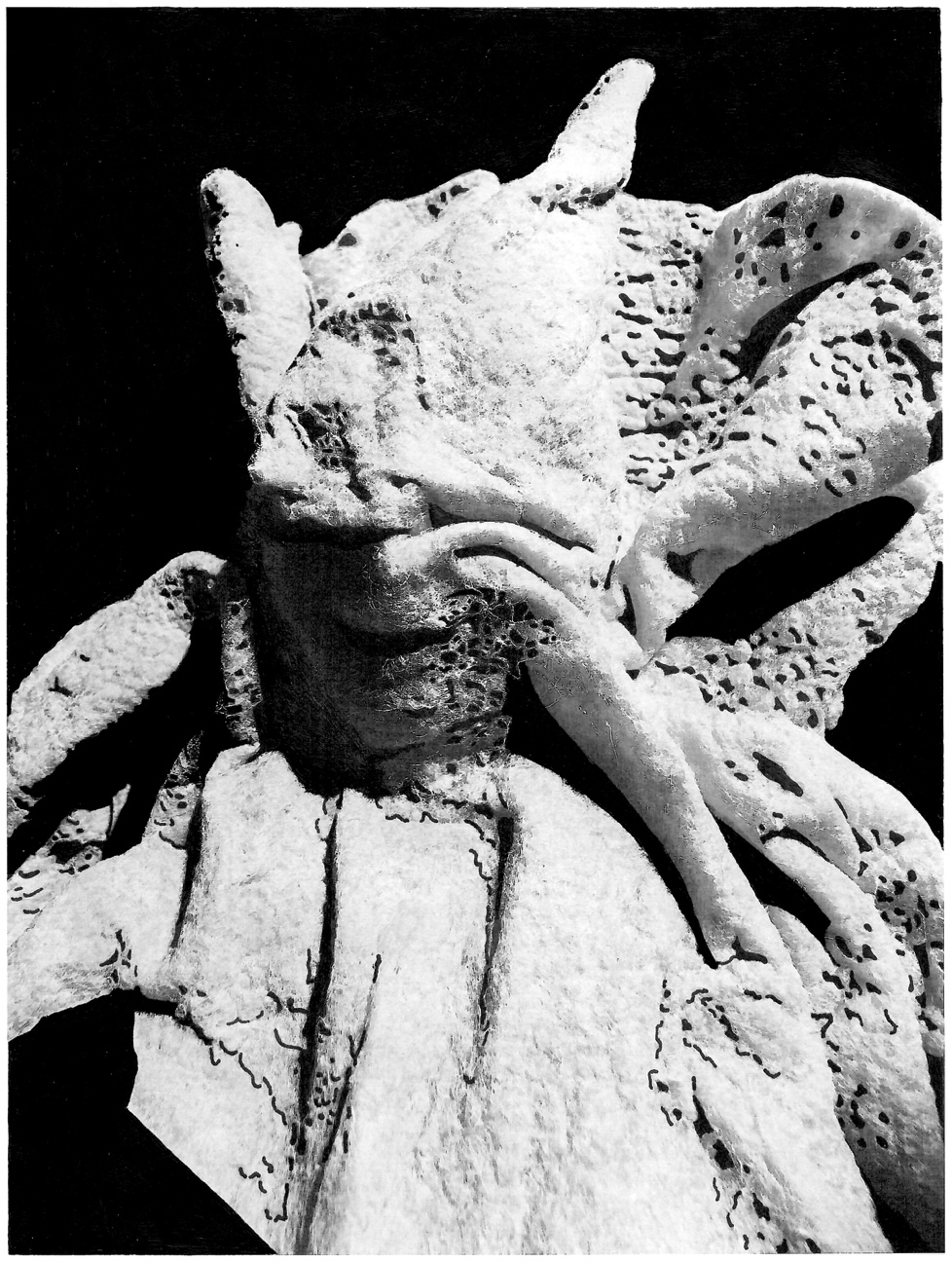
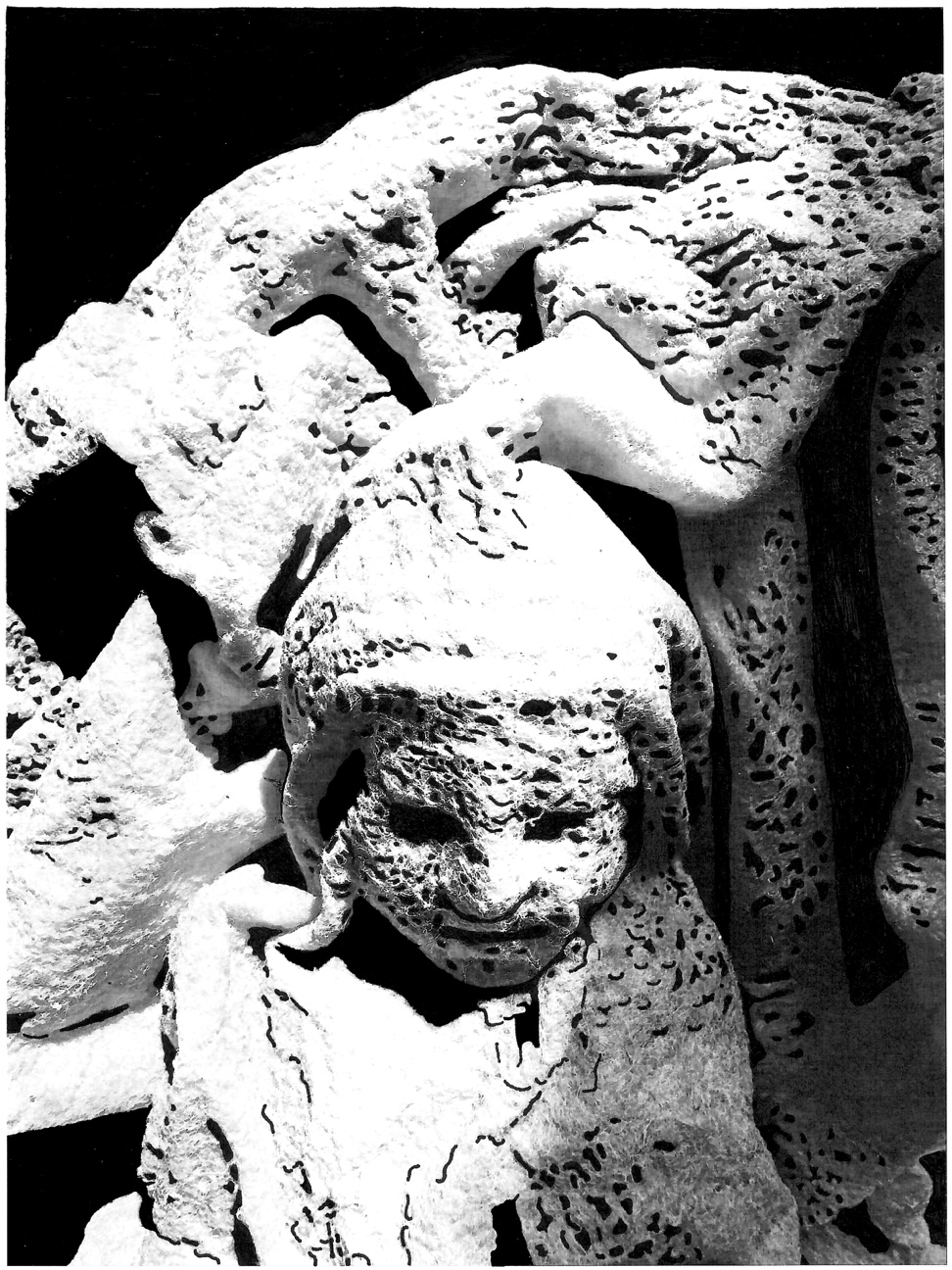
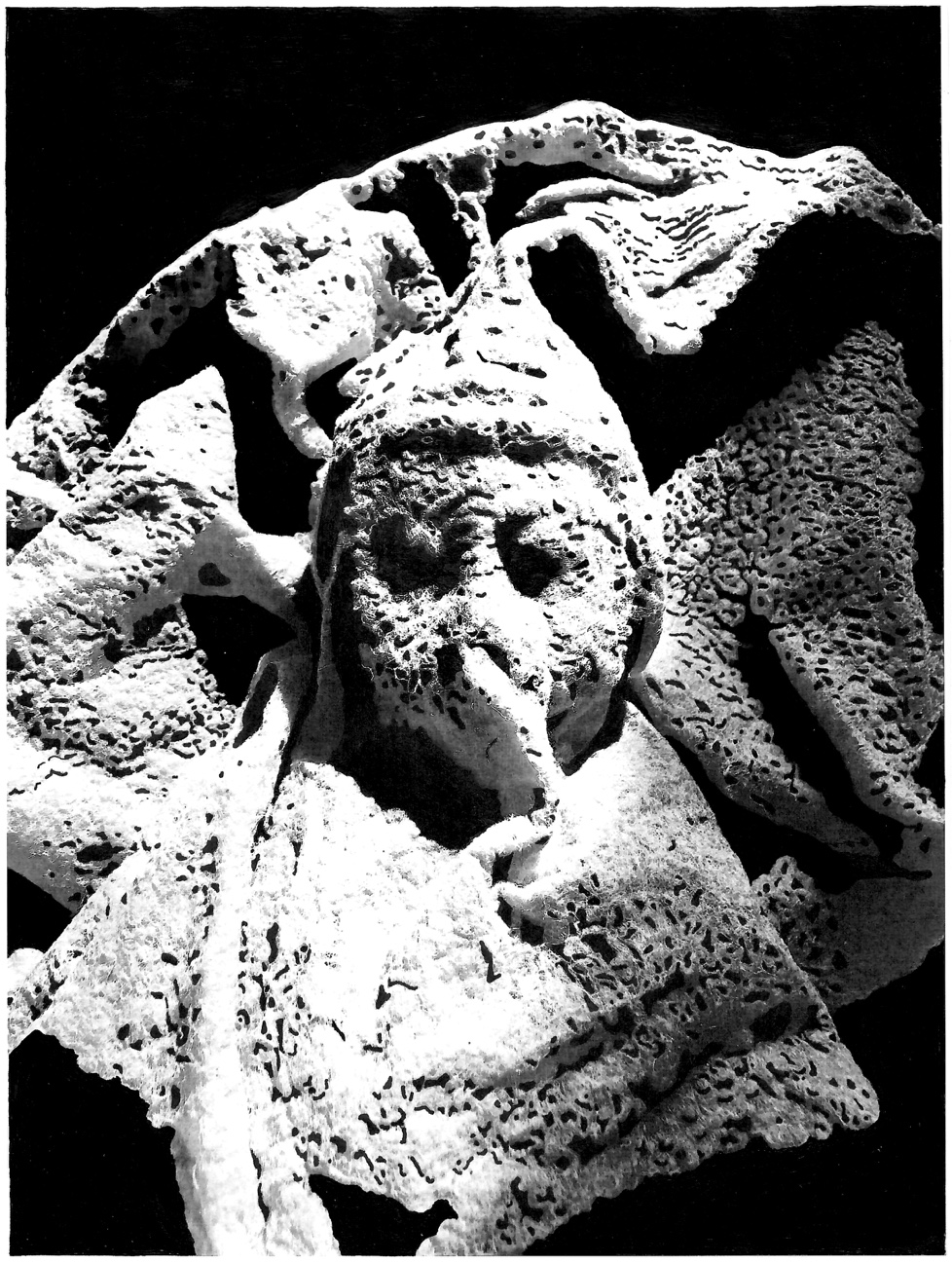
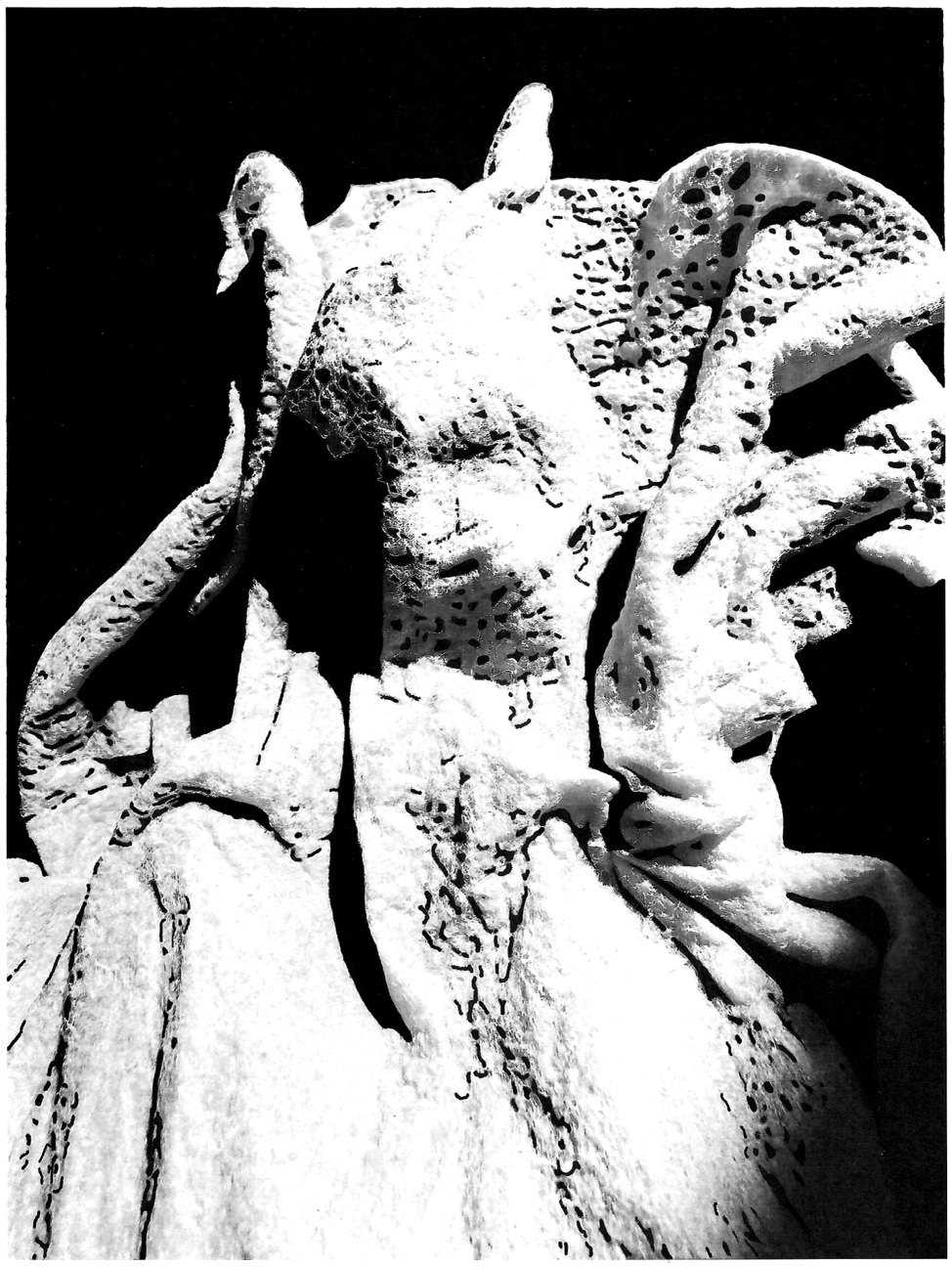
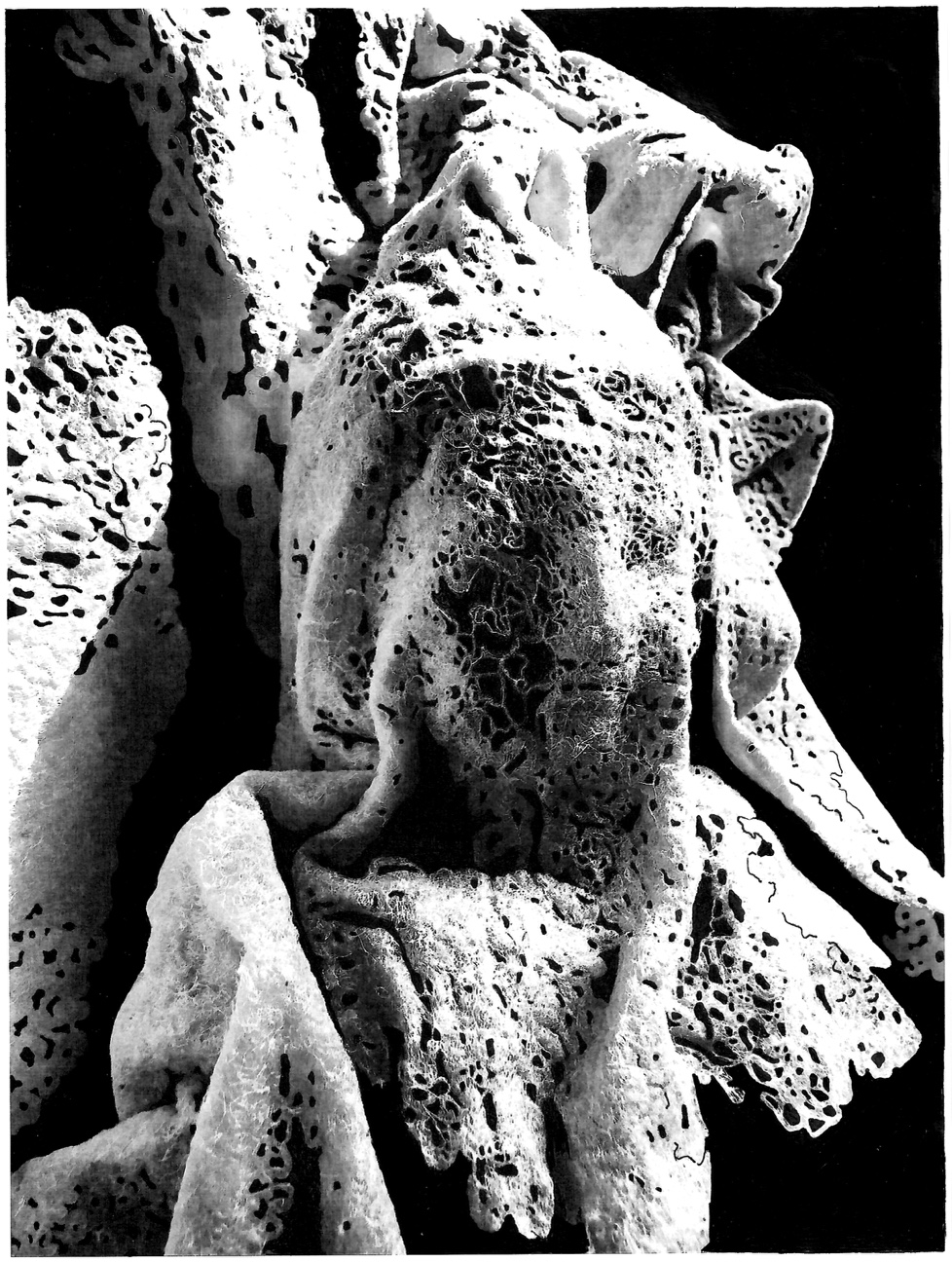
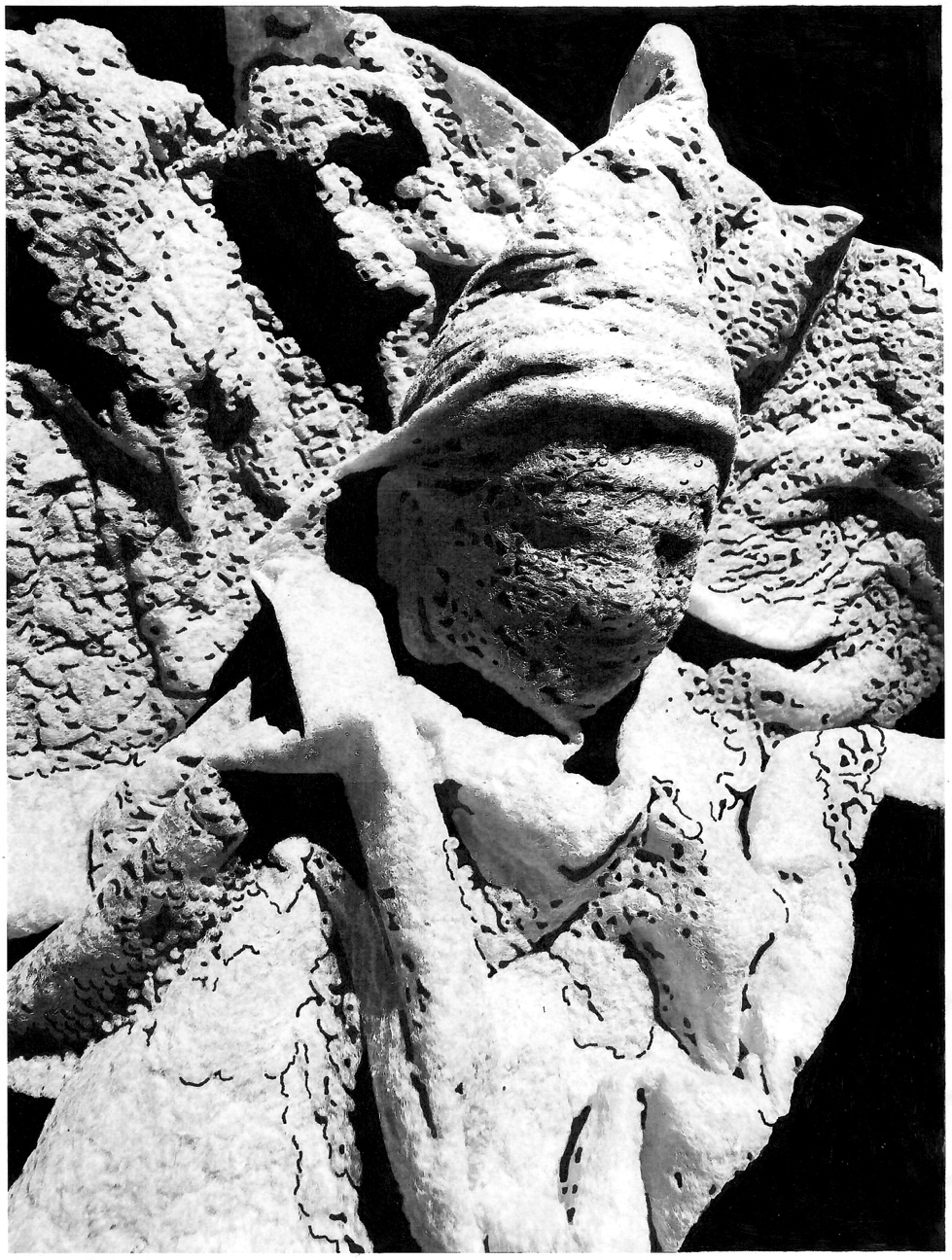
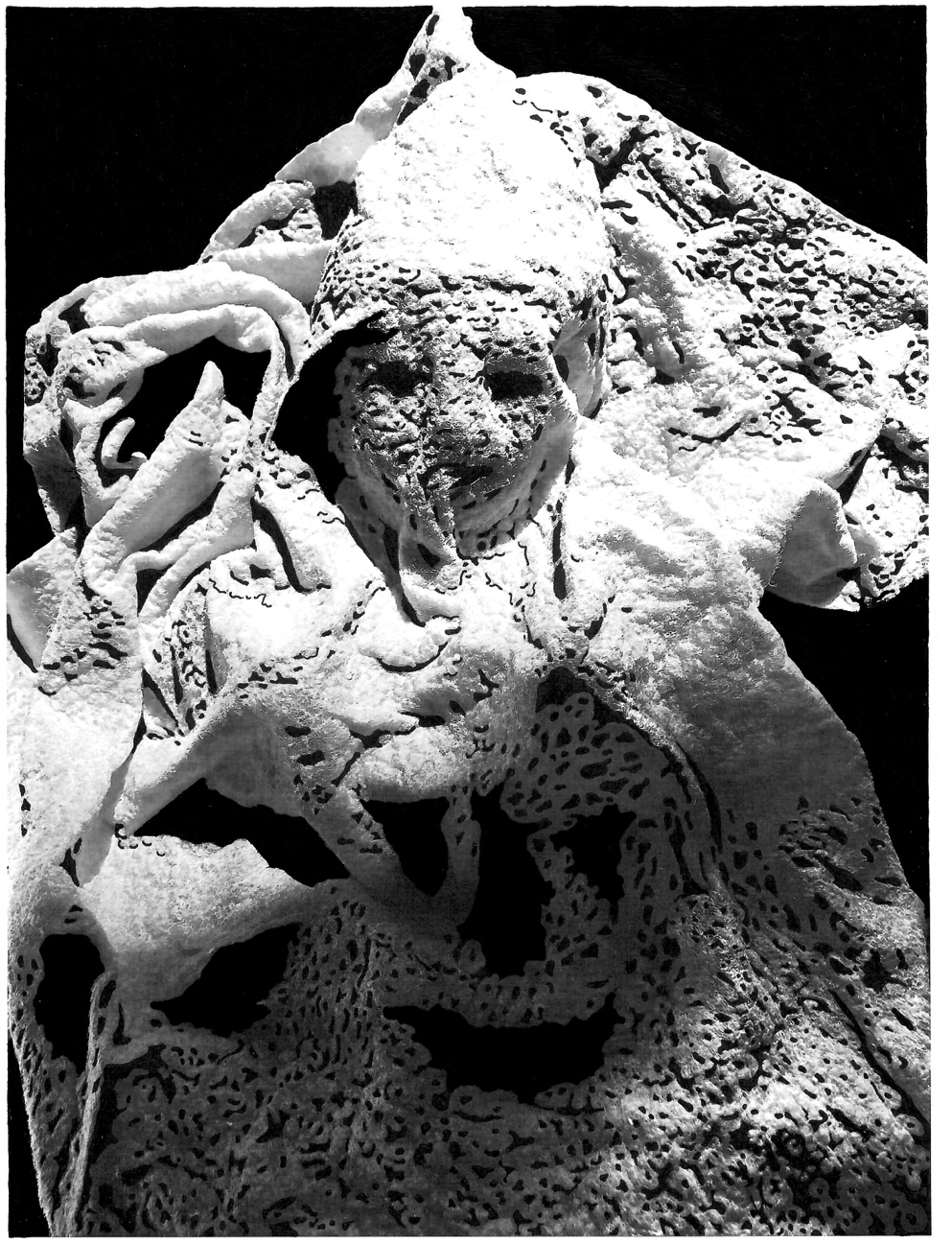
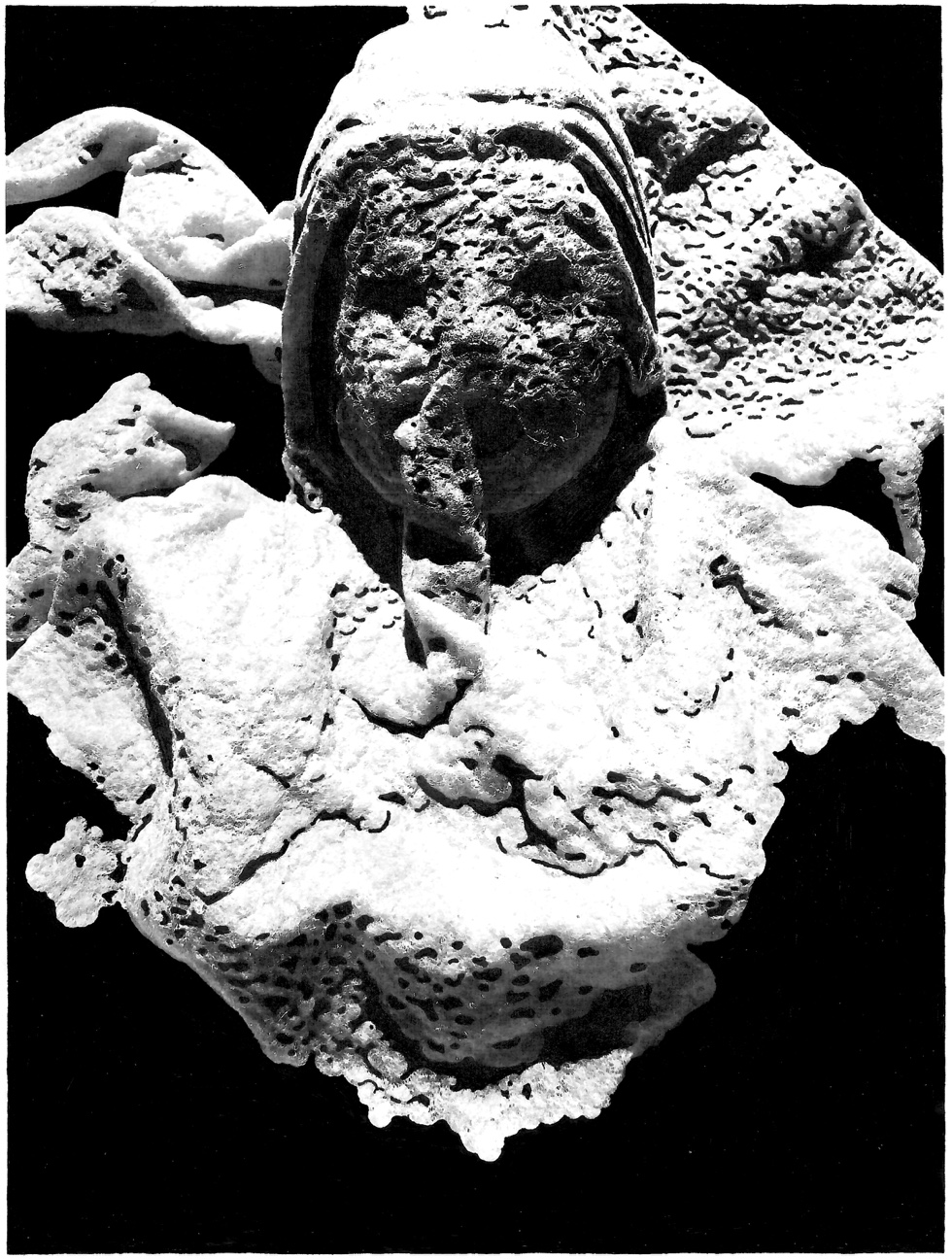
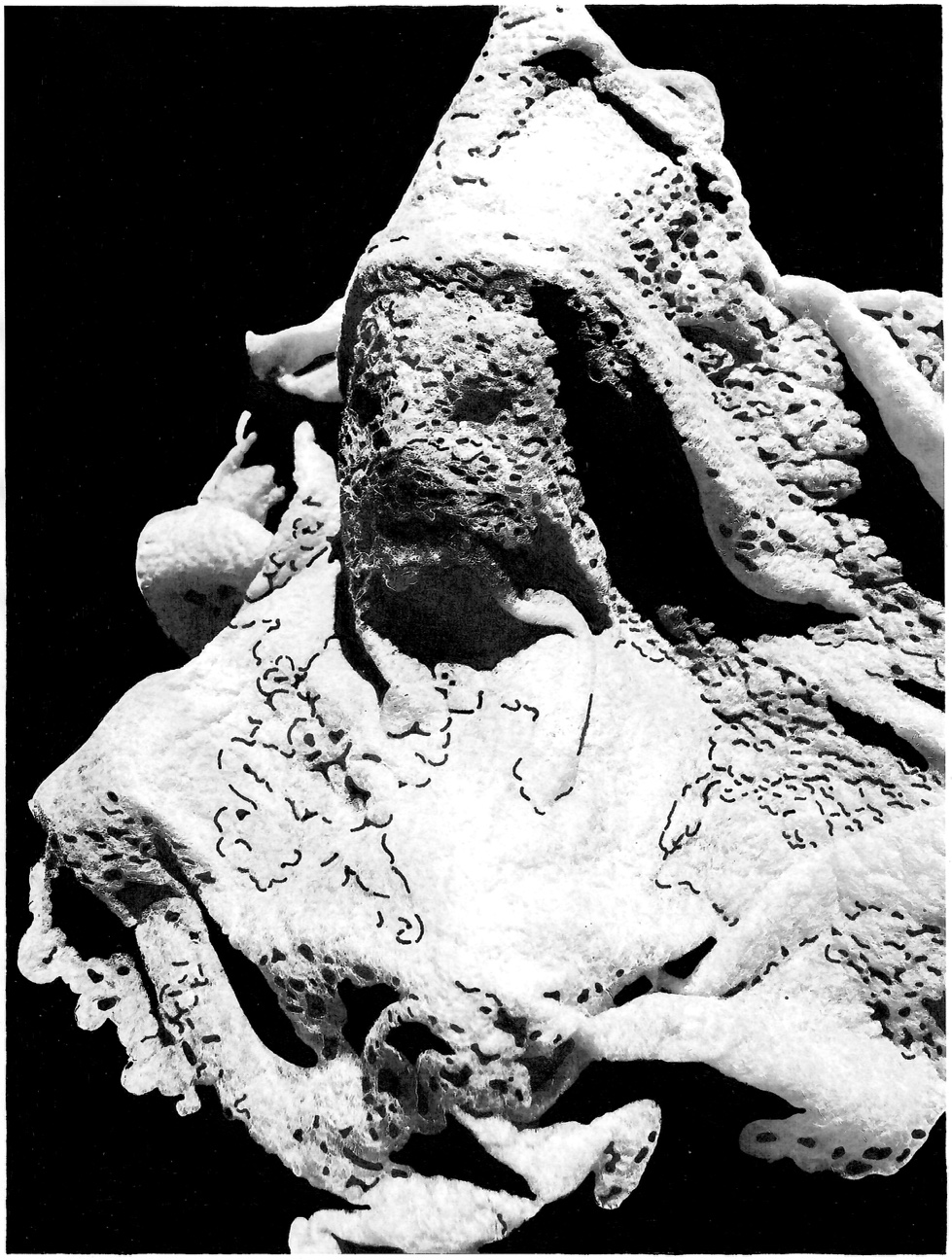
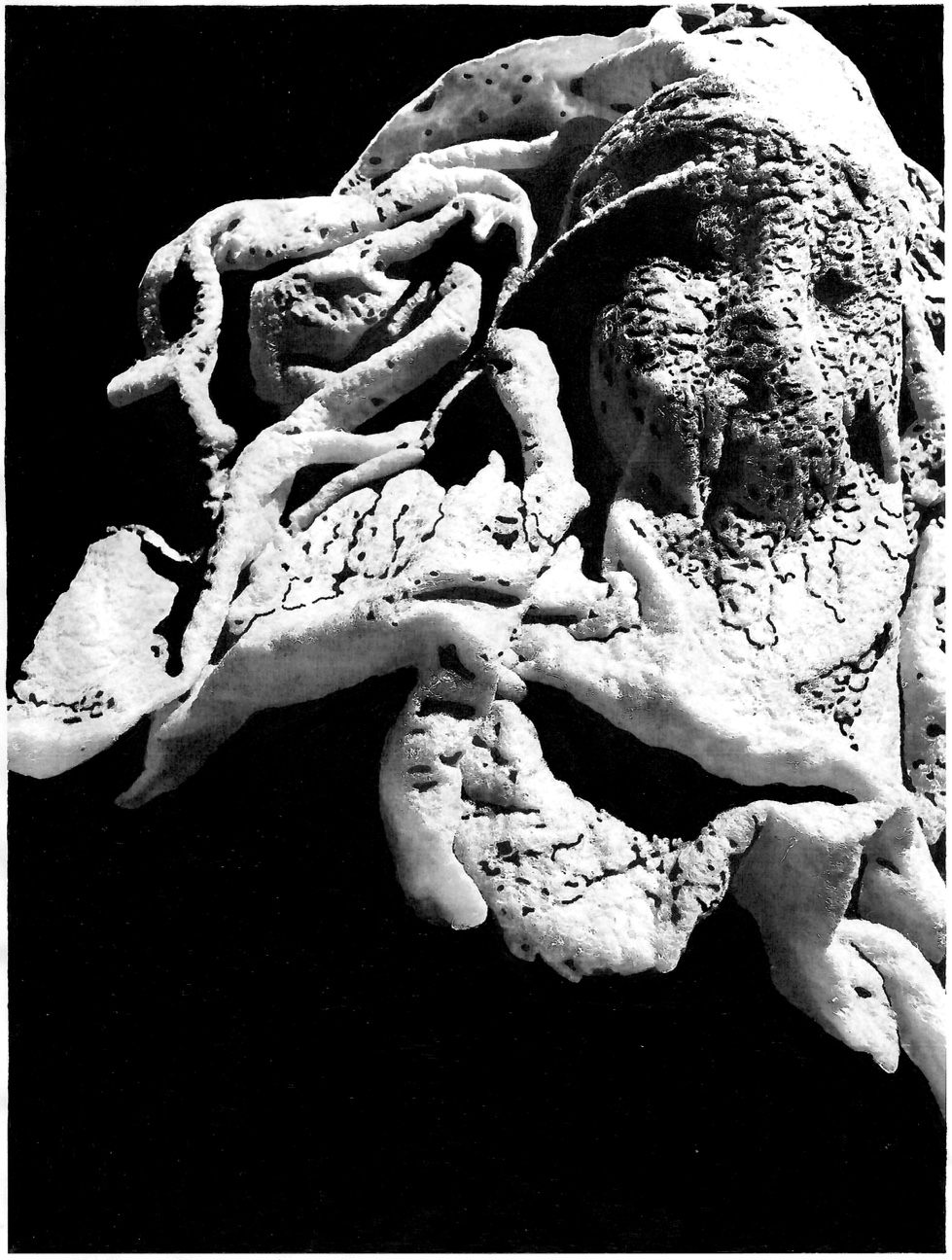
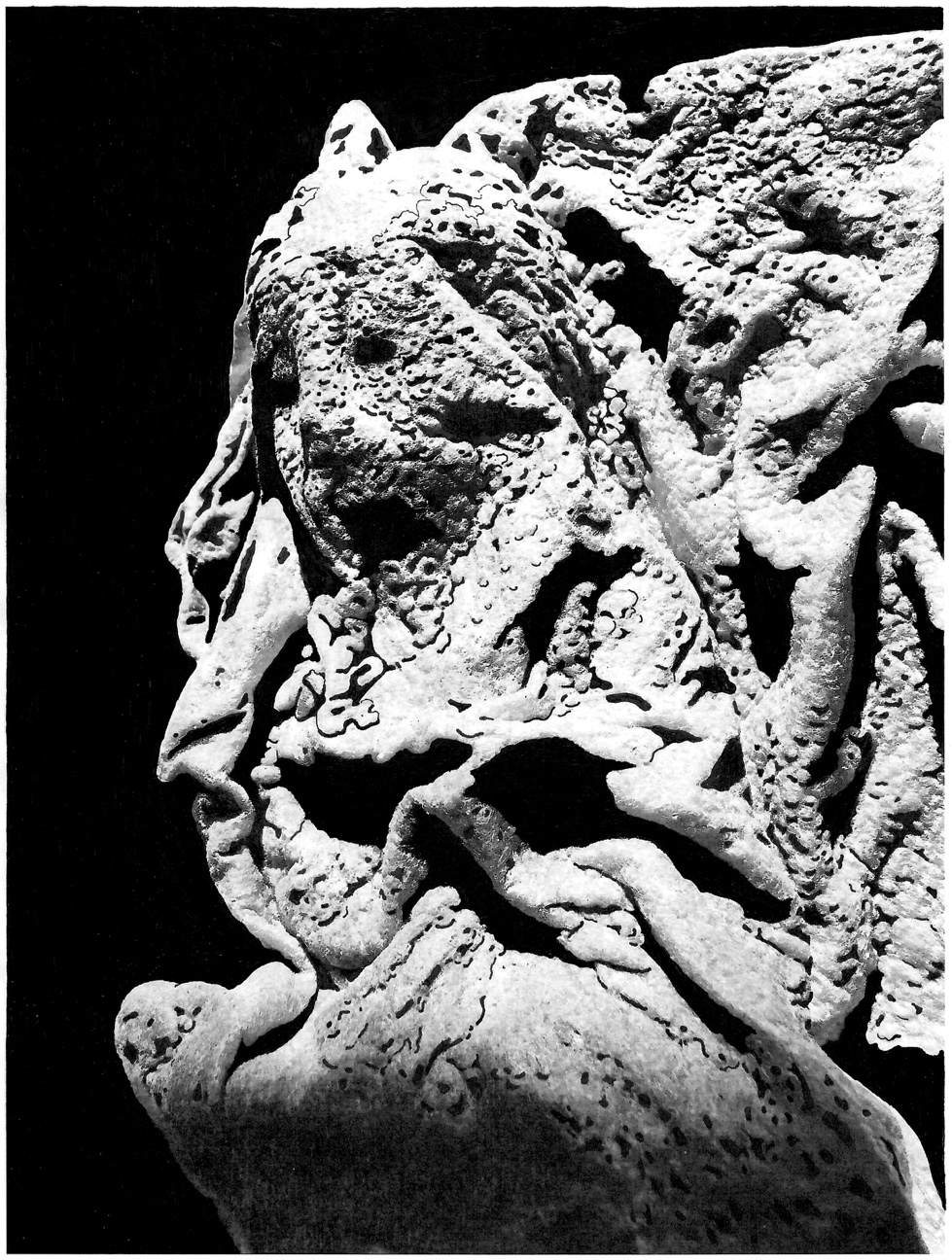
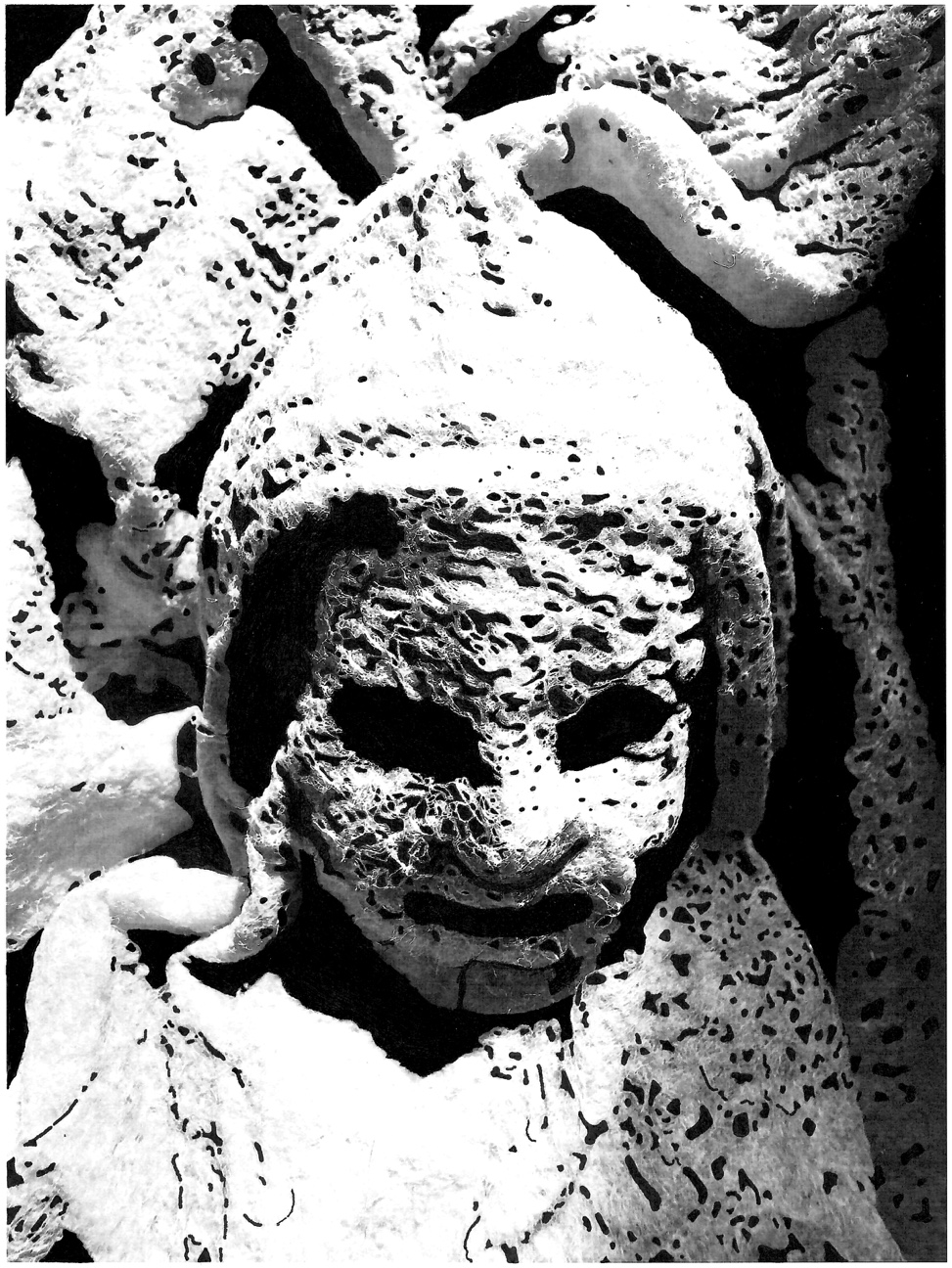
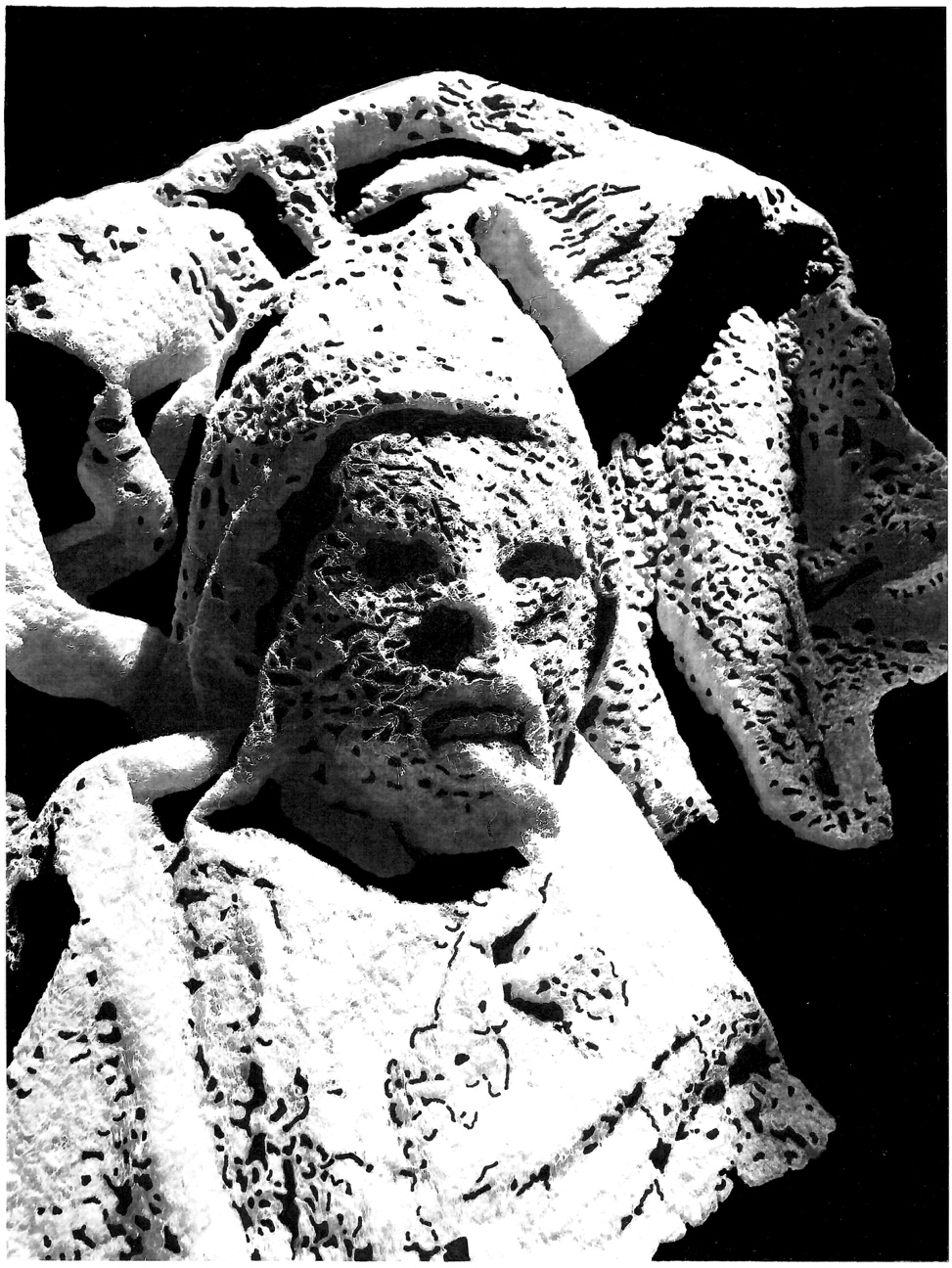
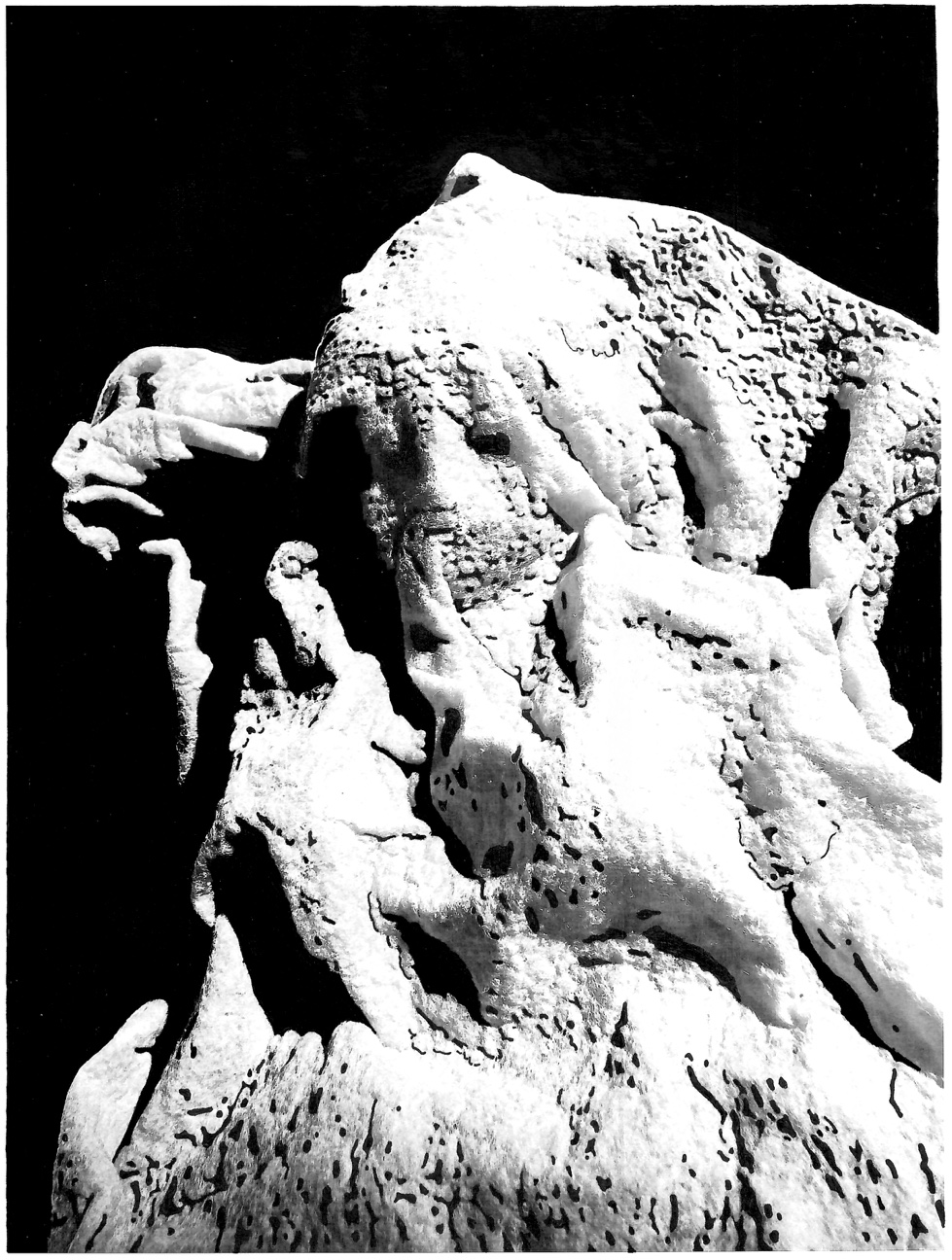
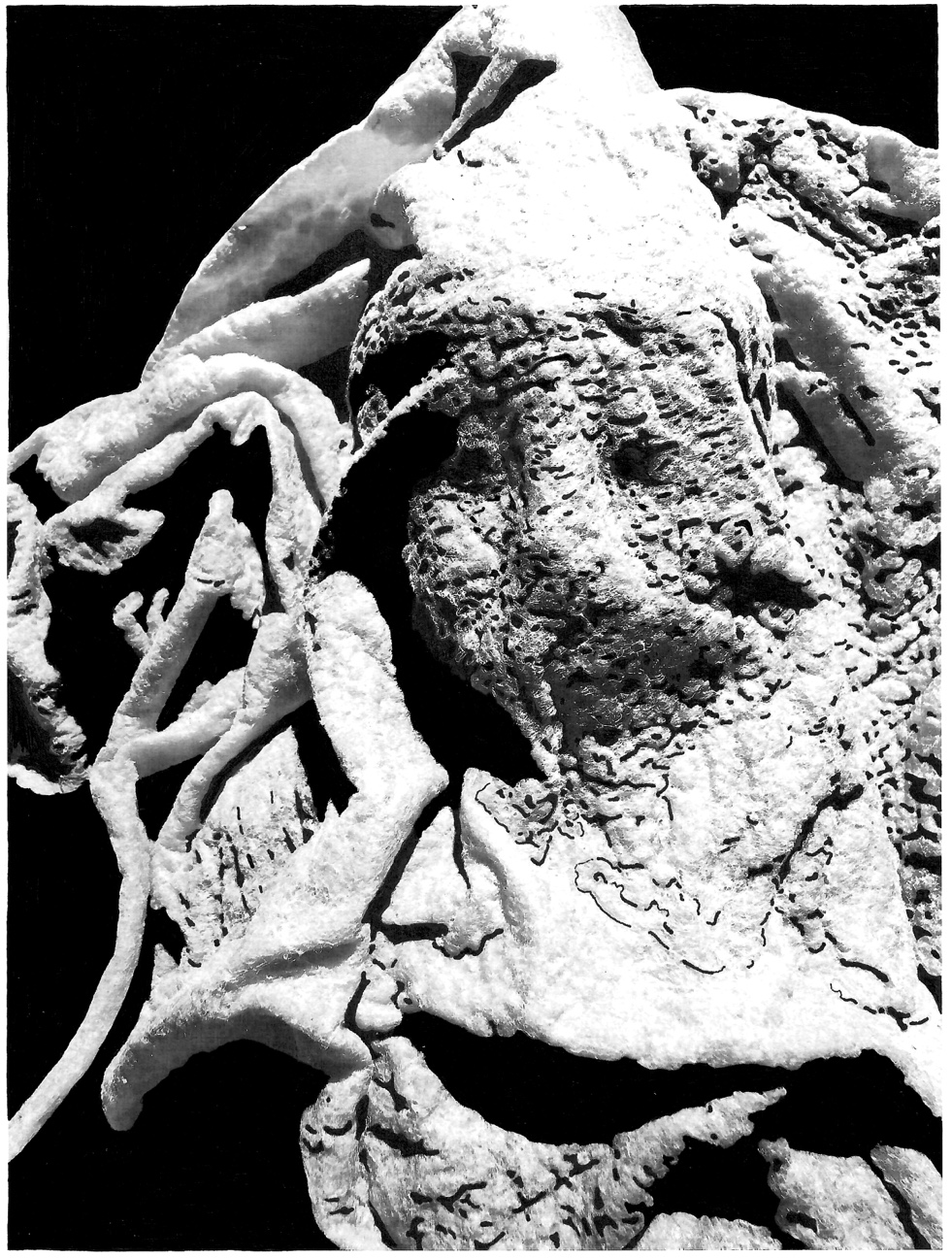
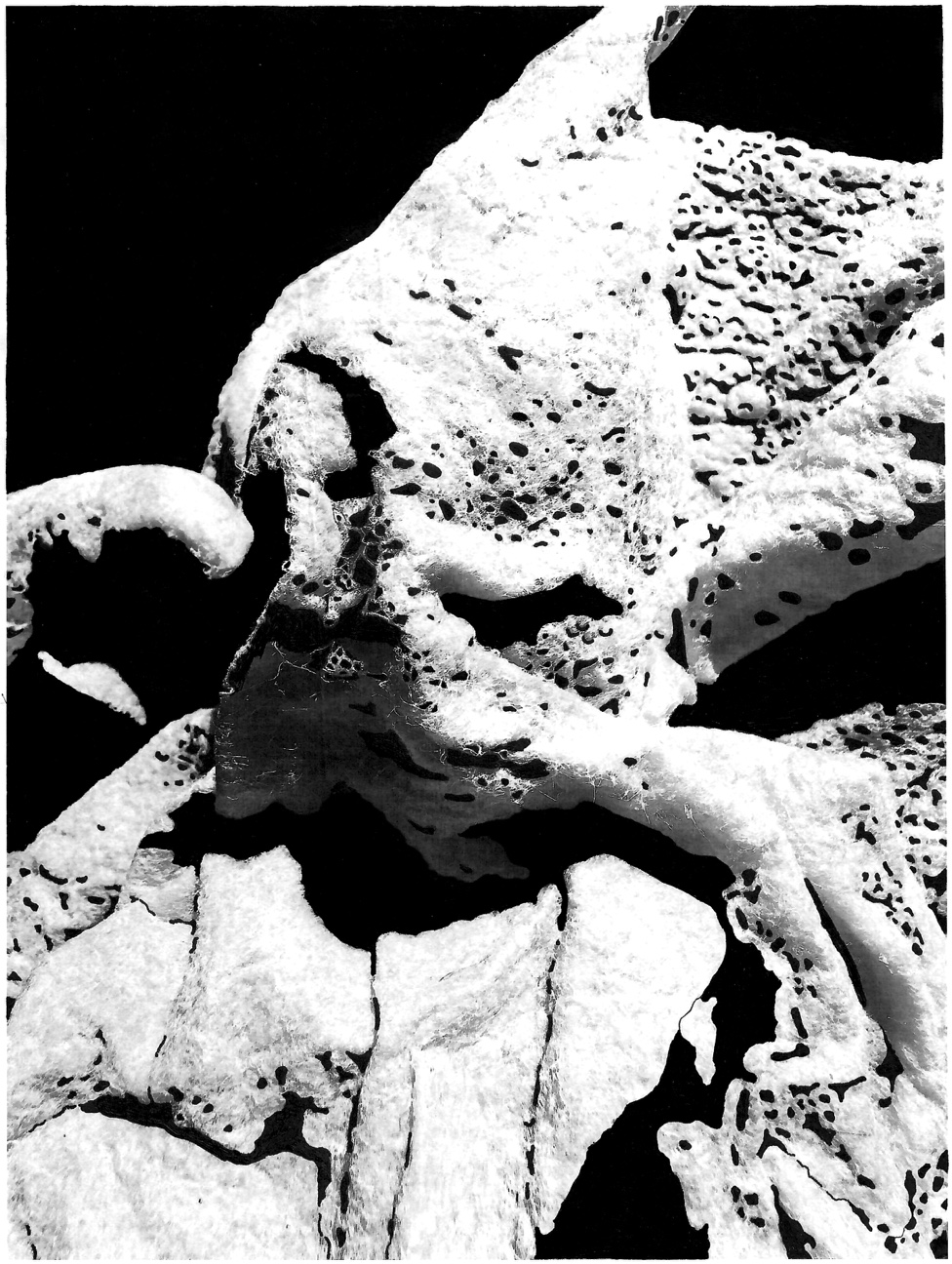
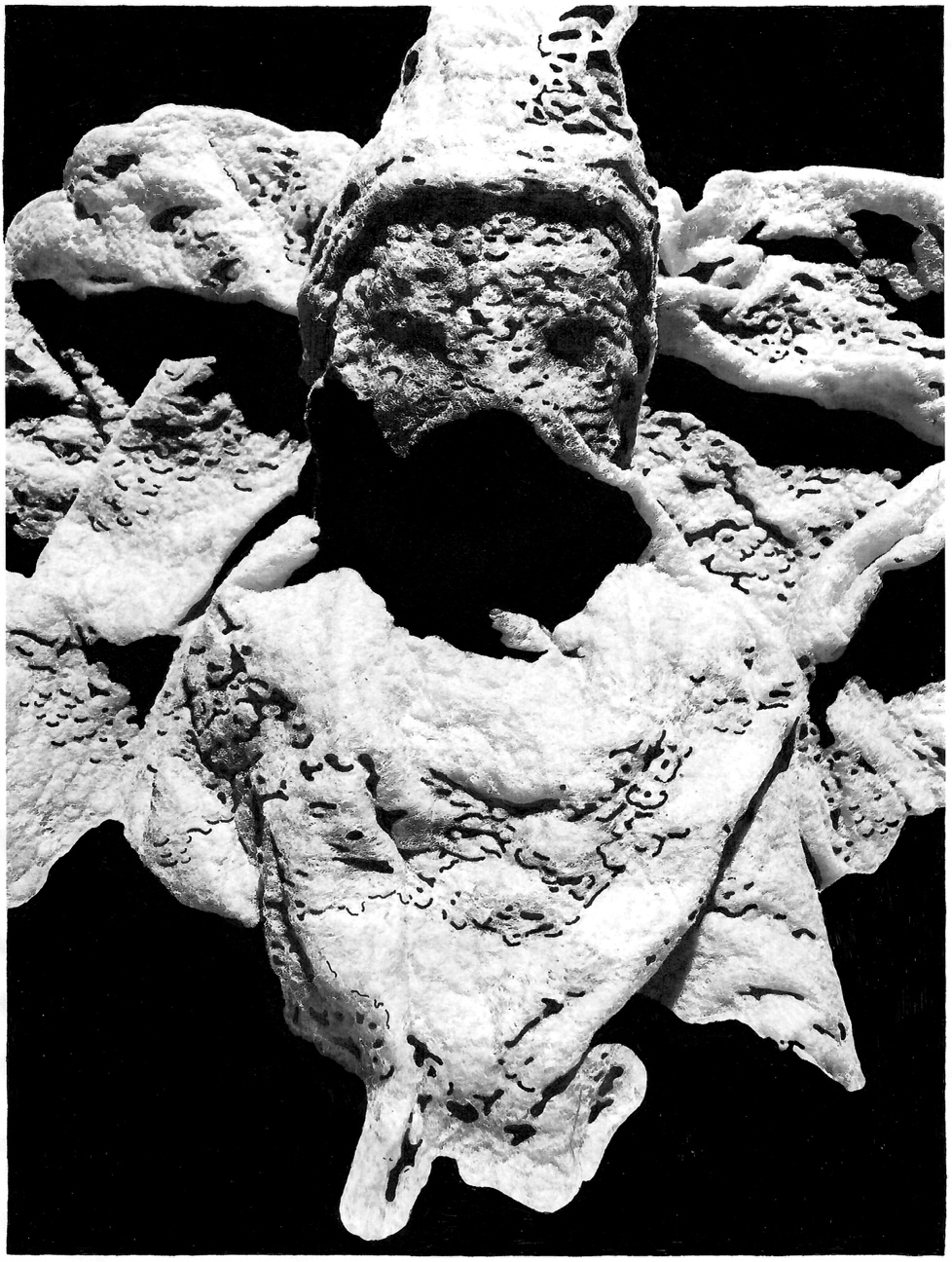
Győző Sárkány’s latest series titled “Atlantis,” consisting of twenty sheets, though visually closely connected to his previous “Demon Structure” pieces, in terms of content reconnects with the diverse phenomena of cultural history, philosophy, and religion. The actual location of Atlantis island has been a source of endless speculation since Plato, accompanied by a multitude of utopian-symbolic theories.
Comparing the two series, the increasingly stronger plasticity of forms is clearly perceptible in the Atlantis sheets. The distinctive light-shadow variants in some cases create almost tangible spatial effects on the flat surface, deceiving the eye like a trompe l’oeil. The various formations, arcs, and curves evoke associations of sculpture-like human figures and animal forms, as if the grotesque and frightening column capitals and gargoyles of Gothic cathedrals were flashing before our eyes and then – similar to Atlantis – sinking into the sea of time and imagination. The fine, lace-like complex yet irregular, jagged surfaces give a timeless swirling rhythm to the spectacle. A world of extraordinary beings unfolds before us, where human, animal, and plant blend together, and we cannot know whether we are seeing torsos or structures in the process of formation. Extinction and genesis, projections of desires and fantasies erupting from the depths of the collective unconscious appear simultaneously in these images. It’s as if the human figures were concealed from us by some stone veil suggesting the subtle movements of faces behind it, while the folds, tears, and breakthroughs spanning across the compositions reinforce the hiding and unrecognizability of the figures. The eye sockets are mostly shrouded in darkness or not visible at all. Secrets surround the sunken, supposedly perfect world of Atlantis, which takes on new forms in human imagination from time to time: its impassive, indifferent silence both attracts and instills fear, just like the extraordinary visions coming to life on the artist’s sheets.
Ildikó D. Udvary art historian