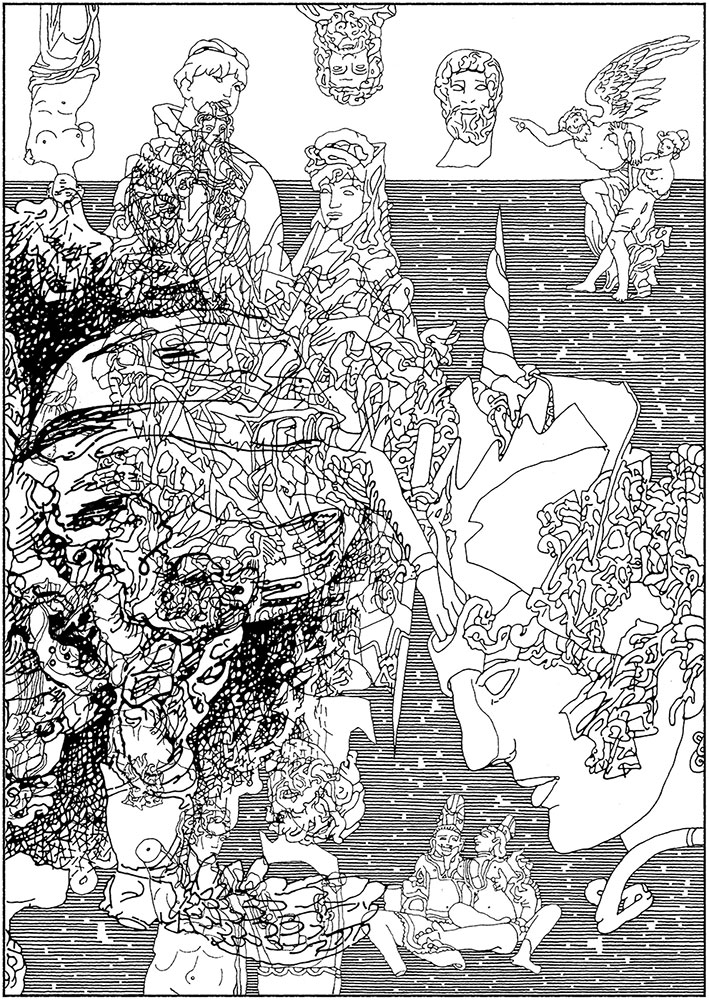
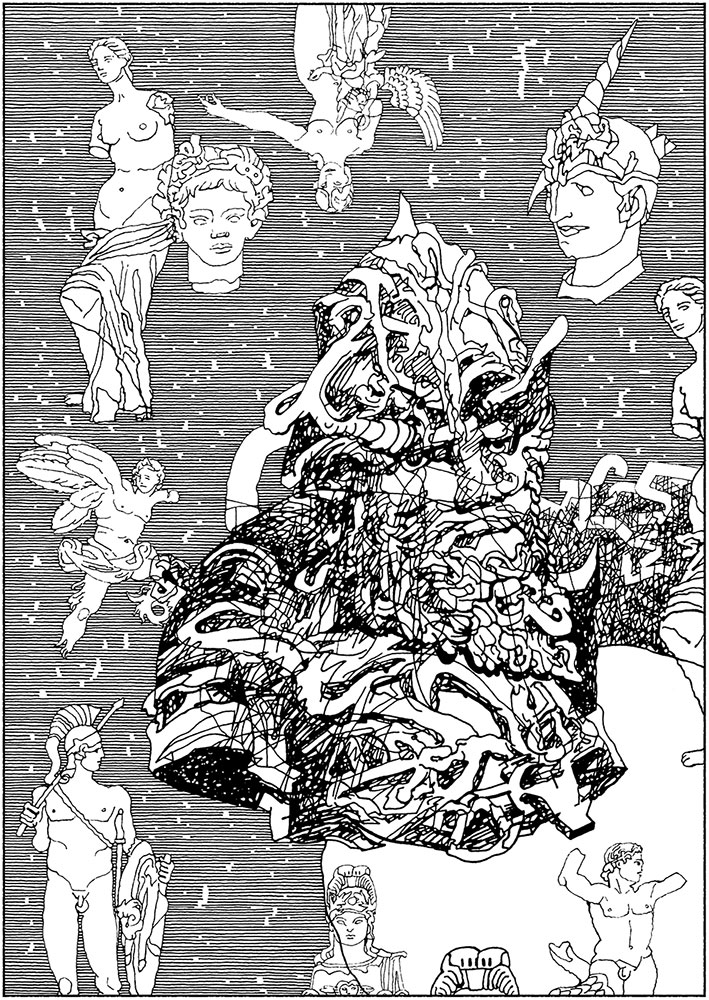
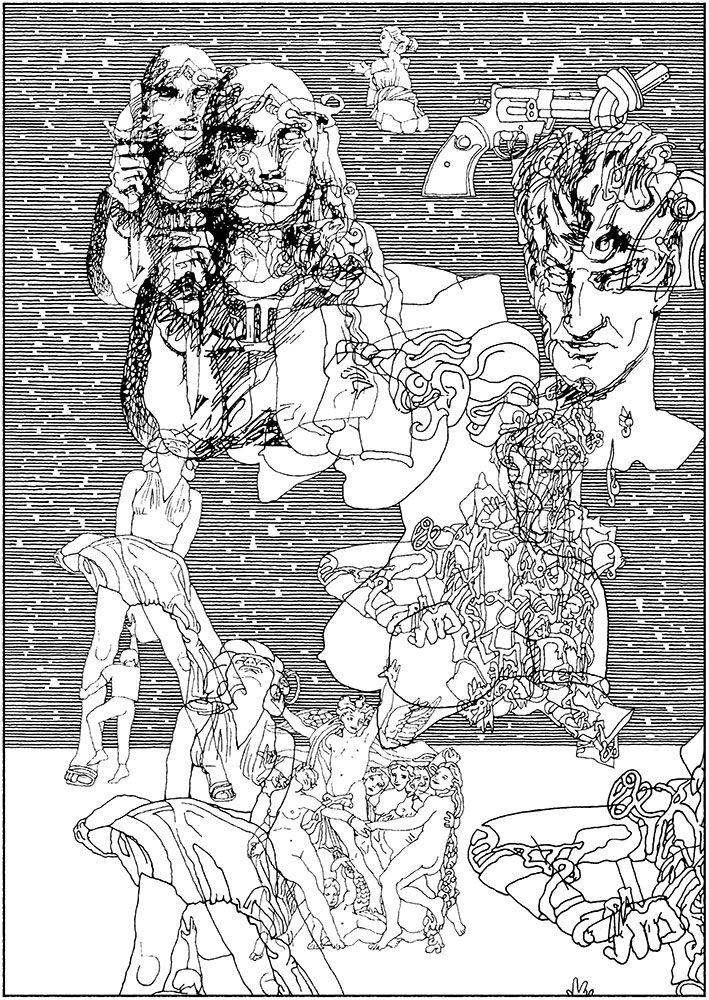
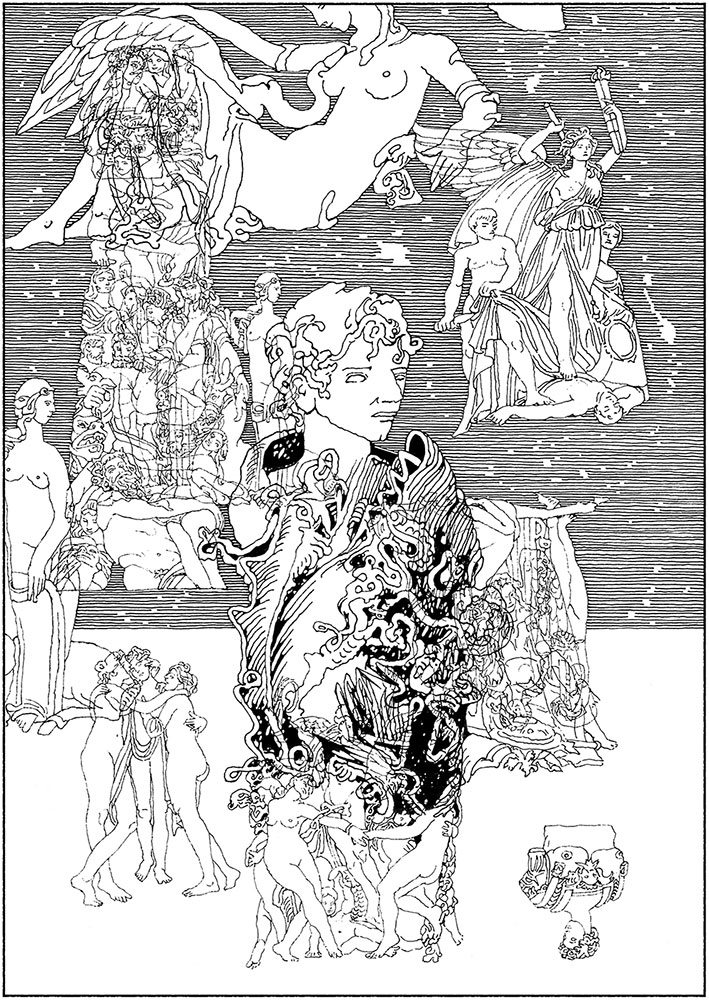
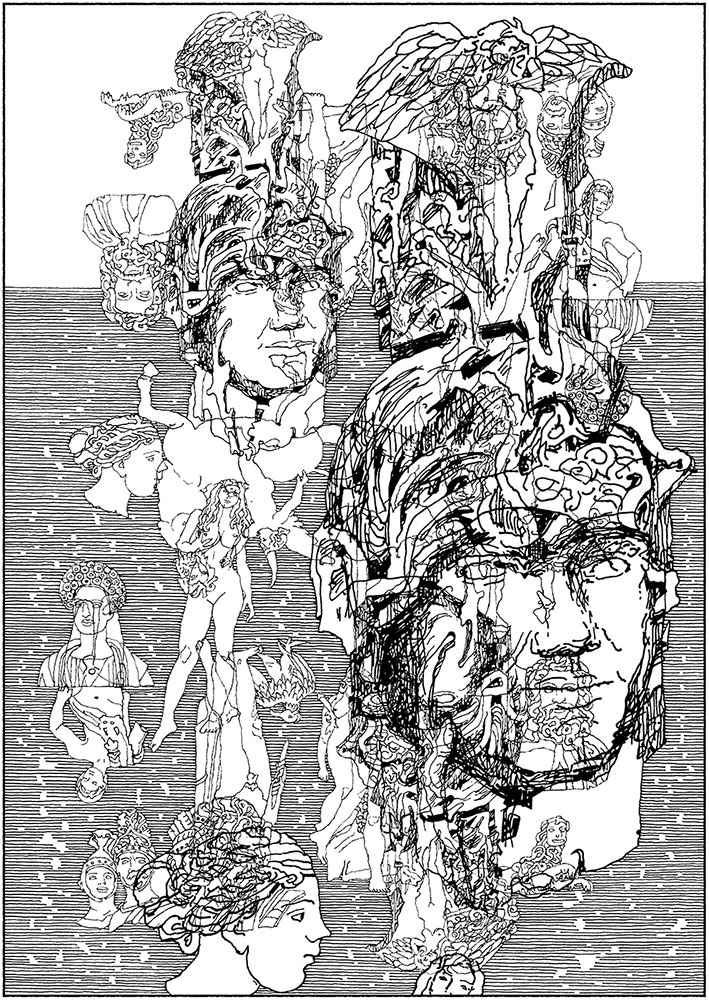
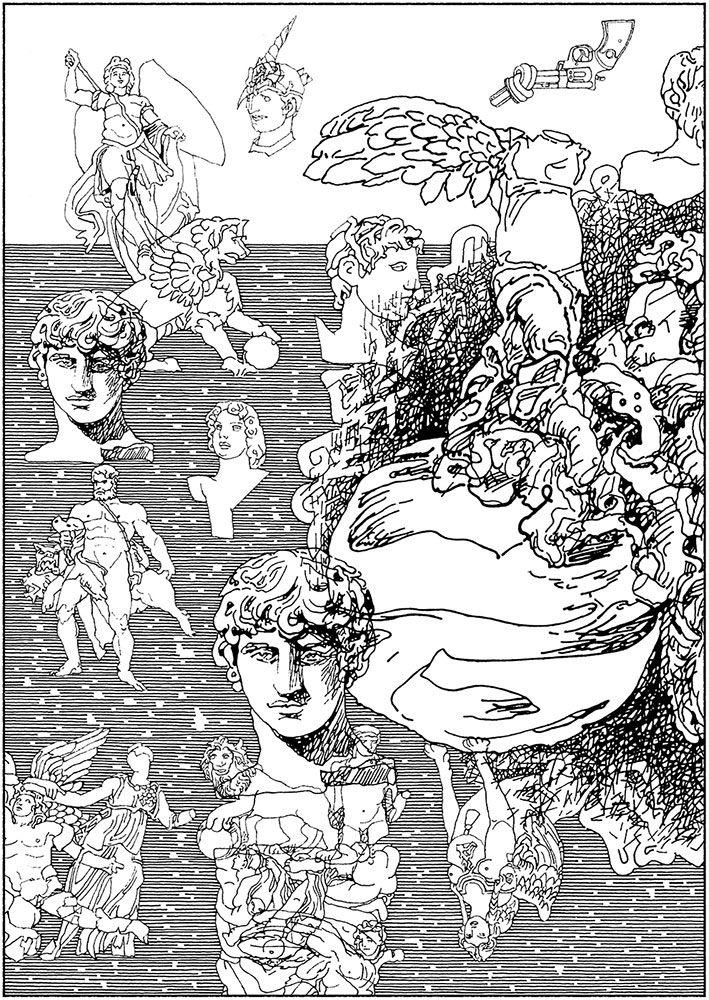
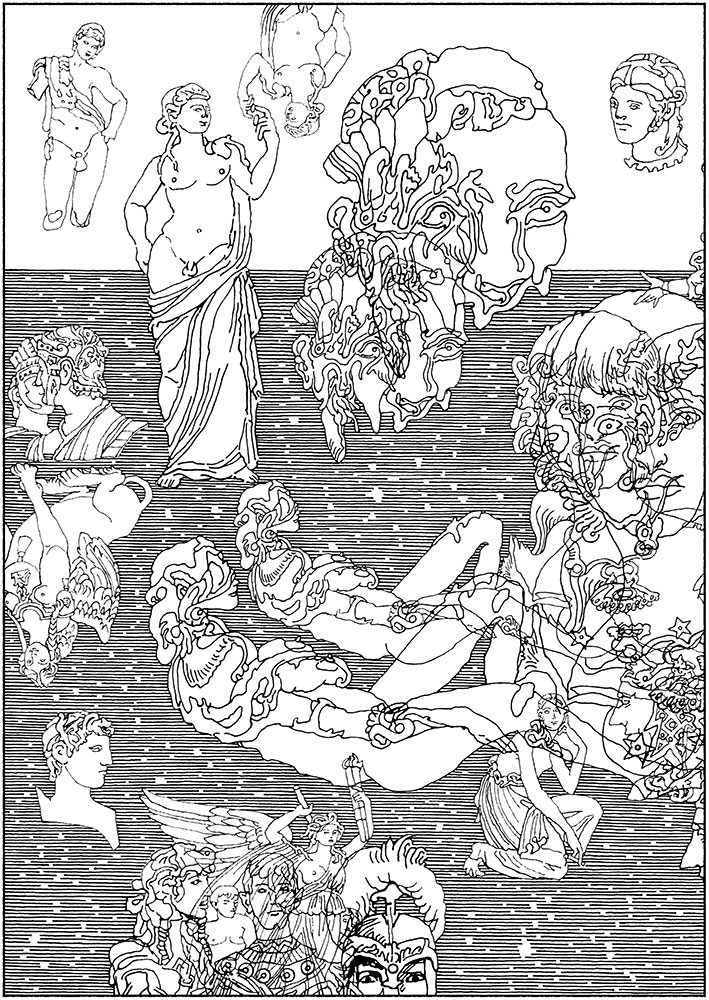
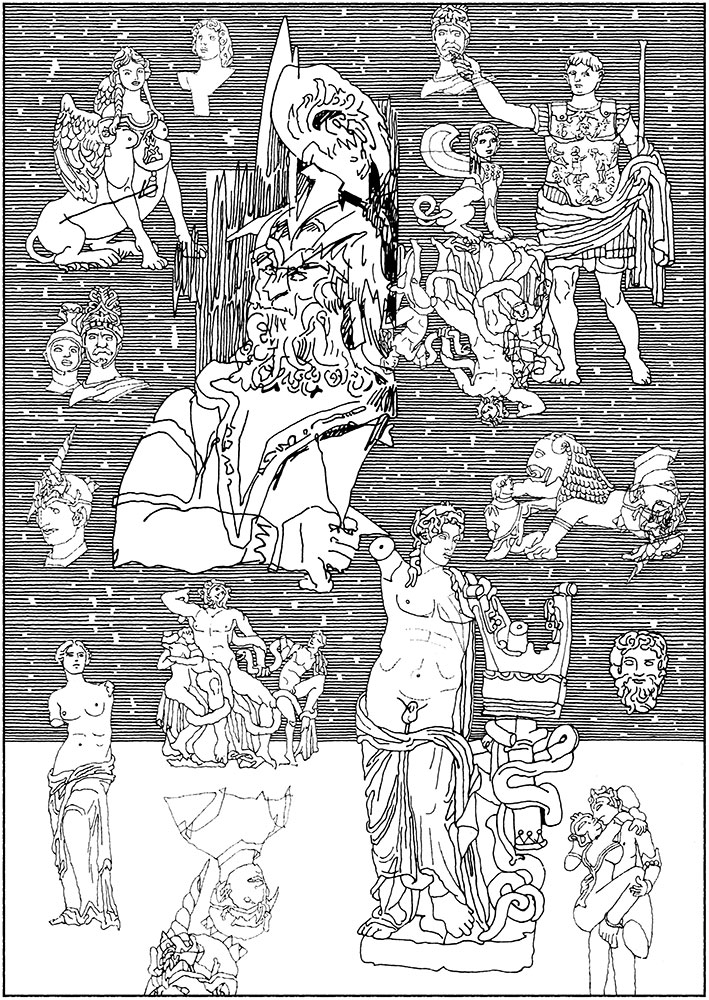
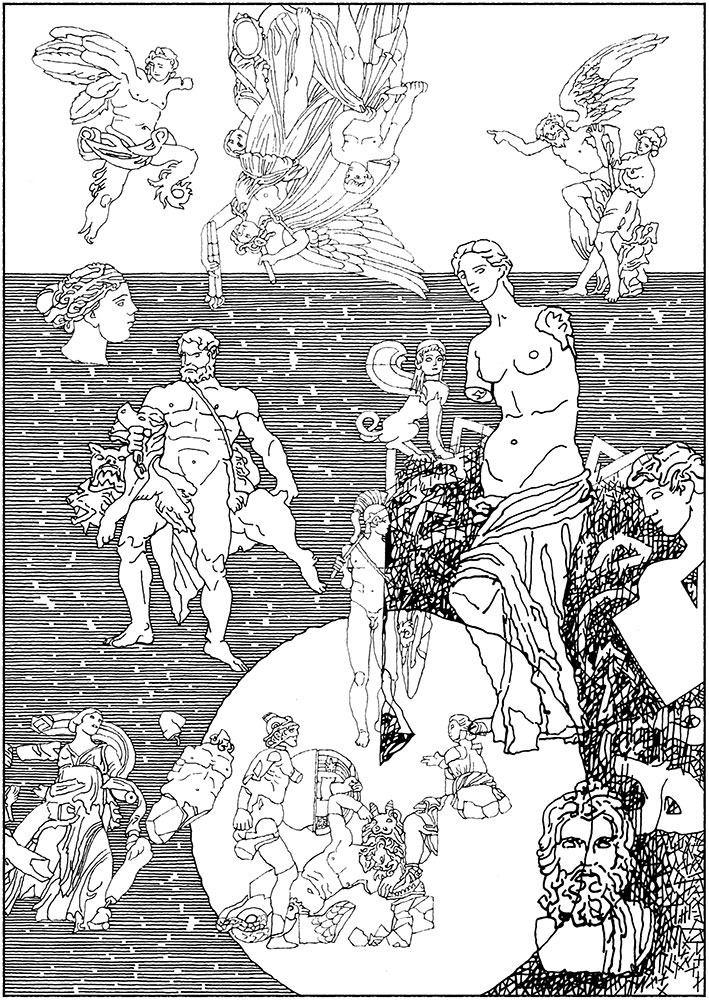
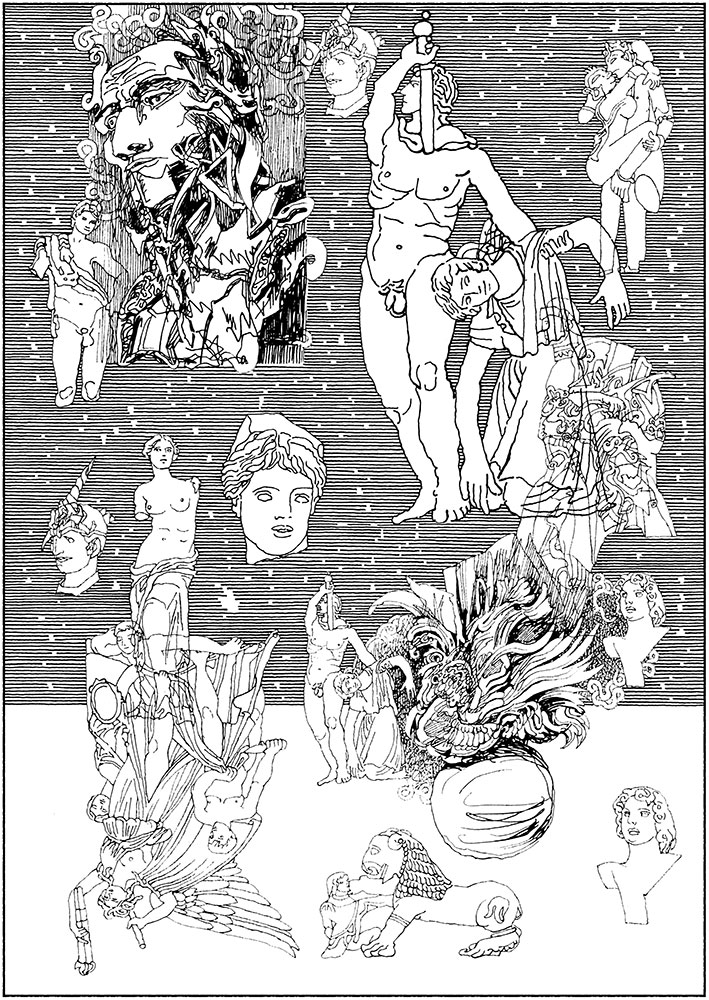
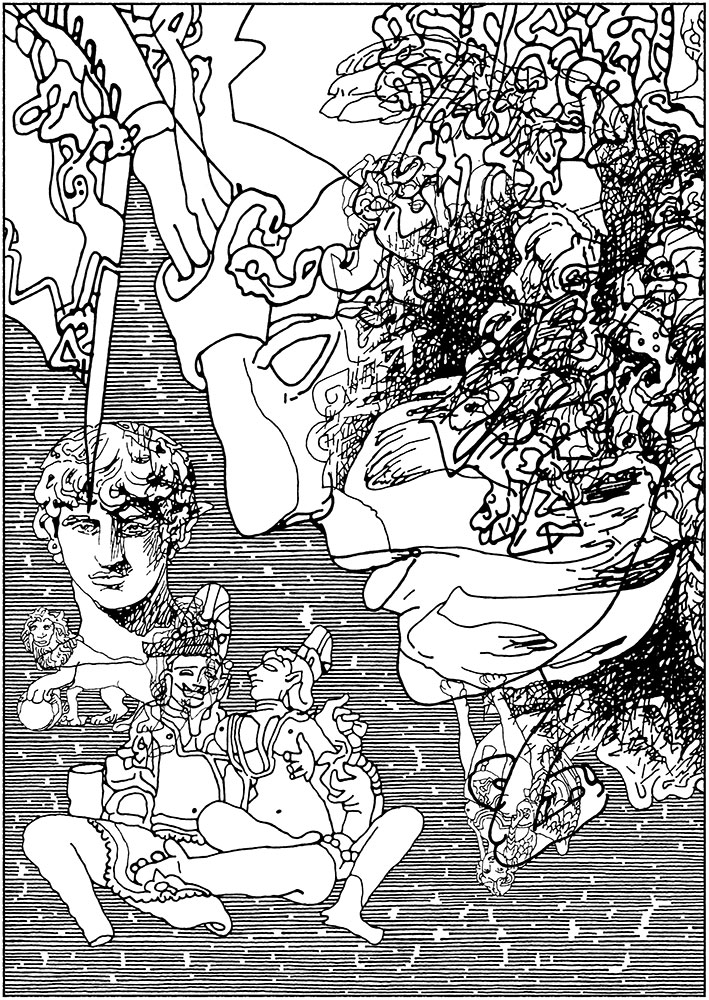
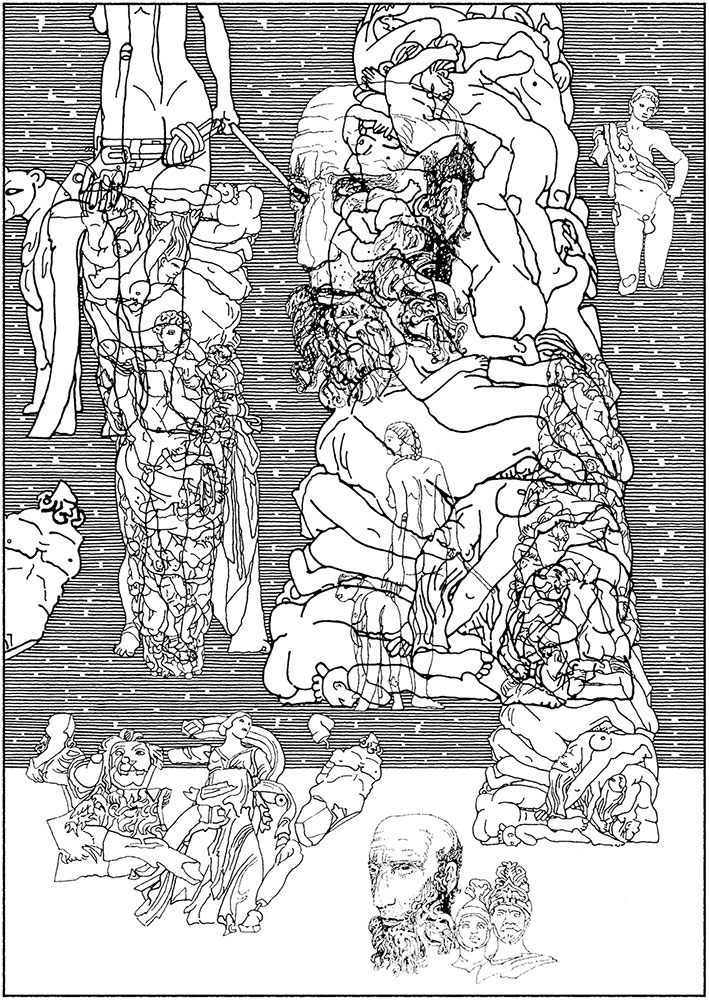
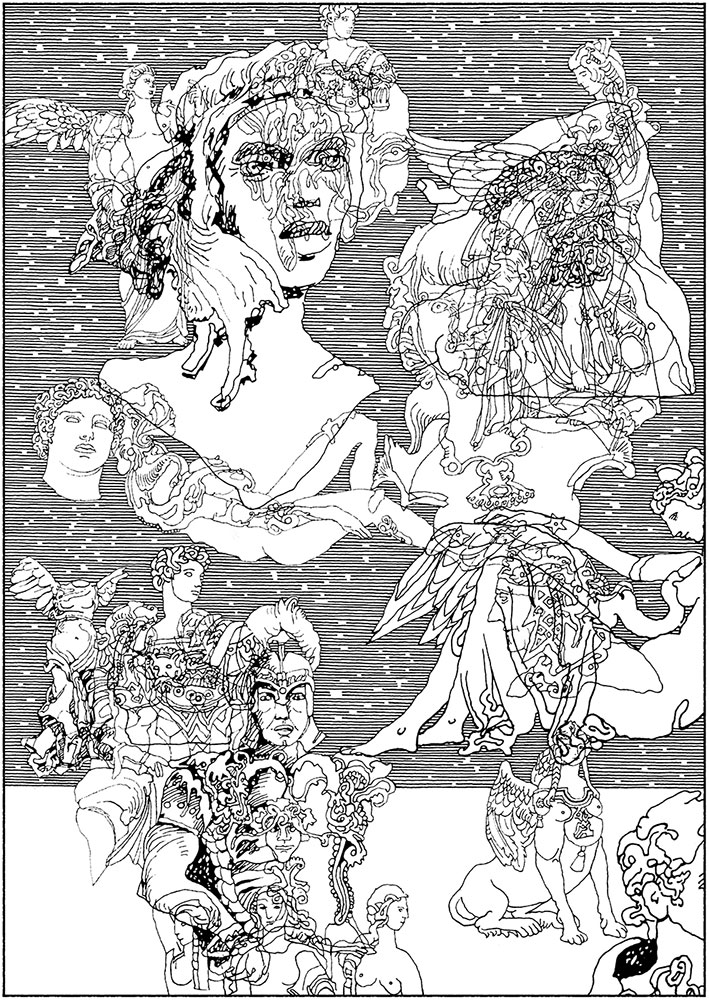
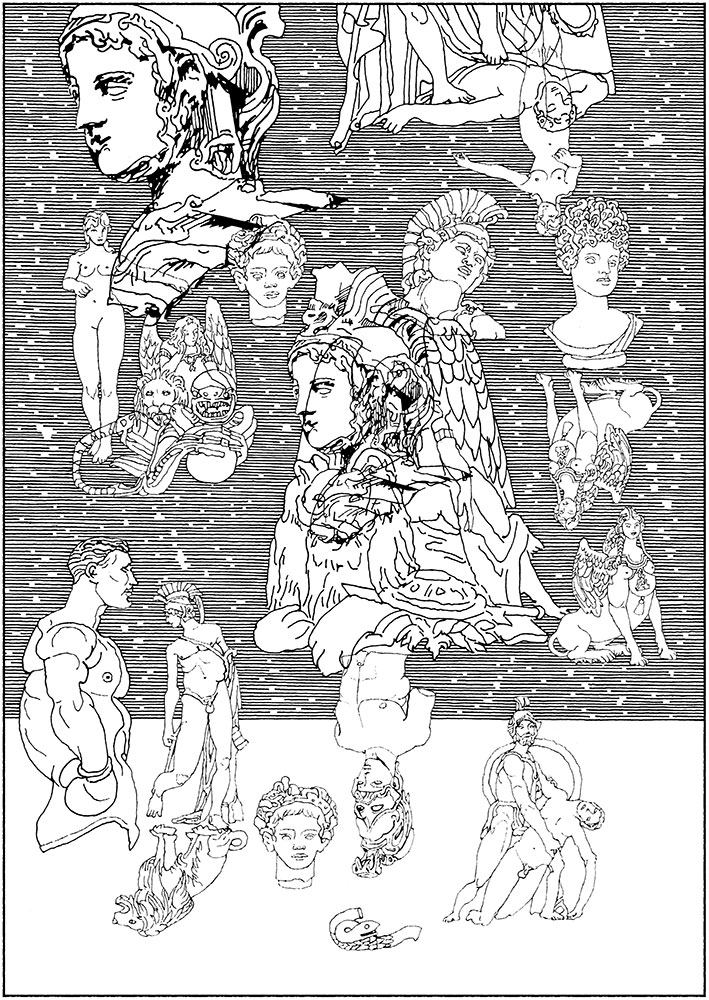
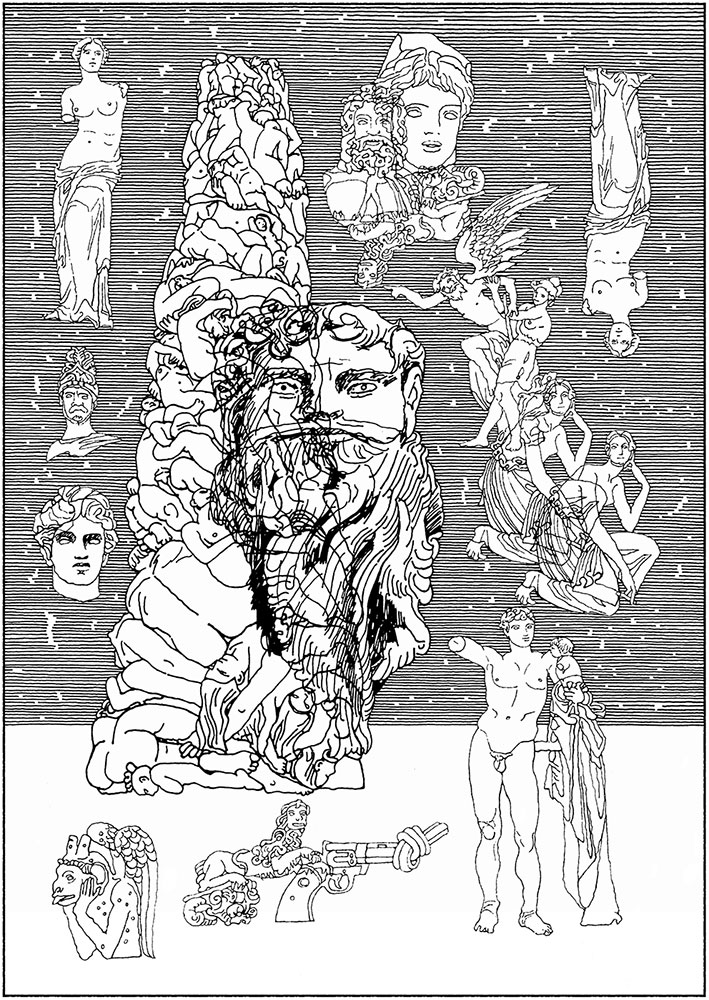
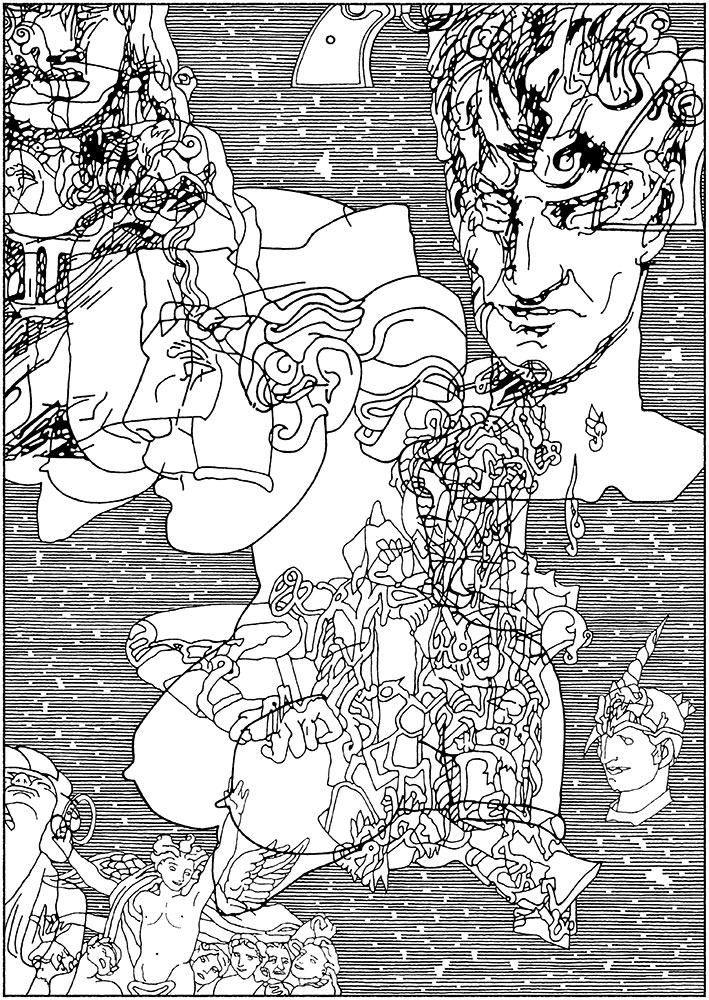
The Fall of Idols refers to the continuous struggle, passing, renewal of historical, artistic, theological, philosophical ways of thinking, feelings and ideas across the ages, where the stylistic and artistic quotations and paraphrases stand before us in an unquestionable evidence of simultaneity. What inspired these compositions? The majority of the pictures recall works of classical antique, Hellenistic sculpture, complemented by sculptures from the East and West, from antiquity to the present day. The flow of ideas, the structure and the relationship between the elements of Győző Sárkány’s graphic series recall the philosophical vision of Heraclitus and Empedocles. His evocations of works cannot be considered exact reproductions of a single work, because in the formal order of the drawings the evoked works are constantly transformed, filled with different content and given new life. Each work is both an inspiration and a symbol in the hands of the artist.
The series of graphics created for the 500th anniversary of the Reformation is an intuitive reinterpretation of the history of humanity: ‘In my drawings, the ideal of infinite space conjured by lines and the struggle of matter turned into form is a struggle that is renewed from time to time. In the wake of birth and death, of joy and anguish, the characters of the great eras of world history appear, sometimes from one scene to the next, sometimes hidden behind masks. The creations of the past float in the endless swirls of the cosmos, intertwining, drifting apart and then returning as characters of the prophesied apocalyptic dance of death. We are all bound together by the question that spans through ages: is there a meaning to this ever-renewing struggle, is there divine providence or is history moving towards its end with some majestic aimlessness?’
Ildikó D. Udvary art historian